


Extensions for Volume: Best Options for Women
The most reliable extensions for volume fall into four categories: weft/sewn-in for dramatic, lasting fullness; tape-in for lightweight layering on finer hair; multi-piece clip-ins and halo systems for instant, reversible volume; and toppers or V-Part pieces for targeted thinning at the crown. If you want one starting point, multi-piece clip-ins are the lowest-risk entry for most women because they are DIY-friendly, immediately removable, and let you test how much volume you actually want before committing to a salon method.
Quick-pick guide by goal:
- Dramatic, full-head volume: Weft/sewn-in with multiple packs for a consistent, salon-level result on low-density hair
- Lightweight volume on fine hair: Tape-in extensions, spaced carefully by a professional
- Instant, customizable volume: Multi-piece clip-ins or a halo system, DIY in just minutes
- Thinning crown or part: V-Part topper or U-part piece for targeted coverage with minimal root load
- Quick ponytail volume: A wraparound ponytail extension, no clips required
Pro Tip: On fine hair, grams matter more than piece count. Around 100–150g is usually the sweet spot for visible volume without visible weight. Going heavier than your natural hair density can cause the extensions to sit proud of your scalp rather than blend in.
Table of Contents
- Which extension types add the most volume?
- How do you choose the right extension type for your hair?
- What to expect from installation, maintenance, and removal
- What do volume extensions cost in Australia?
- What are the best extension options for thin or fine hair?
- How much volume do different gram weights actually give you?
- Why choose Hairlockshairextensions for volume?
- Key Takeaways
- The case for starting with less volume than you think you need
- Ready to add real volume? Here is where to start
- Useful sources
- FAQ
Which extension types add the most volume?
Understanding why each method creates fullness makes it much easier to choose the right one. The mechanics differ significantly across types, and so do the results.
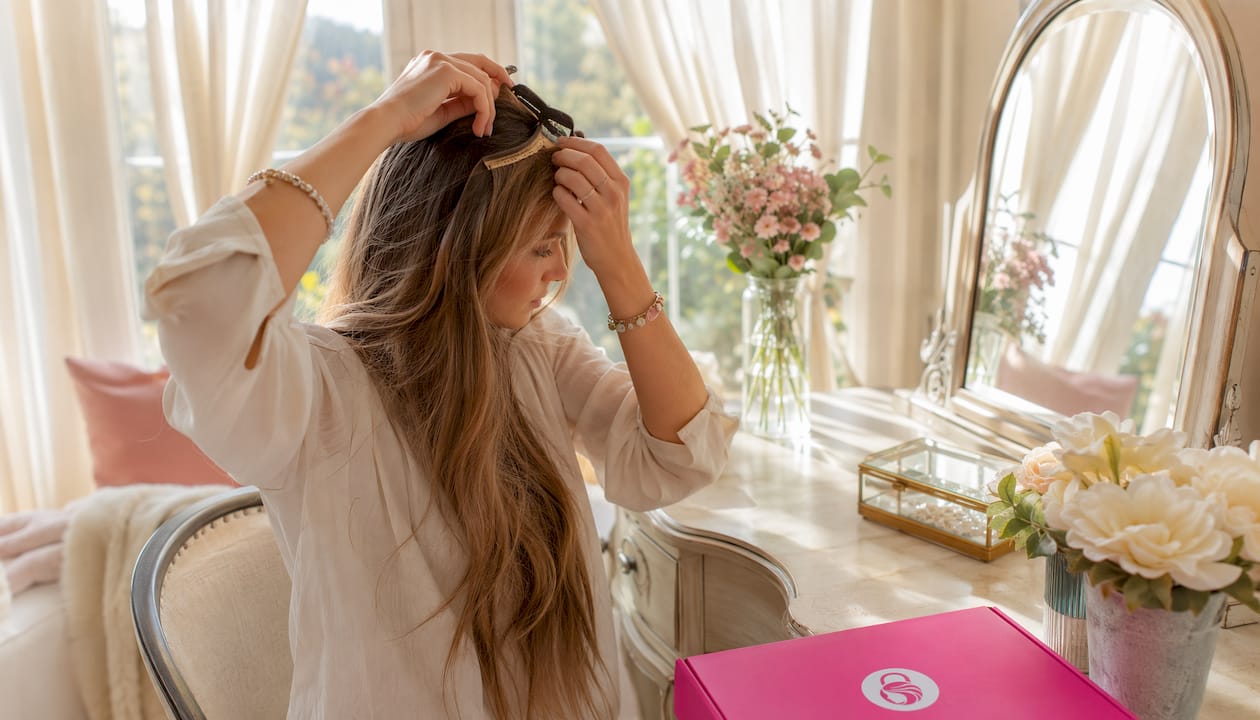
Weft/sewn-in extensions deliver the most consistent, long-lasting volume because multiple tracks are layered across the head. Stylists typically recommend multiple packs for a full, dramatic result on low-density hair. The weft sits flat against the scalp, so the added hair blends from root to tip rather than just at the ends.
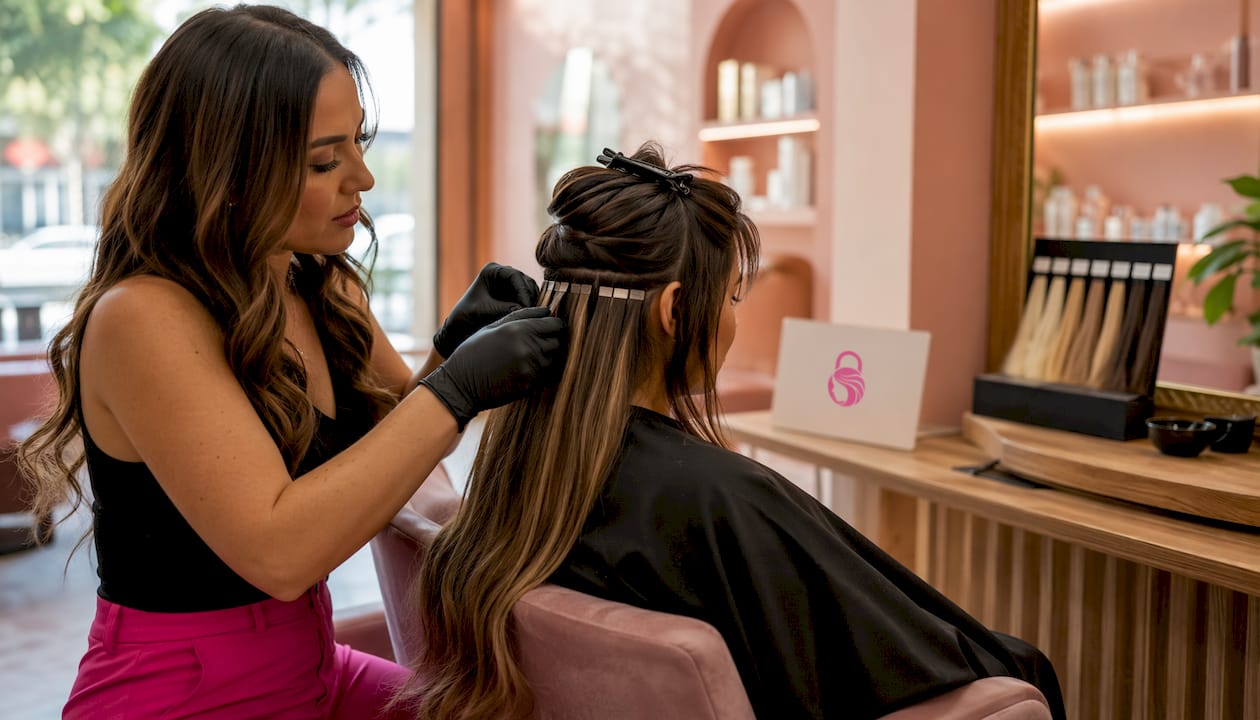
Tape-in extensions use ultra-thin adhesive panels that sandwich small sections of natural hair. Because the tape itself is nearly flat, they layer without adding bulk at the root. This makes them a strong option for fine hair when applied by an experienced stylist who spaces them correctly. Tape-ins are light and layerable, which is exactly why they suit finer textures that would buckle under heavier methods.
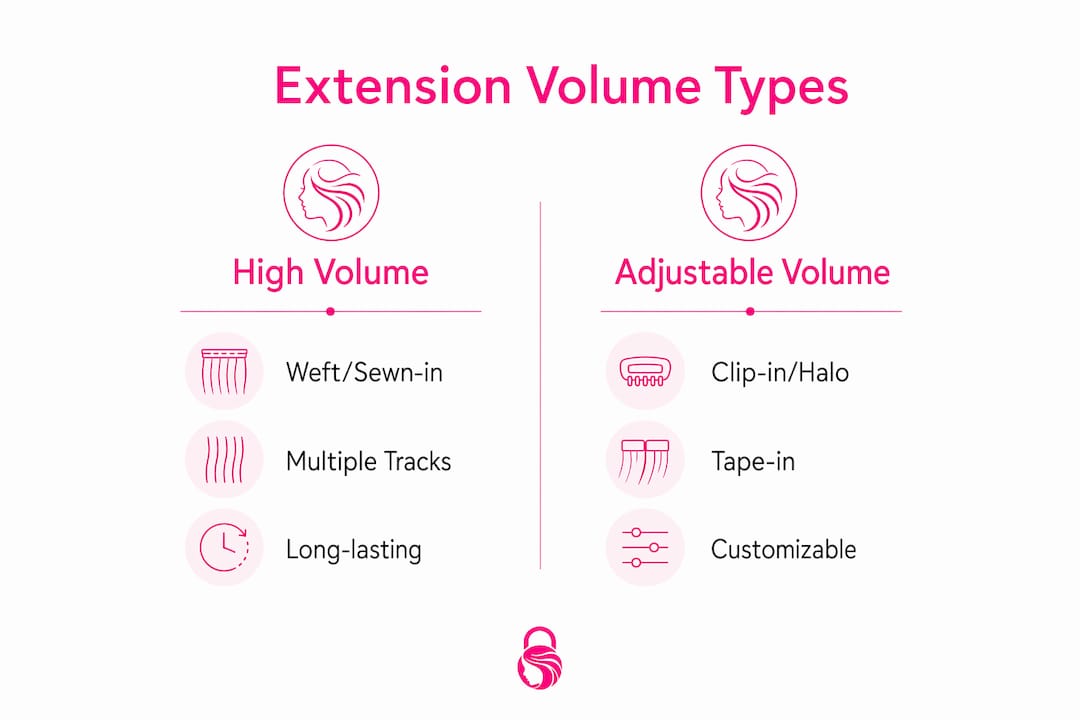
Clip-in and halo systems are the go-to for immediate, customizable volume. A halo sits on a wire that rests on the head with no clips or adhesive, while multi-piece clip-in sets let you add as many or as few pieces as the day calls for. Halo and clip-in systems are especially useful as a low-risk way to test the look before committing to a semi-permanent method.
Keratin bond and micro/nano bead methods attach individual strands close to the root. They create density rather than bulk, which reads as natural thickness rather than dramatic volume. The trade-off is installation time and cost. Nano beads are the smallest attachment point, making them a reasonable option for fine hair when placed with good spacing.
Toppers and V-Part pieces work differently from all of the above. Instead of adding hair across the whole head, they sit over the crown or part line and clip in place. For women experiencing thinning at the top, a V-Part topper delivers targeted volume exactly where it is needed without loading the rest of the scalp.
At a glance:
- Weft/sewn-in: Most dramatic volume; 2–4 hours to install; lasts 6–8 weeks between salon visits
- Tape-in: Lightweight, natural-looking; 60–120 minutes; re-tape every 6–10 weeks
- Clip-in/halo: Instant, reversible; 5–20 minutes DIY; no salon required
- Keratin/nano bead: Natural density; variable install time; 6–10 weeks between maintenance
- Toppers/V-Part: Targeted crown coverage; clip-in, minutes to apply; ongoing use
Pro Tip: If you have scalp sensitivity or color-treated hair, clip-ins and halo systems are the safest starting point. They put zero chemical or mechanical stress on the root.
How do you choose the right extension type for your hair?
The best volume-boosting method is the one that matches your hair health, lifestyle, and how often you plan to wear extensions. A quick decision checklist helps narrow it down fast.
Decision checklist:
- Hair density: Fine or thinning hair needs lightweight attachment (tape-in, nano bead, or topper). Normal to thick hair can handle wefts or keratin bonds.
- Scalp sensitivity: Any sensitivity points toward clip-ins, halo, or toppers. Avoid adhesive methods until you have a professional assessment.
- Typical hairstyles: High ponytails and updos require extensions placed low enough to stay hidden. Discuss placement with your stylist before committing.
- Budget: DIY clip-ins are the lowest upfront cost. Salon-applied methods carry installation fees plus ongoing maintenance costs.
- Wear frequency: Daily wear suits semi-permanent methods. Occasional wear suits clip-ins or a halo.
Questions to ask before you buy or book:
- What is the gram weight per piece, and what is the total grams for the full set? Brands that publish these specs, like Hairlockshairextensions on their care sheet, make it straightforward to estimate the visual result.
- How many packs or pieces are recommended for my density and desired fullness?
- Do you offer color-matching swatches or a consultation before purchase?
- What does removal involve, and is there an additional fee?
Red flags to watch for: vague or missing gram weights, no mention of Remy or human hair, and lifespan claims that seem unrealistically long without specifying care requirements. Remy human hair is the gold standard for natural blending and longevity. Synthetic fiber can look convincing in photos but rarely blends well in motion or under direct light.
Color matching is one of the most underestimated steps. Even a half-shade difference at the ends becomes obvious once the hair moves. If you cannot get a swatch, look for a brand with a wide color range and a clear return or exchange policy.
For most women new to extensions, starting with clip-ins or a halo is the practical move. It costs less, requires no appointment, and gives you a real sense of how much volume you want before booking a salon for tape-ins or wefts.
What to expect from installation, maintenance, and removal
Setting realistic expectations upfront saves both time and money. Each method has a different rhythm of upkeep, and that rhythm affects the total cost of ownership as much as the initial price.
Installation times by method:
- Clip-ins/halo: 5–20 minutes, DIY
- Tape-in: 60–120 minutes, salon only
- Weft/sewn-in: 2–4 hours, salon only
- Micro/nano bead or keratin bond: Variable, typically 2–4 hours depending on strand count
Maintenance and removal:
Clip-ins require the least upkeep. Stored correctly and brushed gently before and after wear, a quality set can last years. Clip-ins with proper care have a significantly longer lifespan than any semi-permanent method. Tape-ins and micro/nano methods need professional reinstallation roughly every 6–10 weeks as natural hair grows out. Wefts need a salon maintenance visit every 6–8 weeks to re-tighten or re-sew. Removal for adhesive or bonded methods should always be done by a professional to avoid breakage.
| Method | Application time | Maintenance interval | Average lifespan |
|---|---|---|---|
| Clip-in/halo | 5–20 min (DIY) | As needed | Years with care |
| Tape-in | 60–120 min (salon) | Every 6–10 weeks | 6–10 weeks per install |
| Weft/sewn-in | 2–4 hours (salon) | Every 6–8 weeks | 6–8 weeks between visits |
| Micro/nano bead | 2–4 hours (salon) | Every 6–10 weeks | 6–10 weeks between visits |
| Topper/V-Part | Minutes (DIY clip-in) | As needed | Ongoing until replaced |
Pro Tip: Sleep in a loose braid or low ponytail to prevent tangling overnight. Use a sulfate-free, extension-safe shampoo and avoid applying conditioner directly to the bonds or tape tabs. Hairlockshairextensions publishes a full care guide that covers washing, drying, and styling to keep volume looking natural.
What do volume extensions cost in Australia?
Australian pricing varies widely depending on method, hair quality, and whether you are buying DIY or booking a salon. Here is a realistic picture of what to budget.
| Method | Typical Australian price range |
|---|---|
| DIY clip-ins (full set, human hair) | AUD $150–$500 |
| Salon tape-in (supply + install) | AUD $300–$1,500+ |
| Weft/sewn-in (supply + install) | AUD $500–$1,500+ |
| Micro/nano bead (supply + install) | AUD $600–$1,500+ |
| Topper/V-Part piece | AUD $200–$600 |
Salon-installed methods in Australia can reach AUD $300–$1,500+ depending on method, hair quality, and maintenance plan. The lower end of that range typically covers a basic tape-in set with standard hair; the upper end reflects full weft installs with premium Remy hair and color-matching services.
What drives the price up: 100% Remy human hair costs more than synthetic or non-Remy blends, but it blends better, lasts longer, and can be heat-styled. Higher gram counts (more hair per pack) and longer lengths also add cost. Professional color-matching, maintenance appointments, and eventual removal fees all factor into the total.
Plan for the full cycle, not just the initial purchase. A tape-in set at AUD $600 installed may need two or three reinstallation visits per year, each costing AUD $150–$300. Clip-ins have a higher upfront cost per quality set but no ongoing salon fees, which often makes them cheaper over 12 months for women who wear extensions regularly.
For women interested in complementing their extensions with a scalp health routine, a hair growth bundle can support the underlying hair between installs.
What are the best extension options for thin or fine hair?
Fine and thinning hair needs a different approach than normal or thick hair. The goal is visible volume without overloading fragile strands at the root.
Toppers and V-Part pieces are usually the best first step. They clip over the crown or part line, adding fullness exactly where thinning is most visible, without placing any load on the sides or back of the scalp. The Top~Lock V-Part Topper from Hairlockshairextensions is designed specifically for this: discreet coverage at the crown with a natural-looking part and minimal attachment points.
Lightweight tape-ins and nano beads can also work, provided an experienced stylist applies them with generous spacing between panels. Crowded placement on fine hair creates visible lumps and puts too much tension on individual strands. Spacing is everything.
What to avoid:
- Heavy weft packs applied too close together on fine hair. The weight can cause traction at the root and, over time, breakage.
- Keratin bonds placed too near the scalp on very fine hair. The bond itself adds a small amount of weight that multiplies across a full head.
- Rushing into a full install without a professional scalp check first.
Pro Tip: For women with thinning hair, a staged approach works best. Start with a topper or a partial clip-in set to see how your scalp responds. A professional consultation, like those offered by Hairlockshairextensions, can assess your hair density and recommend the right gram weight and attachment method before you commit to anything semi-permanent. Pairing extensions with a 360 hair clinic assessment can also help identify whether thinning has an underlying cause worth addressing.
How much volume do different gram weights actually give you?
Gram weight is the most reliable predictor of visual volume, but it only tells the full story when paired with length. Longer extensions carry more visible weight and movement; shorter ones add density close to the root.
Rough guide by gram weight:
- 50–100g: Subtle lift and thickening. Best for fine hair that needs a small boost or for adding a single layer of body. Noticeable up close; not dramatic in photos.
- 100–150g: Visible thickening for medium-density hair. This is the most common range for everyday clip-in sets and produces a natural, full look without obvious bulk.
- 150–200g: Clear volume increase. Suitable for low-density hair wanting a significant transformation, or for medium hair aiming for a thick, high-volume style.
- 200g+: Dramatic volume. Typically requires multiple weft packs or a full salon install. Best for low-density hair where the goal is a genuinely thick, full result.
| Grams | Length | Expected visual result | Suggested type |
|---|---|---|---|
| 50–100g | — | Subtle body and thickening | Clip-in (partial set) or topper |
| 100–150g | — | Visible fullness, natural look | Clip-in (full set) or tape-in |
| 150–200g | — | Significant volume increase | Tape-in or weft (partial) |
| 200g+ | — | Dramatic, high-volume result | Weft/sewn-in (multiple packs) |
Length also affects perceived volume. Extensions at 24 inches and beyond create movement that reads as fullness even at moderate gram weights. Shorter lengths concentrate the added hair closer to the root, which suits fine hair better because the weight is distributed over less distance.
One practical note: always check the gram weight per piece and the total for the full set. A set listed as “10 pieces” could be anywhere from 80g to 200g total depending on the brand. Brands that publish both figures, like Hairlockshairextensions on their product pages, make it much easier to predict the result before you buy.
Why choose Hairlockshairextensions for volume?
Hairlockshairextensions is built around one specific goal: giving women natural-looking volume and length using 100% human hair. Founder Michele brings 30 years of experience to every consultation, which means the advice you receive is grounded in real, hands-on expertise rather than generic product descriptions.
Trust signals worth knowing:
- All extensions are 100% Remy human hair, which means the cuticles run in the same direction for smoother blending and longer wear
- Product pages publish clear specs including length, gram weight, and color options so you can estimate results before purchasing
- A detailed care sheet covers washing, drying, and styling to protect your investment
- A before-and-after gallery shows real client transformations across different hair types and volume goals
- Personalized consultations are available for women who want guidance on method, gram weight, and color match before committing
Hairlockshairextensions products for volume:
- Top~Lock V-Part Topper: Targeted crown coverage for thinning hair. Clips in place over the part line, adds immediate fullness, and requires no salon visit.
- Clip-in extensions: Available in multiple lengths and colors, these are the most flexible volume solution for everyday wear. The full set gives visible, natural-looking fullness that you can adjust piece by piece.
- Ponytail extensions: A wraparound ponytail adds instant length and volume to a pulled-back style with no clips showing. Available at 100g and 200g weights for different volume goals.
The before-and-after gallery is the most honest way to set expectations. Real client photos across different hair densities and extension types show exactly what is achievable, which is far more useful than a product description alone.
Key Takeaways
The most effective extensions for volume match your hair density, lifestyle, and gram-weight needs — not just the most dramatic option available.
| Point | Details |
|---|---|
| Match method to density | Fine hair needs lightweight options (tape-in, nano bead, or topper); normal to thick hair handles wefts or keratin bonds. |
| Gram weight predicts results | 100–150g suits most everyday volume needs; 200g+ is for dramatic, full-head transformations. |
| Clip-ins are the low-risk start | DIY clip-ins and halo systems let you test volume and style before committing to a salon method. |
| Budget the full cycle | Factor in installation, maintenance visits every 6–10 weeks, and removal fees when comparing methods. |
| Hairlockshairextensions | Offers the Top~Lock V-Part Topper, clip-in sets, and ponytail extensions in 100% Remy human hair, with personalized consultations from founder Michele. |
The case for starting with less volume than you think you need
There is a pattern that shows up repeatedly in extension consultations: women ask for maximum volume on the first install, and then spend the next few weeks adjusting to hair that feels heavier than expected. The instinct makes sense. You want a visible result. But the gap between “looks full in the mirror” and “feels comfortable all day” is wider than most people anticipate, especially for women who have never worn extensions before.
The more useful approach is to start at the lower end of the recommended gram range for your hair type, wear it for a few weeks, and then decide whether you want more. With clip-ins and halo systems, this is easy to do without any additional cost. With semi-permanent methods, it requires a conversation with your stylist before the install, not after.
Fine and thinning hair especially benefits from this staged approach. A topper or partial clip-in set gives you real, visible volume while keeping the root load minimal. If that feels right, you can stay there. If you want more, you have a clear baseline to build from. Rushing to a full weft install on fragile hair to get the most dramatic result possible is the single most common mistake, and the one most likely to set back hair health.
The best volume result is the one you can wear comfortably every day, not the one that looks most impressive in a single photo.
Ready to add real volume? Here is where to start
Hairlockshairextensions offers a direct path from question to result. Whether you want the instant fullness of a clip-in set, the targeted coverage of the Top~Lock V-Part Topper, or the dramatic transformation of a professional weft install, every product is made from 100% Remy human hair and backed by Michele’s 30 years of expertise.
The before-and-after gallery is the best place to see what is actually achievable across different hair types and volume goals. For women with thinning hair, the V-Part Topper collection is a strong starting point. If you are ready to browse the full range of application methods or want a personalized recommendation, book a consultation directly through the Hairlockshairextensions website. Michele will guide you through gram weights, color matching, and the right method for your hair density so you leave with a result you are confident in.
Useful sources
- What Are the Best Hair Extensions for Adding Volume? — HairCandy: Covers tape-in, clip-in, and weft methods with practical guidance on volume and fine hair.
- The 11 Best Hair Extensions of 2025, Tested and Reviewed — Byrdie: Comprehensive overview of extension types, Remy hair quality, and halo/clip-in systems for volume.
- CARE SHEET — Hairlockshairextensions: Full care and maintenance guidance for HairLocks products, including washing, drying, and lifespan tips.
- Before and After Gallery — Hairlockshairextensions: Real client transformation photos showing volume results across hair types.
- Top~Lock V-Part Topper — Hairlockshairextensions: Product page for the targeted crown-volume topper, including specs and color options.
- How Much Do Hair Extensions Cost? — Christian Michael Hair: Pricing reference for salon-installed extension methods; note this source is US-based and figures have been adapted to Australian market context.
FAQ
Can you get extensions just for volume, not length?
Yes. Toppers, V-Part pieces, and partial clip-in sets are designed specifically to add volume without significant length. They sit at the crown or blend mid-shaft to create fullness where natural hair is thin.
What extensions are best for adding volume?
Weft/sewn-in extensions deliver the most dramatic volume when multiple packs are used; clip-in and halo systems are the best option for customizable, low-commitment volume you can adjust daily.
How much do volume extensions cost in Australia?
DIY clip-in sets typically run AUD $150–$500 for a quality human hair set. Salon-installed methods such as tape-ins and wefts generally range from AUD $300 to $1,500+ depending on method, hair quality, and the number of packs required.
How many grams do I need for visible volume?
For most women, 100–150g produces a natural, visible result. Fine hair often sees a clear difference at 50–100g, while low-density hair aiming for a dramatic transformation may need 200g or more across a full weft install.
How long do volume extensions last?
Clip-ins can last years with proper care. Tape-ins and micro/nano bead methods need professional reinstallation every 6–10 weeks. Weft/sewn-in extensions require a salon maintenance visit every 6–8 weeks to stay secure and looking full.