

Best Shampoo for Extensions: Top Picks in Australia
The best shampoos for hair extensions available in Australia
The right shampoo for extensions is sulfate-free, moisturizing, and formulated to protect both the hair bonds and the strands themselves. Harsh cleansers strip moisture and weaken adhesives, cutting your investment short. The five options below are the strongest choices available in Australia right now.
| Product | Best For | Key Ingredients | Moisturizing | Sulfate-Free | Price | Available in Australia |
|---|---|---|---|---|---|---|
| HairLocks Premium Extensions Shampoo | All HairLocks types: tape, keratin bond, micro bead | Botanical moisturizers, silicone-free blend | High | Yes | Contact HairLocks | Yes |
| Deep Muk Ultra Soft Shampoo | Bonded extensions needing softness | Moisturizing agents, gentle surfactants | High | Yes | Mid-range | Yes |
| Davroe Moisture Senses Hydrating Shampoo | Daily hydration, all extension types | Moisture-boosting botanicals | High | Yes | Mid-range | Yes |
| Pure Goddess Shampoo | Sulfate-free cleansing, bond preservation | Natural ingredients | Moderate–High | Yes | Affordable | Yes |
| EVO The Therapist Hydrating Shampoo | Extensions needing intense hydration | Plant-based peptides | High | Yes | Mid-range | Yes |
Each of these formulas avoids the sulfates, parabens, and heavy silicones that damage extension bonds and strip moisture from the hair shaft.
Table of Contents
- Why the shampoo you choose directly affects your extensions’ lifespan
- What ingredients to look for (and avoid) in a shampoo for extensions
- Detailed look at the top extension shampoos in Australia
- How to choose the right shampoo based on your extension type
- How Hairlockshairextensions approaches extension care
- How water quality in Australia affects your shampoo’s performance
- Hairlockshairextensions offers premium extensions built for long-term care
- Key Takeaways
- FAQ
Why the shampoo you choose directly affects your extensions’ lifespan
Most people don’t realize that the wrong shampoo can shorten extension life by weeks, sometimes months. Regular shampoos often contain sulfates and silicones that strip moisture and cause build-up around bonds, accelerating damage at exactly the points where extensions are most vulnerable.
The consequences show up fast: dry, brittle strands, slipping tape bonds, and tangling that no conditioner can fully reverse. Choosing a gentle, extension-specific formula from the start protects your investment at every wash.
Key reasons shampoo choice affects extension longevity:
- Sulfates (SLS, SLES) dissolve the adhesive in tape-in and keratin bond extensions
- Heavy silicones create build-up around micro bead and nano bead attachment points
- Parabens and sodium chloride dry out the hair shaft, making extensions prone to tangling and breakage
- Stripping natural oils from extensions accelerates frizz, since extensions cannot replenish moisture the way natural hair does
- Gentle, sulfate-free formulas preserve both the hair’s softness and the integrity of the bond
What ingredients to look for (and avoid) in a shampoo for extensions
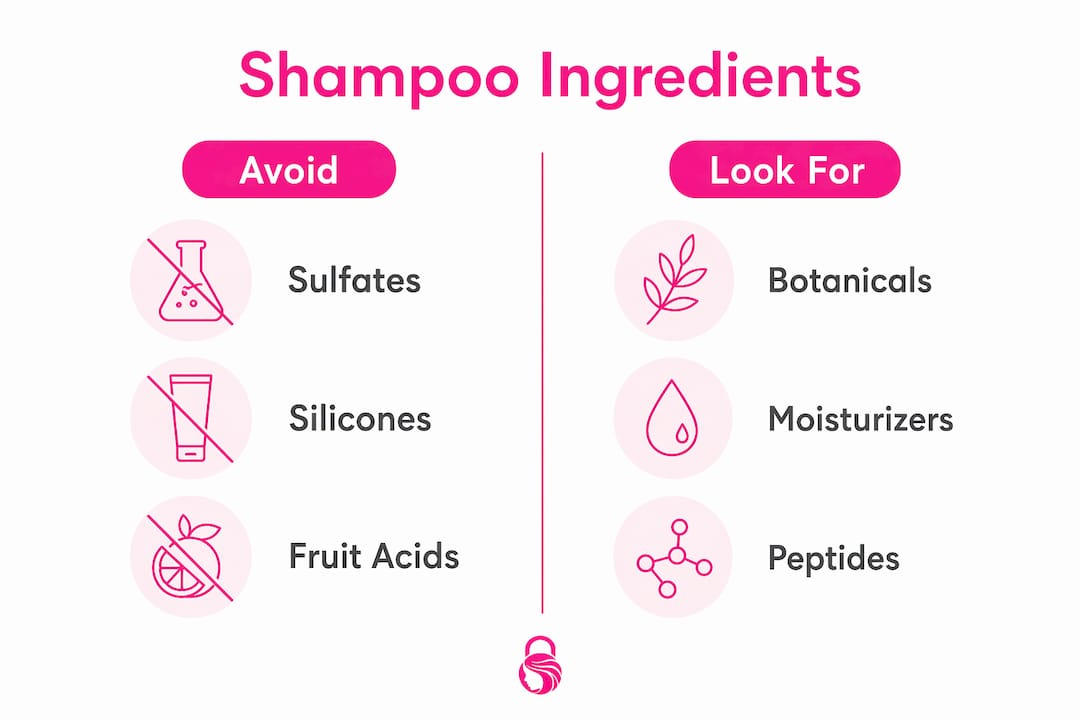
Reading an ingredient list takes thirty seconds and can save you from a costly mistake. The formulation is what separates a shampoo that protects your extensions from one that quietly destroys them.
Ingredients to avoid:
- SLS and SLES (sodium lauryl sulfate, sodium laureth sulfate): aggressive cleansers that weaken adhesives and strip moisture
- Sodium chloride (salt): dries out the hair shaft and can loosen tape bonds
- Heavy silicones (dimethicone, cyclomethicone): coat the hair and build up around attachment points
- Parabens: preservatives linked to dryness and scalp sensitivity
Ingredients that genuinely help:
- Hydrolyzed Quinoa and Propanediol: botanical-based ingredients that detangle and hydrate without adding weight
- Plant-based peptides: support elasticity and strand resilience, particularly useful for extensions that cannot self-repair
- Natural oils and botanical extracts: provide moisture retention without the build-up risk of synthetic silicones
One category worth a specific warning: shampoos containing fruit acids, including popular brands like Aussie or Garnier Fructis, can be too harsh for extensions and should be avoided regardless of their sulfate status.
Pro Tip: Flip the bottle and scan the first five ingredients. If you see SLS, SLES, or sodium chloride in that opening list, put it back. The first five ingredients make up the bulk of any formula.
Detailed look at the top extension shampoos in Australia
HairLocks Premium 100% Human Hair Extensions Shampoo
Hairlockshairextensions developed this formula specifically for their own extension range, which means it was tested against the exact attachment methods their clients use: tape-in, keratin bond, and micro bead. It is sulfate-free, silicone-free, and built around moisturizing botanical ingredients that hydrate without coating the bond points. For anyone already wearing Hairlockshairextensions extensions, this is the most precisely matched option available. See the full care sheet for product pairing guidance.
Deep Muk Ultra Soft Shampoo
Deep Muk’s formula prioritizes softness, which makes it particularly well-suited to bonded extensions that need gentle, consistent moisture. The cleansing agents are mild enough to use regularly without compromising adhesive integrity, and the moisturizing agents leave the hair feeling noticeably softer after a single wash. It’s widely available through Australian salons and online retailers.
Davroe Moisture Senses Hydrating Shampoo
Davroe is an Australian brand, which means availability is never an issue. The Moisture Senses formula is built for daily hydration, with a balanced approach that supports both the extension hair and the natural hair underneath. It’s a practical choice for extension wearers who wash frequently and need a formula that won’t over-dry with repeated use.
Pure Goddess Shampoo
Available through Hairhouse in Australia, Pure Goddess keeps things straightforward: natural ingredients, no sulfates, and a focus on maintaining softness and shine. It suits extension wearers who want a clean, simple formula without a long ingredient list to decode. The price point is accessible, making it a solid everyday option.
EVO The Therapist Hydrating Shampoo
EVO’s plant-based peptides are the standout feature here. Peptides support the hair’s structural integrity, which matters for extensions because they cannot self-repair the way natural hair does. The sulfate-free cleansing agents maintain moisture balance while still delivering a thorough clean. EVO is well-distributed across Australia through professional salon suppliers and online.
How to choose the right shampoo based on your extension type
Not every sulfate-free shampoo suits every attachment method. The way your extensions are attached changes what your shampoo needs to do.
Tape-in extensions are the most adhesive-sensitive. Any formula with oils near the roots or heavy conditioning agents can loosen the tape. Stick to lightweight, sulfate-free options and apply shampoo in downward strokes rather than scrubbing at the bonds.
Keratin bond extensions need moisture but are sensitive to anything that softens the keratin tip. Avoid protein-heavy shampoos if your bonds are already strong; excess protein can make the hair brittle over time.
Micro bead and nano bead extensions tolerate a slightly richer formula since there’s no adhesive to dissolve, but build-up around the bead is still a concern. Choose a formula free of heavy silicones. The micro bead extension range from Hairlockshairextensions pairs well with lightweight botanical shampoos for exactly this reason.
Clip-in extensions are the most forgiving since they’re removed before washing. Still, sulfate-free formulas preserve the hair longer between washes.
Shampoo selection checklist:
- Confirm the formula is sulfate-free (SLS and SLES free)
- Check for sodium chloride, especially for tape-in wearers
- Avoid silicone-heavy formulas if you wear bead-attached extensions
- Choose lightweight moisture over heavy conditioning agents for bonded types
- Wash in the direction of the hair growth, never in circular motions at the bonds
How Hairlockshairextensions approaches extension care
Michele, the founder of Hairlockshairextensions, brings 30 years of hands-on experience to every product recommendation and client consultation. That depth of knowledge shapes how Hairlockshairextensions approaches shampoo selection: not as a generic recommendation, but as a decision tied to the specific extension type, attachment method, and the client’s natural hair condition.
Every product Hairlockshairextensions recommends has been tested against their own extension range; for detailed guidance, see their Hair Transplant Aftercare Guide which offers expert advice on maintaining hair health after treatments. The care advice isn’t theoretical. It comes from seeing what actually happens to extensions over months of wear when the wrong products are used, and what happens when the right ones are.
Professional care tips from Hairlockshairextensions:
- Use a personalized color matching service to ensure your shampoo and extension type are perfectly aligned
- Wash extensions no more than two to three times per week to preserve moisture balance
- Always detangle gently before washing, working from ends to roots
- Apply shampoo in downward strokes and rinse thoroughly to prevent residue build-up at bonds
- Follow every wash with a sulfate-free conditioner applied mid-length to ends only
How water quality in Australia affects your shampoo’s performance
Australia’s water quality varies significantly by region, and it has a real effect on how well your extension shampoo performs. Hard water, which is common in cities like Adelaide, Perth, and parts of Melbourne, contains elevated levels of calcium and magnesium minerals. These minerals bind to the hair shaft and create a film that makes extensions feel rough, dull, and harder to detangle, even when you’re using a good sulfate-free shampoo.
In hard water areas, a clarifying rinse or a chelating shampoo used occasionally can remove mineral build-up without stripping the hair. Look for formulas containing citric acid or EDTA, which bind to minerals and lift them from the strand. Use these sparingly, as they are stronger than your regular extension shampoo.
Soft water, more common in parts of Queensland and New South Wales, is gentler on extensions and allows moisturizing ingredients to penetrate more effectively. If you’re in a soft water area, your sulfate-free shampoo will likely perform closer to its full potential without any additional steps. Checking your local council’s water quality report takes minutes and can explain a lot about why your extensions feel the way they do after washing.
Hairlockshairextensions offers premium extensions built for long-term care
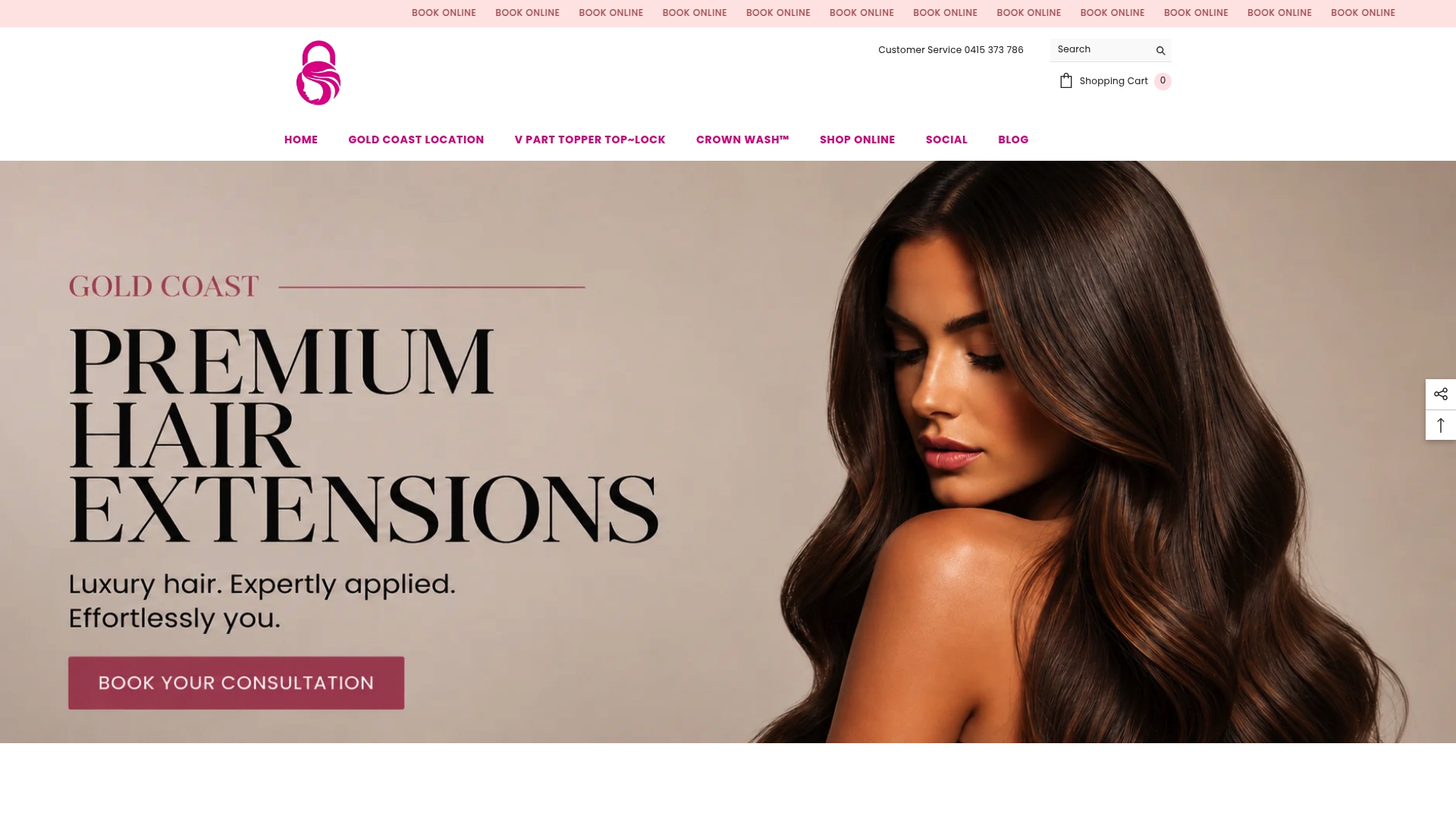
Choosing the right shampoo matters most when your extensions are worth protecting. Hairlockshairextensions supplies 100% human hair extensions, including weft, nano bead, micro bead, and keratin bond styles, along with the exclusive Top~Lock V-Part Topper for those experiencing thinning hair. Every extension is matched to the client’s natural hair through a free personal color consultation, and each purchase comes with detailed care guidance so you know exactly which products to use and how.
The difference between extensions that last six months and ones that last twelve often comes down to the care routine established from day one. Hairlockshairextensions builds that routine into the purchase experience. Browse the extension gallery to see real client results, or visit Hairlockshairextensions to find the right extension type for your hair and get personalized care advice from Michele’s team.
Key Takeaways
Sulfate-free, moisturizing shampoos are the single most important product choice for protecting hair extension bonds, preserving softness, and extending the lifespan of any extension type.
| Point | Details |
|---|---|
| Avoid sulfates and silicones | SLS, SLES, sodium chloride, and heavy silicones damage bonds and strip moisture from extensions. |
| Choose botanical formulas | Ingredients like Hydrolyzed Quinoa and Propanediol hydrate and detangle without weighing extensions down. |
| Match shampoo to extension type | Tape-in extensions need lightweight formulas; bead extensions need silicone-free options to prevent build-up. |
| Account for water hardness | Hard water in cities like Adelaide and Perth can reduce shampoo effectiveness; a chelating rinse helps. |
| Hairlockshairextensions | Offers tested, sulfate-free shampoo formulated specifically for their human hair extension range, with personalized care guidance included. |
FAQ
What kind of shampoo is best for extensions?
A sulfate-free, silicone-free shampoo with moisturizing botanical ingredients is best for extensions. These formulas cleanse gently without dissolving adhesives or stripping moisture from the hair shaft.
Do you need a special shampoo for hair extensions?
Yes. Regular shampoos often contain sulfates and silicones that weaken extension bonds and cause build-up, so a formula specifically designed for extensions is strongly recommended.
Is Aussie shampoo safe for extensions?
No. Shampoos containing fruit acids, including Aussie, can be too harsh for extensions and may accelerate damage to both the hair and the attachment points.
How do I keep my extensions soft and silky?
Wash with a sulfate-free shampoo two to three times per week, follow with a moisturizing conditioner applied mid-length to ends, and detangle gently before every wash. Over-washing dries extensions out, so frequency matters as much as formula.
Which shampoo does Hairlockshairextensions recommend for their extensions?
Hairlockshairextensions recommends their own premium sulfate-free shampoo, formulated and tested specifically for their tape-in, keratin bond, and micro bead extension range, with full care guidance provided at purchase.