

Extension Friendly Hair Products: Your 2026 Australia Guide
What makes a hair product safe for extensions?
Extension friendly hair products are formulated to clean, condition, and protect hair extensions without weakening bonds, dissolving adhesives, or stripping moisture. The core principle is simple: gentle formulas that do nothing to compromise the attachment point while keeping the hair itself soft and manageable.
Key features to look for:
- Sulfate-free formula: Sulfates strip moisture aggressively and can degrade tape adhesives and keratin bonds over time.
- Lightweight texture: Heavy products weigh down extensions and cause buildup near attachment points.
- Alcohol-free or low-alcohol: Drying alcohols like SD Alcohol 40, ethanol, and isopropyl pull moisture from the hair shaft, leaving extensions brittle.
- Silicone-free or light silicone: Heavy silicones coat the hair and attract buildup, dulling shine and causing tangling.
- No heavy oils: Castor oil and mineral oil sit on the surface, attract dust, and can loosen bonds when they migrate upward.
The payoff for choosing the right products is real: extensions stay softer longer, bonds hold more reliably, and the overall look stays salon-fresh between appointments.
Which types of products are safe to use on extensions?
Not every product category carries the same risk. Knowing what to look for in each type saves you from costly mistakes.
Shampoos should be sulfate-free and pH-balanced. A shampoo with a pH of 5.5–6.5 keeps the hair cuticle closed and reduces porosity issues common in chemically treated extension hair. Apply only to the scalp and lengths, never massaged into bonds or tape tabs.
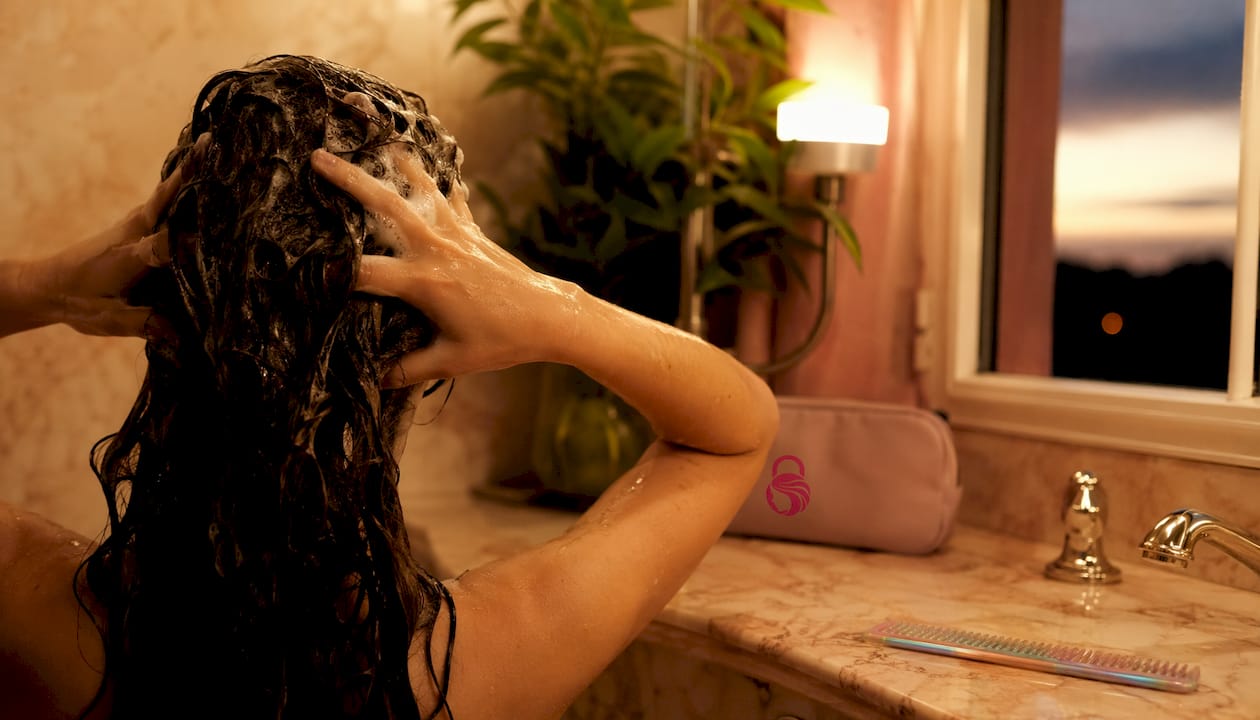
Conditioners work best when they are lightweight and free of heavy proteins or keratin coatings, which can cause breakage in extension wearers over time. Apply from one inch below the roots down to the ends, and comb through with a wide-tooth comb for even distribution.
Oils for hair extensions require the most care in selection. Argan oil is the most widely recommended choice: it absorbs into the hair shaft rather than sitting on the surface, controls frizz, and adds shine without greasiness. Jojoba oil mimics the structure of natural sebum, making it ideal for fine or thin extensions that go limp easily. Macadamia oil suits very dry or heat-damaged extensions with its Omega-7 fatty acid content. Avoid castor oil and olive oil as leave-in treatments; both are too heavy and attract dirt.
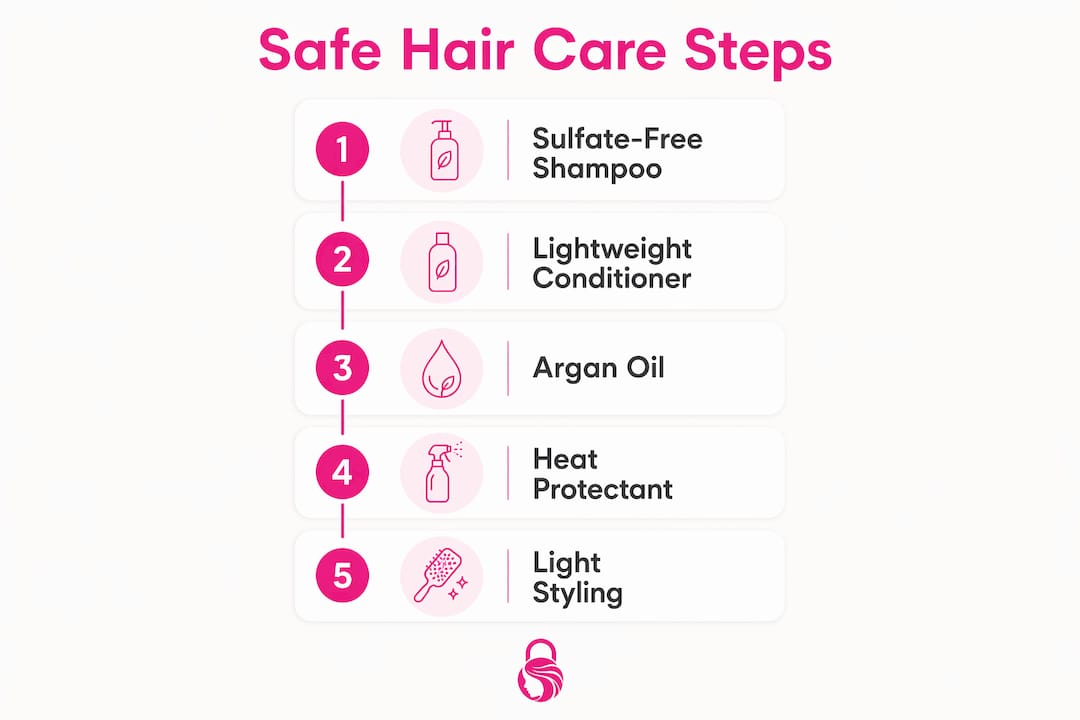
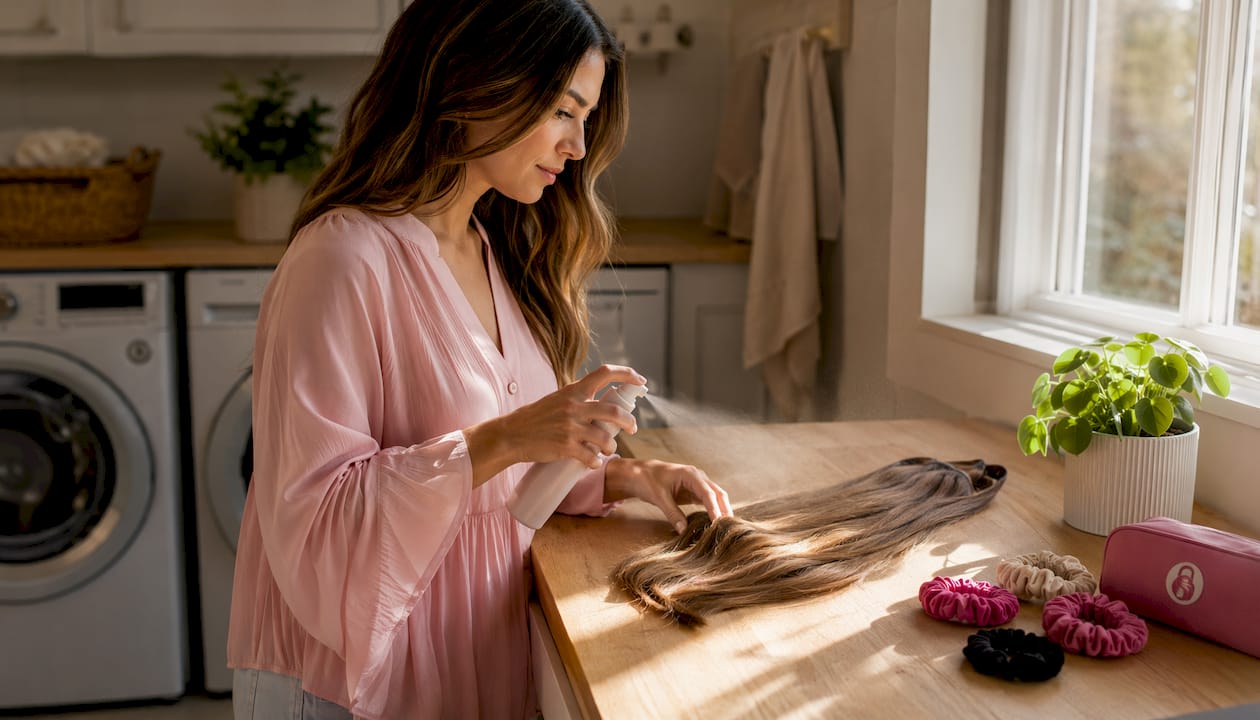
Heat protectants for extensions must form a genuine thermal barrier. Products designed for extensions protect against temperatures up to 450°F, reducing breakage and moisture loss during blow-drying or flat ironing. Apply before every heat styling session without exception, because thermal damage to extensions is permanent.
Styling products should be light mousses or sprays. Avoid anything with a thick, waxy, or gel-like consistency near the roots.
How to apply hair products on extensions correctly
Getting the application right matters as much as choosing the right product. Applying even a good formula in the wrong place can loosen bonds and shorten extension life significantly.
- Wet hair thoroughly before shampooing. Saturate the hair completely with warm water before adding any product. This activates lather with less product, reducing the risk of buildup.
- Apply shampoo to the scalp only. Work it gently through the roots with your fingertips. Let the lather rinse down the lengths naturally rather than scrubbing mid-shaft or near bonds.
- Apply conditioner from mid-length to ends. Start at least one inch below the attachment point. Use a wide-tooth comb to distribute evenly, then rinse thoroughly.
- Pat dry with a microfiber towel. Rubbing creates friction that tangles extensions and stresses attachment points. Squeeze gently from roots to ends.
- Apply heat protectant before any heat tool. Spray or smooth it through damp mid-lengths and ends before blow-drying. Never skip this step, even for a quick dry.
- Finish with a micro-dose of lightweight oil. Once the hair is dry or nearly dry, apply a small amount of argan or jojoba oil from ear level down to the ends only. Keep it well below the attachment zone.
- Brush gently from ends upward. Start detangling at the tips and work toward the roots to avoid pulling on bonds.
Pro Tip: Apply oil only to dry or nearly dry hair, focusing on the bottom two inches of the lengths. Oil applied to wet hair before heat styling can heat up and damage the cuticle. Use a dedicated heat protectant first, style, then finish with oil.
Washing frequency matters too. Extensions do not need daily washing. Two to three times per week is typically sufficient, and washing less often actually extends the life of the bonds and the hair itself.
Trusted Australian brands and suppliers for extension care
Australia has a strong network of extension specialists who understand product compatibility at a professional level. These are the providers worth knowing.
- Samantha Harrison Hair Extensions & Education: Based on the Sunshine Coast, Samantha Harrison has earned a strong reputation with many five-star reviews and recognition as a top hair extension salon in Sunshine Coast. The brand offers a signature product range alongside professional education, with free shipping on orders over $250 and a 10-day return window.
- Melbourne Human Hair Extensions: This Melbourne specialist imports its own Remy human hair and backs it with an 18-month guarantee when aftercare instructions are followed. The team also offers professional training for technicians.
- Great Lengths Hair Extensions Australia & New Zealand: With over 30 years in the industry, Great Lengths supplies ethically sourced virgin Indian temple hair and professional aftercare products through a network of certified salons across Australia and New Zealand. Their cold-fusion bonding technology is designed specifically to minimize hair stress.
- Gorgeous Hair Wholesale Extensions & Salon Pty Ltd: A wholesale and retail supplier offering nano bead, invisible tape, and clip-in extensions with flexible payment options including ZipPay and AfterPay.
- Ari2 Hair Extensions: Specializes in permanent extensions and hair replacement systems for fine or damaged hair, with advanced UK training brought to the Australian and New Zealand market.
- Dulge Hair Extensions: An Australian-owned brand with over 11 years of expertise, a 4.6-star Google rating, a 30-day warranty, and AfterPay payment options. Their Remy human hair range is ethically sourced.
- Hairlockshairextensions: Based on the Gold Coast, Hairlockshairextensions offers weft, nano bead, micro bead, and keratin bond extensions alongside the exclusive Top~Lock V-Part Topper. Founder Michele brings 30 years of hands-on experience to every consultation, and the brand provides detailed extension care guidance to support clients between appointments.
- Bahcci Hair Extensions: A Sydney luxury boutique known for its proprietary INVISIbead™ and INVISItape™ systems using premium Russian and Island Luxe hair.
- Real Hair Co Hair Extensions Brisbane: A Brisbane-based provider focused on natural-looking results with professional aftercare support.
- Davroe: An Australian professional haircare brand formulating sulfate-free, extension-compatible shampoos and conditioners widely used by salons across the country.
For those also exploring lightweight serums that won’t interfere with bonds, the Voraly Bio-Active Veganic Serum is a lightweight option worth considering for mid-length and end application.
What Australian extension specialists say about product use
Professional advice from experienced Australian technicians consistently points to the same patterns: most premature extension failure comes down to product misuse, not product quality alone.
Common mistakes Australian specialists flag most often:
- Applying conditioner, oil, or serum directly onto tape tabs, keratin bonds, or bead attachment points, which causes slippage and weakens hold.
- Using heavy botanical oils as daily leave-ins, which creates buildup that dulls the hair and attracts lint and dust.
- Skipping heat protection before blow-drying, which causes irreversible dryness and brittleness in extension hair.
- Washing extensions daily, which accelerates bond degradation and dries out the hair faster than necessary.
- Choosing products by scent or packaging rather than reading the ingredient label for sulfates, heavy alcohols, and silicone content.
Ingredient transparency is a consistent trust signal among reputable Australian providers. Brands that list full ingredient decks and specify what their formulas do not contain give clients the information they need to make safe choices. If a product label does not clearly state “sulfate-free” and “paraben-free,” treat it as incompatible until confirmed otherwise.
Color matching is another area where professional guidance pays off. Hairlockshairextensions offers a free color matching service to help clients find extensions that blend naturally with their own hair, which also informs which product tones and formulas suit the specific hair type being used.
Ready to protect your extension investment?
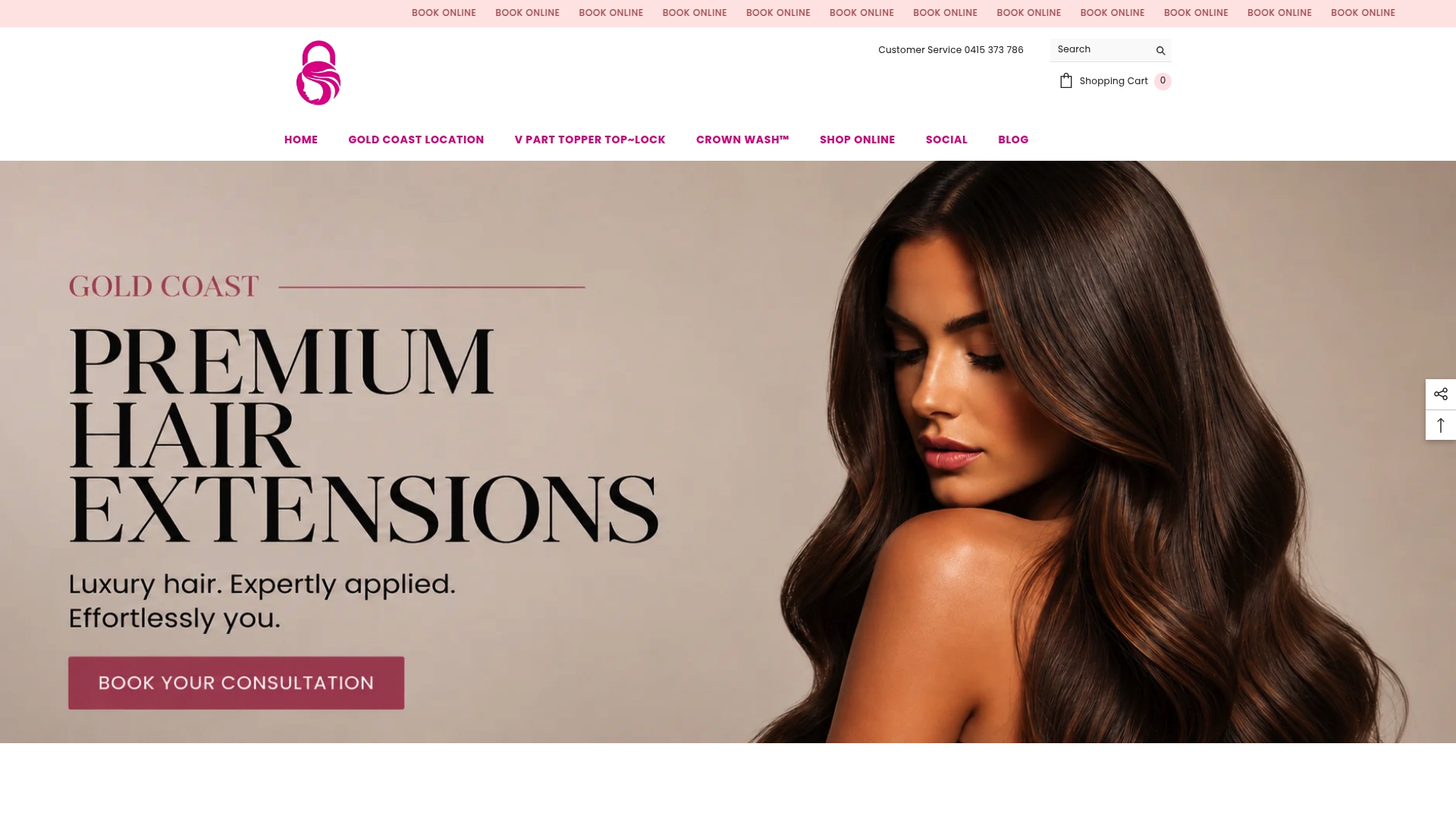
Hairlockshairextensions carries premium human hair extensions designed to work beautifully with the right aftercare routine. Whether you are starting fresh or looking to get more life from your current set, the team at Hairlockshairextensions can guide you to the right products and application methods for your specific extension type. Book a consultation to get personalized advice from Michele and her team.
Key Takeaways
Extension friendly hair products protect bonds, preserve softness, and extend the life of your extensions by avoiding sulfates, heavy oils, and drying alcohols.
| Point | Details |
|---|---|
| Sulfate-free is non-negotiable | Sulfates degrade tape adhesives and keratin bonds, shortening extension lifespan. |
| Apply from mid-length to ends only | Keep all products, especially oils and conditioners, away from attachment points to prevent slippage. |
| Heat protectants must be used every time | Thermal damage to extensions is permanent; apply a heat protectant rated up to 450°F before every styling session. |
| Argan and jojoba oils are the safest choices | Both are lightweight, absorb well, and add moisture without buildup or bond interference. |
| Wash two to three times per week | Washing less often preserves bonds and keeps extension hair hydrated longer. |
FAQ
What products can I use on hair extensions?
Use sulfate-free shampoos, lightweight conditioners, argan or jojoba oil on mid-lengths and ends, and a heat protectant spray before any heat styling. Avoid anything with heavy silicones, drying alcohols, or thick oils near the attachment points.
Can you put hair products on extensions?
Yes, but placement is everything. Apply shampoo to the scalp, conditioner from one inch below the roots to the ends, and oil only from ear level downward. Never apply product directly onto bonds, tape tabs, or bead attachment areas.
What are the best products for hair extensions?
The best options are sulfate-free, paraben-free shampoos, lightweight conditioners without heavy protein coatings, argan or jojoba oil for moisture, and a dedicated heat protectant rated for high temperatures. Davroe and Great Lengths both offer extension-compatible product lines available through Australian salons.
What products can you not use on extensions?
Avoid shampoos containing sulfates, conditioners with heavy keratin or protein deposits, castor oil or mineral oil as leave-ins, products with drying alcohols like ethanol or isopropyl, and any thick styling product applied near the roots or attachment points.
Recommended
- How to Make Hair Extensions Look Natural: The Professional Blending Gu – HairLocks Hair Extensions
- CARE SHEET – HairLocks Hair Extensions
- Professional Hair Extensions Gold Coast: The Ultimate Guide to Luxury – HairLocks Hair Extensions
- Before and After Hair Extensions Gallery - HairLocks – HairLocks Hair Extensions