

Best Extensions for Short Hair in Australia 2026
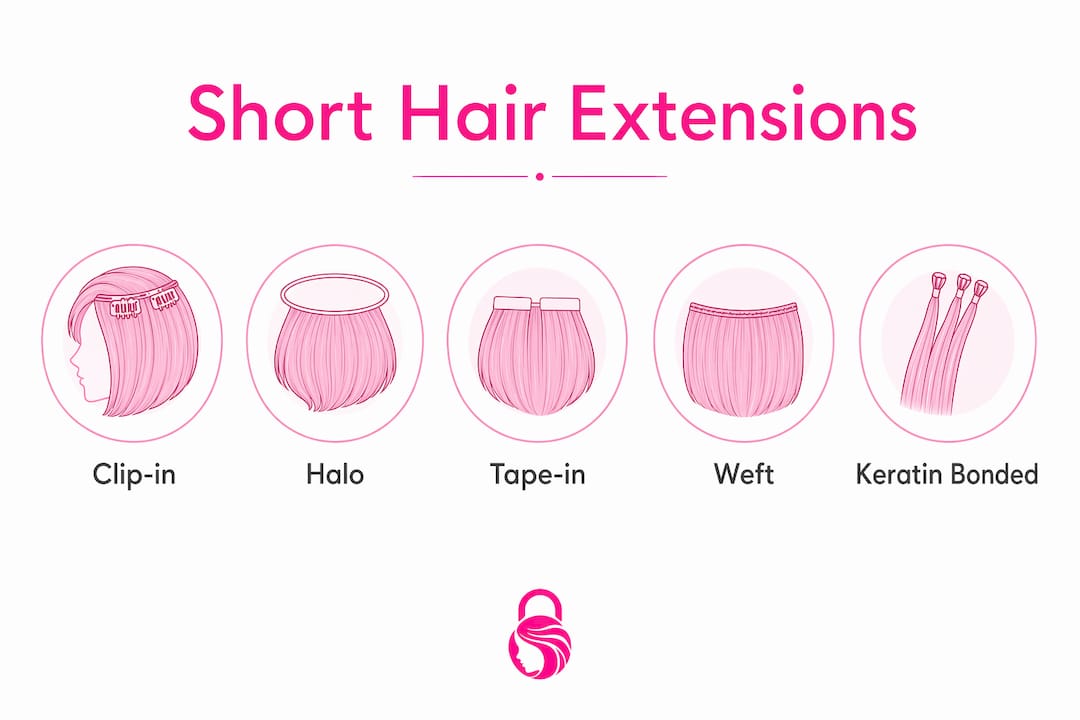
Short hair can absolutely wear extensions. The six methods that work best for short hair in Australia are clip-in, halo, tape-in, weft, microbead, and keratin bonded extensions. Each suits a different hair length, lifestyle, and commitment level. Here is a quick overview before we go deeper:
- Clip-in extensions: Temporary, zero damage, ideal for special occasions or first-timers with short hair
- Halo extensions: No clips or bonds, sit on a clear wire, great for fine or fragile short hair
- Tape-in extensions: Flat, lightweight, seamless blending for short to mid-length hair
- Weft extensions: Versatile rows of hair attached close to the scalp, good for adding both volume and length
- Microbead extensions: Small metal rings, no heat or glue, adjustable and reusable
- Keratin bonded extensions: The longest-lasting semi-permanent method, fused strand by strand
Cost in Australia ranges from affordable clip-ins at the lower end to premium keratin bonded sets at the higher end. Hairlockshairextensions, based in Sydney, offers all of these methods in 100% human hair with a free personal color matching service.
What are the best extensions for short hair? A full comparison
Choosing between methods comes down to how short your hair is, how much maintenance you can commit to, and whether you want a temporary or semi-permanent result. The table below covers the key decision factors for each method.
| Method | Duration | Damage risk | Cost range (AUD) | Ease of application | Maintenance | Suits very short hair | Available in Australia |
|---|---|---|---|---|---|---|---|
| Clip-in | Per wear | Very low | Low end | DIY at home | Low | Yes, with care | Yes |
| Halo | Per wear | None | Low to mid | DIY at home | Low | Yes | Yes |
| Tape-in | several weeks | Low | Mid range | Salon only | Moderate | Yes, chin length+ | Yes |
| Weft | several weeks | Low to moderate | Mid range | Salon only | Moderate | Yes, chin length+ | Yes |
| Microbead | months | Low | Mid to high | Salon only | Moderate to high | Yes, chin length+ | Yes |
| Keratin bonded | months | Moderate | High end | Salon only | High | Yes, chin length+ | Yes |
Clip-in extensions are the most forgiving option for short hair. They clip onto small sections of hair, add instant volume or length, and come out at night. No commitment, no salon visit, and no heat or chemicals involved. The trade-off is that very short hair may struggle to hide the clips, so a little layering helps.
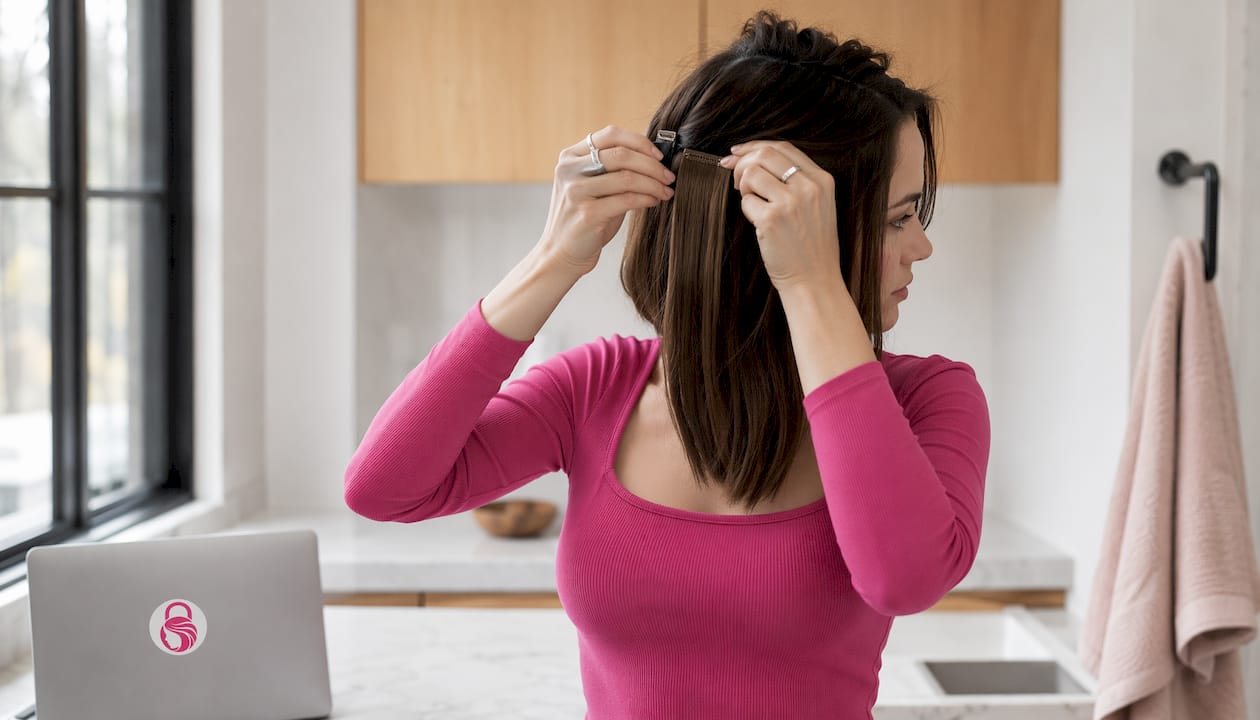
Halo extensions sit on a near-invisible wire that rests on the crown. Because nothing attaches directly to your hair, they carry zero damage risk. They work particularly well for fine or thinning short hair that cannot support clip pressure.
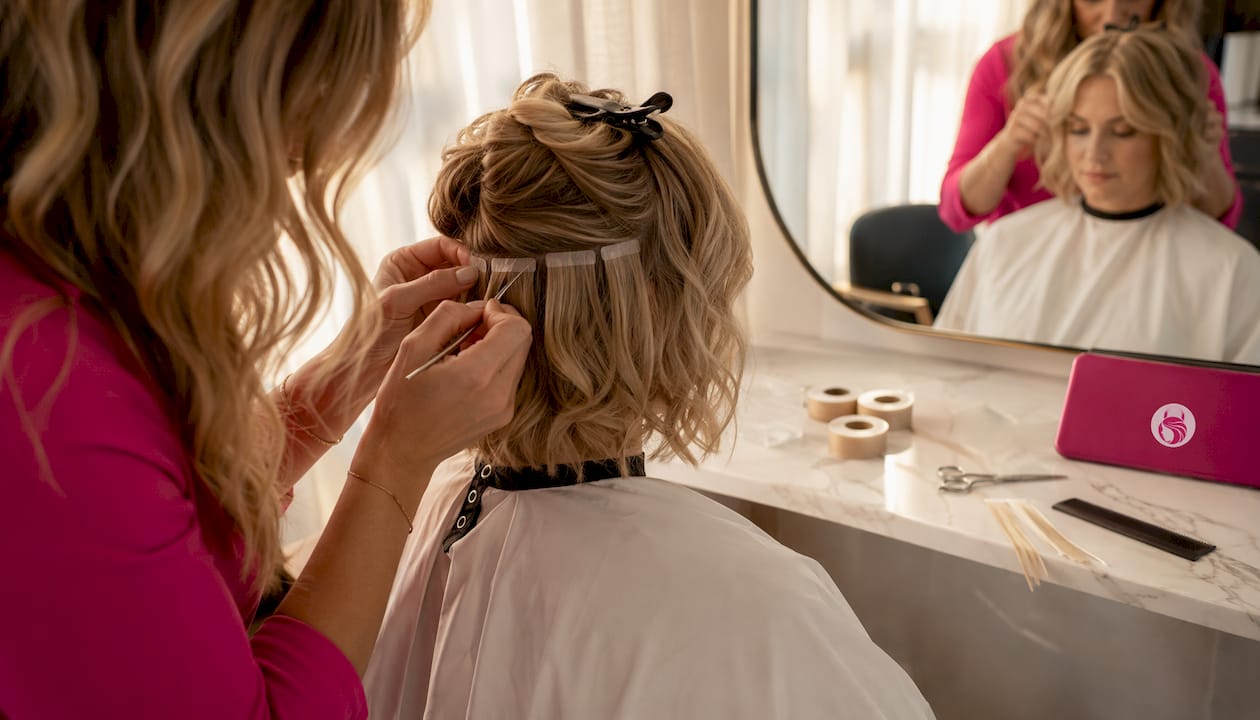
Tape-in extensions use thin adhesive panels that lie flat against the scalp. They are among the best choices for short hair because of their low bulk and natural movement. Reapplication every several weeks is standard.
Weft extensions are rows of hair sewn or bonded onto a track. One row adds volume without changing length; two or more rows add measurable length. Your stylist determines how many rows suit your natural density.
Microbead extensions use tiny silicone-lined rings to attach individual strands. No glue, no heat. They are adjustable as your hair grows and can be reused at each appointment.
Keratin bonded extensions fuse individual strands to your natural hair using a keratin protein bond. They last the longest of any method but require professional removal and carry a higher heat-related damage risk if not maintained properly.
How to choose the right hair extensions for your short hair
The single most important factor is your current hair length. Professional stylists recommend at least chin length for most semi-permanent methods, so your natural hair can cover the attachment points. Shorter than chin length generally limits you to clip-ins or a halo.
Beyond length, consider these factors before purchasing:
- Your goal: One row of extensions adds volume and thickness without changing length. Two or more rows add actual length. Be clear on which outcome you want before choosing a method.
- Hair texture and density: Fine or thin hair suits lightweight methods like halo or tape-in. Thicker hair can support microbead or keratin bonded without the bonds showing.
- Maintenance tolerance: Clip-ins and halo extensions can be managed entirely at home. Microbead and keratin bonded methods need regular salon visits for upkeep and repositioning.
- Budget: Clip-ins sit at the affordable end of the spectrum. Keratin bonded sets, including application and maintenance, sit at the premium end. Factor in ongoing costs, not just the initial purchase.
- Color and texture match: 100% human hair extensions blend far more naturally than synthetic alternatives, especially for short hair where any mismatch is immediately visible.
Hairlockshairextensions offers a free color matching service that pairs you with the right shade before you commit to a purchase. Getting color right the first time saves both money and frustration.
Pro Tip: Avoid heavy extension sets on very short hair. The weight can strain fine strands at the root, causing breakage over time. Lightweight tape-in or halo methods are the safer starting point for hair under chin length.
How to apply and maintain extensions on short hair
Preparation makes the biggest difference in how natural extensions look on short hair. Start with clean, dry, product-free hair before any application. Product residue weakens adhesive bonds and reduces clip grip.
For application:
- Section hair horizontally, starting from the nape and working upward
- Place attachment points at least 1 cm from the hairline so bonds stay hidden
- For clip-ins, tease the root of each section slightly before clipping for a more secure hold
- Match the width of each weft or tape panel to the section of hair it covers
For ongoing care, follow the extension care guide recommended for your specific method. General rules apply across all types:
- Brush from ends to roots using a loop or extension-safe brush
- Wash with sulfate-free shampoo and avoid applying conditioner directly to bonds or tape
- Sleep with hair in a loose braid to prevent tangling overnight
- Avoid excessive heat directly on attachment points
Safe removal matters as much as application. Clip-ins and halo extensions simply come out by hand. Tape-in panels require a bond remover solution applied carefully before peeling. Microbead rings open with a flat tool. Keratin bonds need a professional keratin remover and should never be pulled or cut out at home. Forcing any bond out risks taking your natural hair with it.
Why the blending haircut makes or breaks your extensions
Every experienced stylist agrees on one thing: the blending haircut is not optional. Without it, extensions on short hair create a visible “shelf” line where your natural hair ends and the extensions begin. A skilled stylist removes that line with layering and texturizing cuts that graduate the two lengths together.
Getting extensions without a blending cut is like buying a tailored suit and wearing it unaltered. The raw material might be perfect, but the finish gives it away. Michele, founder of Hairlockshairextensions, brings 30 years of experience to every consultation, and the first question she asks is always about the cut, not the color.
Clients consistently underestimate how much the blending cut contributes to the final result. The extensions themselves can be flawless in color and texture, but if the natural hair beneath them is blunt or one-length, the transition will show. Layering softens the perimeter, texturizing removes bulk, and both work together to make the join invisible.
Pro Tip: Book your blending cut at the same appointment as your extension application. Trying to add extensions first and cut later often means removing and repositioning bonds, which adds cost and time.
Maintaining healthy natural hair underneath also supports long-term extension wear. Products designed for hair growth and scalp health can help keep your base hair strong between salon visits, which matters especially for fine or short hair that carries the weight of extensions.
Hairlockshairextensions: premium extensions for short hair in Australia
Thirty years of hands-on expertise is what separates a good extension result from a great one. Hairlockshairextensions, founded by Michele and based in Sydney, offers 100% human hair extensions across every method covered in this article, including weft, microbead, keratin bonded, and clip-in styles, plus the exclusive Top~Lock V-Part Topper for clients dealing with thinning at the crown.
What makes Hairlockshairextensions the right fit for short hair clients specifically is the personalized consultation process. Michele’s team assesses your current length, density, and goals before recommending a method, so you never end up with extensions that are too heavy, too long, or the wrong color for your hair. The free color matching service removes the guesswork entirely. Browse the before and after gallery to see real short hair transformations, then book your consultation to get started.
Key Takeaways
Clip-in and halo extensions are the safest starting point for very short hair, while tape-in, weft, microbead, and keratin bonded methods suit chin-length and longer hair with the right professional application and a blending haircut.
| Point | Details |
|---|---|
| Minimum length matters | Most semi-permanent methods need at least chin-length hair to cover attachment points for best blending. |
| Match method to lifestyle | Clip-ins and halo suit low-maintenance needs; microbead and keratin bonded require regular salon visits. |
| Blending cut is non-negotiable | A layering or texturizing cut removes the visible shelf line between natural hair and extensions. |
| Color match first | 100% human hair extensions with a professional color match look natural; mismatched color shows immediately on short hair. |
| Hairlockshairextensions | Offers all major extension methods in 100% human hair, with free color matching and personalized consultations in Sydney. |
FAQ
What type of extensions are best for short hair?
Tape-in and halo extensions are generally the best starting point for short hair because both are lightweight and low-bulk. For hair at chin length or longer, microbead and weft methods also work well with professional application to ensure a natural blend.
Can you get extensions on really short hair?
Yes, though options narrow with very short hair. Clip-in and halo extensions work on shorter lengths because they do not require attachment points hidden by natural hair. Most semi-permanent methods need at least chin-length hair for a clean blend, so the natural hair can cover attachment points effectively.
How much do hair extensions cost in Australia?
Costs vary by method and quality. Clip-ins sit at the more affordable end of the range, while keratin bonded sets with professional application sit at the premium end. Hairlockshairextensions publishes current pricing on its booking page.
What is the 2-inch rule for short hair extensions?
Stylists use a length guideline to ensure enough natural hair below each attachment point to keep the bond or weft hidden; this helps determine if a client’s hair is long enough for semi-permanent methods.
Recommended
- Luxury Hair Extensions Gold Coast | Seamless Invisible Blends – HairLocks Hair Extensions
- Clip In Hair Extensions Gold Coast Range | HairLocks Shop Australia – HairLocks Hair Extensions
- Clip In Hair Extensions - HairLocks Hair Extensions
- Before and After Hair Extensions Gallery - HairLocks – HairLocks Hair Extensions