


Hair Extension Lifespan: Your 2026 Australian Guide
Hair extensions in Australia generally last several months depending on the method, hair quality, and how consistently you maintain them. That range covers the hair itself, not the installation. The installation, meaning how long the extensions stay positioned before needing a salon visit, is a separate and shorter window, typically 6–10 weeks. Confusing the two is the most common mistake clients make when budgeting for extensions.
Here’s a quick orientation by method:
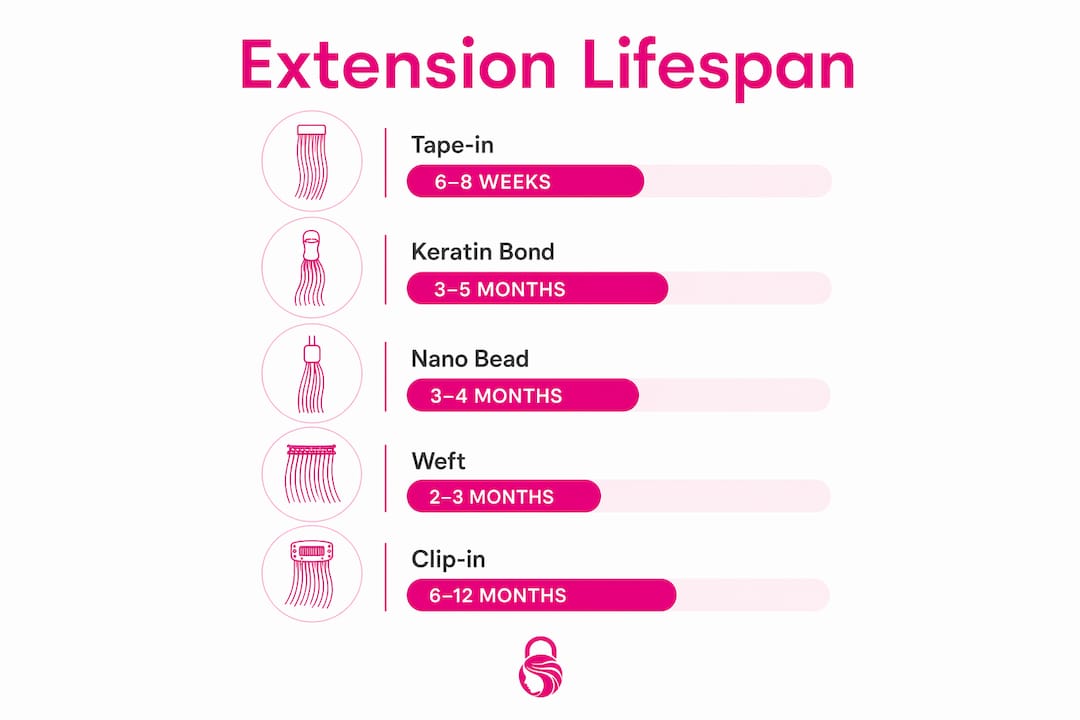
- Tape-in extensions: 6–8 weeks between maintenance; hair lasts 6–12 months with proper care
- Keratin bond (K-tip) extensions: 3–5 months per application; hair is generally not reusable
- Nano and micro bead extensions: move-up appointments every 6–8 weeks; hair lasts up to 12 months
- Weft extensions (hand-tied or machine-sewn): maintenance every 6–10 weeks; weft hair lasts 6–12 months
- Clip-in extensions: no installation interval; hair lasts 3–12 months depending on wear frequency
- Hair toppers (V-Part style): reapplication every 2–3 weeks; full reinstall every 6–8 weeks
Six recognized Australian salons and suppliers active in this space include Carla Lawson Hair Extensions, Melbourne Human Hair Extensions, Ari2 Hair Extensions, Dulge Hair Extensions, Hairlockshairextensions, and BLEND Hair Extensions & Salon. Each reports lifespans consistent with the ranges above, though hair quality tier plays a significant role.
How long do different extension types last in Australia?
Extension type is the single biggest variable in how long your hair lasts, but installation quality runs a close second.
Tape-in extensions
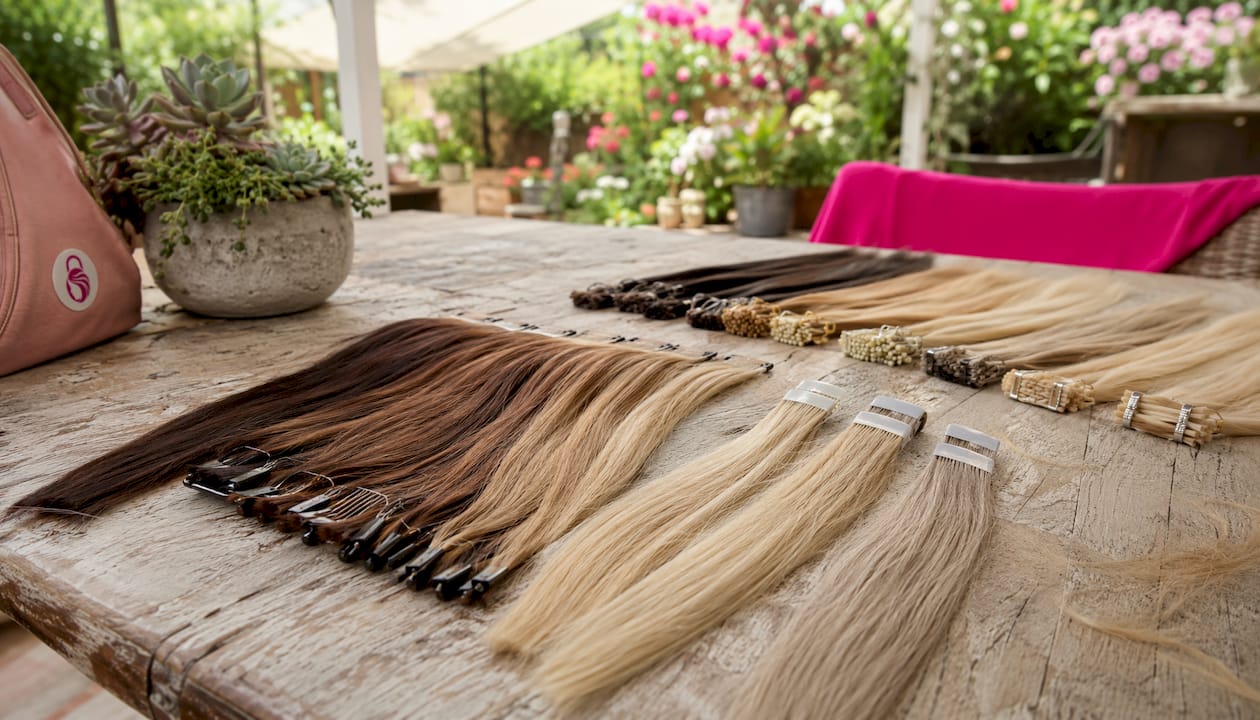
Tape-ins are among the most popular methods in Australian salons, valued for their lightweight feel and natural blend. Carla Lawson Hair Extensions notes they require maintenance every 6–8 weeks, with the hair remaining usable for 6–12 months. The tape adhesive breaks down from natural scalp oils over time, which is why professional removal and re-taping are necessary rather than optional.
Care tips for tape-ins:
- Wash with sulfate-free shampoo only; sulfates degrade the adhesive bond faster
- Avoid applying conditioner or oil near the tape bonds
- Never sleep with wet hair; moisture weakens the tape and encourages matting
Keratin bond extensions
Keratin bond, or K-tip, extensions use a heat-activated keratin polymer fused to individual strands of your natural hair. They last 3–5 months per application and are generally a one-time-use method. Once removed, the bonds cannot be reused, so you purchase a new set for each application. The trade-off is a very natural, strand-by-strand result that blends well with most hair types.
Nano and micro bead extensions
Hairlockshairextensions specializes in invisible nano and micro bead extensions that require professional reapplication every 2–3 weeks and a full reinstall every 6–8 weeks. The bead slides down as your natural hair grows, so timely move-up appointments keep tension balanced and prevent stress on the follicle.
Weft extensions
Weft extensions, whether hand-tied or machine-sewn, attach horizontally across the head and are among the most versatile methods. Hand-tied wefts suit fine to medium hair and last several months; machine-sewn wefts work better for medium to thick hair and last many months with proper care. Both require move-up appointments every 6–10 weeks. Sew-in wefts, where the weft is stitched onto braided cornrows, follow a similar 6–8 week maintenance window.
Care tips for wefts:
- Use a loop brush or extension-safe paddle brush, starting from the ends
- Sleep in a low, loose braid on a silk pillowcase to reduce friction
- Air dry whenever possible; heat accelerates cuticle damage
Clip-in extensions
Clip-ins are the only truly temporary option. Because you remove them nightly, they experience far less wear than permanent methods. With daily use, expect a few months of life. Worn occasionally for events or weekends, high-quality human hair clip-ins can last longer with proper care. Dulge Hair Extensions offers 100% Remy clip-ins with a 30-day warranty, and Melbourne Human Hair Extensions backs their premium Remy range with an 18-month guarantee when clients follow their aftercare instructions.
Hair quality tiers and lifespan
BLEND Hair Extensions & Salon grades their range into three tiers with clear lifespan guidance: Standard Remy lasts 6+ months, Premium Remy 12+ months, and Luxury Russian 18–22 months with proper care. Investing in a higher quality tier reduces how often you replace the hair, which often offsets the higher upfront cost over time.
| Extension Type | Maintenance Interval | Hair Lifespan |
|---|---|---|
| Tape-in | Regular maintenance every few weeks | Lasts several months |
| Keratin bond (K-tip) | Several months per application | Not reusable |
| Nano/micro bead | Maintenance every few weeks | Lasts many months |
| Hand-tied weft | Maintenance every several weeks | Lasts several months |
| Machine-sewn weft | Maintenance every several weeks | Lasts many months |
| Clip-in | No fixed maintenance interval | Lifespan varies with use |
| Luxury Russian hair | Maintenance every several weeks | Lasts over a year |
What factors shorten extension life, and how do you protect yours?
The method matters, but daily habits determine whether your extensions reach the top or bottom of their lifespan range.
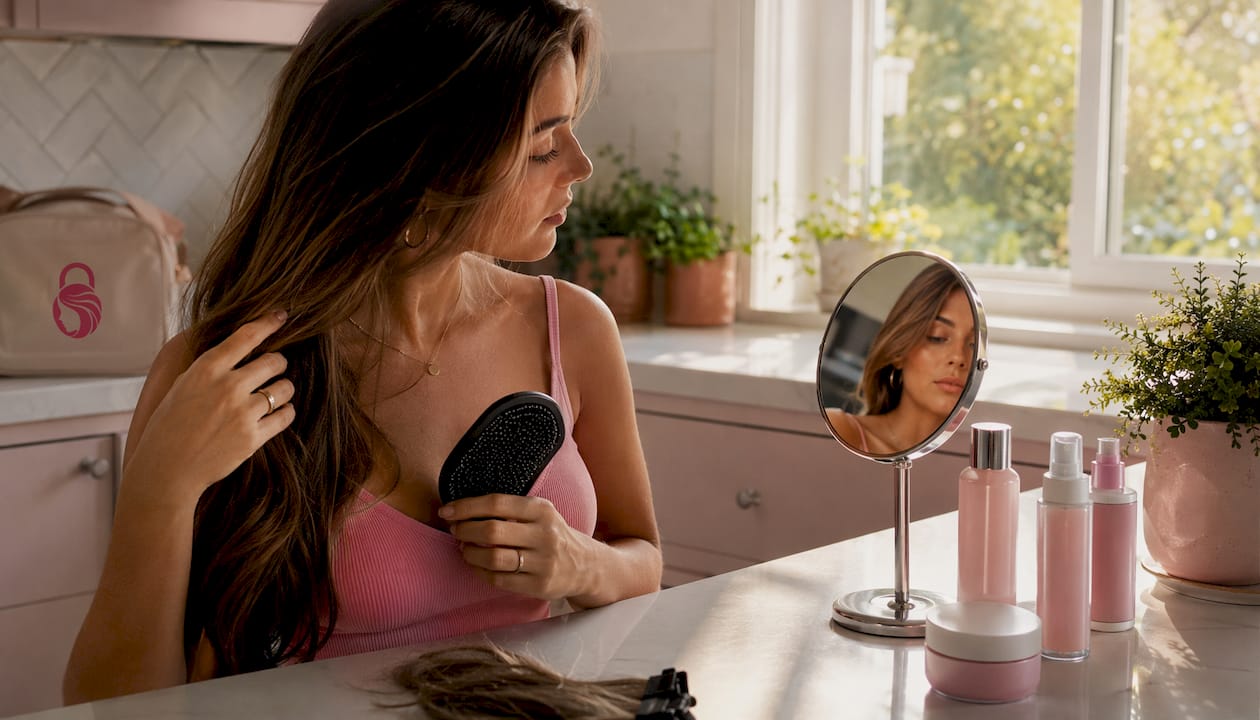
Environmental factors are underestimated in Australia’s climate. High humidity softens tape bonds and causes frizz in extension hair that can no longer self-repair with natural oils. UV exposure from the sun degrades the hair cuticle over time, making extensions feel dry and brittle faster than they would indoors. Chlorine from pools and salt from the ocean both strip moisture aggressively. Rinse extensions thoroughly after swimming and apply a leave-in conditioner before entering the water.
Styling habits have a direct impact. Heat tools used frequently accelerate cuticle breakdown. Always apply a heat protectant, keep tools below 180°C, and air dry when you can. Washing extensions more than twice a week removes the natural oils that keep the hair supple, even though extension hair cannot replenish those oils the way your scalp does.
Hair texture and condition also play a role. Clients with fine or fragile natural hair may experience more tension at attachment points, which can shorten the comfortable wear window. Ari2 Hair Extensions, with advanced training in hair replacement, specifically addresses thickness enhancement for fine or damaged hair, recognizing that the base hair’s health affects how long extensions can safely stay in.
Care tips to maximize lifespan:
- Use sulfate-free, extension-safe shampoo and conditioner every wash
- Detangle gently from ends upward before washing
- Apply a quality hair care product between salon visits to maintain moisture
- Avoid applying oils or serums directly on bonds or tape
- Never go to bed with wet extensions
Pro Tip: Natural hair sheds 50–100 strands daily. Those shed hairs accumulate inside extension bonds and wefts. After roughly 10 weeks, you can have thousands of shed strands trapped in your extensions. Without professional removal, they tangle around the attachment and cause matting that is painful and damaging to remove. Scheduled salon visits are a health measure, not just a cosmetic one.
When should you replace your hair extensions?
Replacement timing depends on both the method and the condition of the hair, not just the calendar.
For permanent methods, the installation grows out with your natural hair. Tape-ins and wefts need repositioning every 6–8 weeks regardless of how the hair looks. Waiting longer than recommended allows shed hair to accumulate and tension to shift toward the mid-shaft, which risks breakage. Keratin bonds that have grown more than an inch from the scalp should be removed promptly.
The hair itself signals when it’s time for a new set. Watch for these signs:
- Persistent tangling that does not resolve after washing and conditioning
- Rough texture even after a deep conditioning treatment
- Excessive frizz or “expansion” compared to your natural hair
- Loss of curl retention when styled with heat
- Visible matting at the attachment points
- Slipping bonds or tapes that no longer hold securely
From a cost perspective, replacing extension hair before it deteriorates completely protects your natural hair underneath. Matted or tangled extensions that are left too long require more aggressive removal, which can cause breakage at the root. The cost of a new set is almost always less than the cost of repairing damaged natural hair.
Clients who commit to scheduled maintenance appointments consistently get more total wear from their extensions than those who stretch intervals. A 6-week check-in that takes an hour is far less disruptive than an emergency removal and reinstall.
Michele’s expert perspective on getting the most from your extensions
Michele, founder of Hairlockshairextensions, brings 30 years of experience to every client consultation. Her core philosophy is that no single extension method works for everyone, and choosing the wrong one based on trend rather than hair type is the leading cause of premature wear and unnecessary damage.
Hairlockshairextensions offers weft, nano bead, micro bead, and keratin bond extensions, along with the exclusive Top~Lock V-Part Topper for clients experiencing thinning hair. The Top~Lock requires its own specific care schedule, with reapplication every 2–3 weeks and a full reinstall every 6–8 weeks, to maintain both scalp health and a discreet, natural appearance.
Michele’s insider tips for clients:
- Match your extension method to your maintenance commitment before your budget
- Book a personal colour matching consultation before purchasing to avoid mismatched blends that age faster visually
- Ask your technician specifically about the shed hair accumulation timeline for your chosen method
- Treat extensions as an investment: the more consistently you maintain them, the longer they last
Hairlockshairextensions also offers a free personal hair colour matching service, which helps clients avoid the common mistake of purchasing extensions that look natural in photos but don’t blend with their actual hair color in person. A poor color match accelerates the perception of wear even when the hair itself is in good condition.
Ready to find the right extension method for your hair type and lifestyle? Explore the full range at Hairlockshairextensions or browse the before and after gallery to see real results. Book a consultation to get Michele’s personalized guidance on which method will give you the longest, healthiest wear.
Key Takeaways
The hair extension lifespan in Australia varies widely depending on hair quality tier, extension method, and how consistently you follow a professional maintenance schedule.
| Point | Details |
|---|---|
| Installation vs. hair lifespan | Installation lasts 6–10 weeks; the hair itself lasts 6–22 months depending on quality tier and care. |
| Method determines maintenance | Tape-ins need salon visits every 6–8 weeks; nano beads every 2–3 weeks; clip-ins have no fixed interval. |
| Hair quality tier matters | Standard Remy lasts 6+ months; Premium Remy 12+ months; Luxury Russian 18–22 months with proper care. |
| Shed hair is a health risk | Natural shedding of 50–100 strands daily accumulates in bonds; professional removal every 6–10 weeks prevents matting. |
| Match method to lifestyle | Choosing the wrong method for your hair type or schedule shortens lifespan and increases damage risk. |
FAQ
What is the lifespan of hair extensions?
Hair extensions last several months on average, with higher-end types potentially lasting over a year with proper care. The installation itself needs repositioning every 6–10 weeks as your natural hair grows.
Am I too old for hair extensions?
Age is not a barrier to wearing extensions. The key factors are your natural hair’s density, scalp health, and your ability to maintain a regular salon schedule, not your age.
Are extensions damaging for your hair?
Extensions are not inherently damaging. Damage comes from poor installation, skipped maintenance appointments, or a method that doesn’t suit your hair type. Natural shedding trapped in bonds causes the most common extension-related damage when maintenance is delayed.
How often should hair extensions be replaced?
The hair itself typically needs replacing every 6–22 months, depending on the quality tier and care you provide. Maintenance appointments to reposition the installation are needed every 6–10 weeks for most permanent methods.