


Hair Extension Length Guide: Find Your Perfect Match
A hair extension length guide is the process of matching extension length to your natural hair, body proportions, texture, and lifestyle so the result looks and feels like your own hair. Standard extension lengths range from 12 to 26+ inches, covering everything from shoulder-length to waist-length styles. Getting this decision right from the start saves you money, prevents blending problems, and means you walk out looking exactly how you pictured. Hairlockshairextensions works with clients daily on this exact question, and the answer is never one-size-fits-all.
What does a hair extension length guide actually tell you?
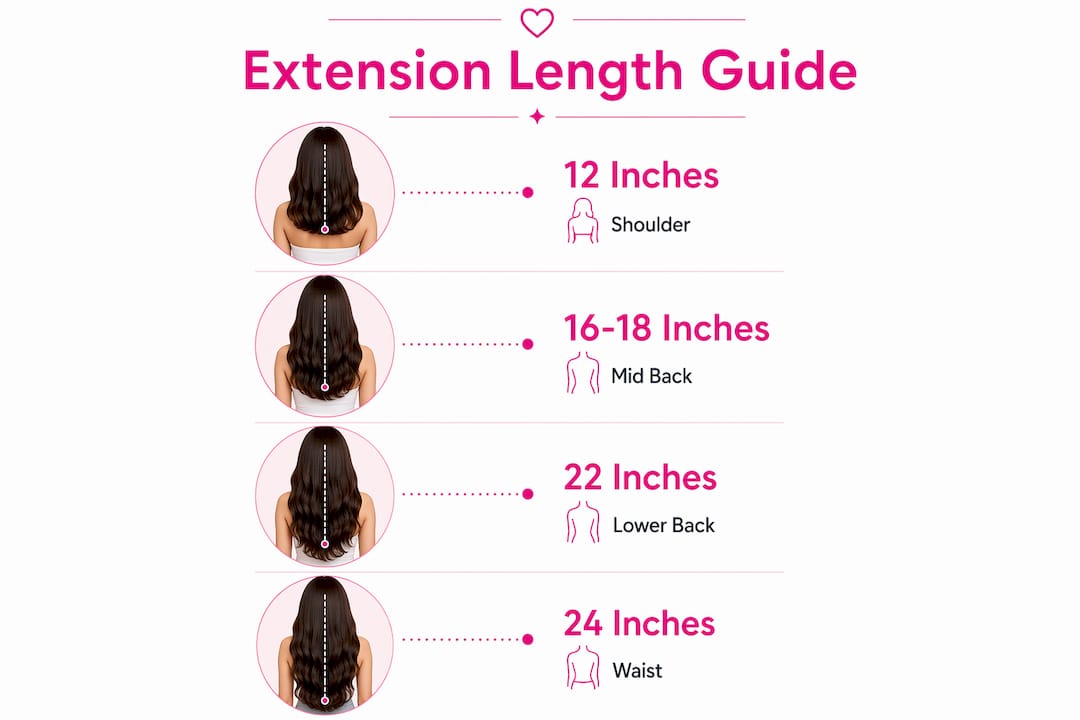
A hair extension lengths guide maps specific inch measurements to where the hair falls on your body, not just a number on a tag. Twelve inches sits at the shoulder. Sixteen inches reaches the collarbone. Eighteen inches hits just below the shoulder blades. Twenty-two inches falls at mid-back, and 26 inches reaches the waist or lower. These reference points give you a real-world picture before you buy.
Your body frame changes everything. Height influences how length looks on you directly. A taller woman carries 24-inch extensions with ease because the length stays proportional to her frame. A petite woman wearing the same length may find it visually overwhelming, pulling attention away from her face rather than framing it. The sweet spot for petite frames is usually 16–20 inches.
| Extension Length | Approximate Fall Point | Best For |
|---|---|---|
| 12 inches | Shoulder | Short, natural-looking boost |
| 16 inches | Collarbone | Petite frames, beginners |
| 18 inches | Below shoulder blades | Versatile, most popular length |
| 22 inches | Mid-back | Tall frames, dramatic volume |
| 26+ inches | Waist or lower | Statement styles, experienced wearers |
Pro Tip: Stand in front of a mirror and hold a tape measure from your crown down your back. Mark where 18 inches, 22 inches, and 26 inches land on your body before ordering. This single step prevents the most common length regret.
How does hair texture affect which length you should choose?
Curly and wavy hair shrinks when it dries. Curl shrinkage reduces visual length by 20–30%, which means a 20-inch extension on a curly-haired woman may look closer to 14–16 inches once styled. This is the most overlooked factor in the entire selection process. Ordering longer extensions to compensate is not optional for curly textures. It is necessary.
The practical rule is to add 4–6 inches to your target length if you have curly or wavy hair. If you want the finished look to sit at mid-back, order 26-inch extensions rather than 22-inch. Straight hair does not shrink, so the labeled length is the visual length you get.
Blending also depends on texture matching. Extensions that are too straight layered over naturally curly hair create a visible disconnect at the roots. Hairlockshairextensions offers curly clip-in options that match natural curl patterns, which makes blending far more natural. You can also read the professional blending guide for texture-specific techniques.
- Straight hair: Order your target length exactly as labeled.
- Wavy hair: Add 2–3 inches to your target length to account for wave compression.
- Curly hair: Add 4–6 inches to your target length to compensate for shrinkage.
- Coily or kinky hair: Add 6+ inches and consider a professional consultation before ordering.
Pro Tip: Wet your natural hair, let it dry fully, then measure it. The difference between your wet length and dry length tells you exactly how much shrinkage you are working with.
How does your lifestyle affect the right extension length?
Maintenance time scales directly with length. Longer extensions require more washing time, more detangling, and more heat styling to look polished. A woman who washes her hair every other day and spends 10 minutes styling will find 26-inch extensions a genuine daily burden. A woman who styles her hair thoroughly each morning will handle the same length without issue.
For beginners, 16–18 inch extensions are the most practical starting point. They add visible length and volume without requiring a major shift in your styling routine. Starting here also gives you time to learn how to care for extensions before committing to longer, more demanding lengths.
Active lifestyles add another layer of consideration. Women who swim, run, or train regularly deal with more tangling, more friction, and more frequent washing. These factors wear extensions faster and make longer lengths harder to maintain in good condition. For active women, 16–18 inches is the most manageable range.
Weight is a real physical factor, not just an aesthetic one. Longer extensions strain fine or thin natural hair at the roots, especially with heavier application methods like keratin bonds or micro beads. Fine-haired women should prioritize lighter application methods and moderate lengths until they understand how their hair responds.
- Assess your daily styling time honestly before choosing a length.
- Consider how often you wash your hair. More frequent washing means more wear on longer extensions.
- Factor in your activity level. High-impact exercise increases tangling and maintenance needs.
- If your natural hair is fine or thin, start at 16–18 inches and use a lightweight application method.
- Revisit length after your first set of extensions. Most women adjust their preference after wearing extensions for a few months.
What are the most common mistakes when choosing extension length?
The biggest mistake is buying too few bundles for the length you want. Longer extensions require 3–4 bundles to look full at the ends, while shorter lengths work with 2 bundles. Women who buy 2 bundles of 24-inch extensions often end up with thin, stringy ends that look nothing like the full, lush result they expected.
- Copying a model photo without measuring yourself. Models are often tall with specific proportions. The same length on your frame may look completely different.
- Ignoring texture shrinkage. Ordering the same length as your target look without accounting for curl compression leads to extensions that appear far shorter than expected.
- Choosing length based on price alone. Shorter extensions cost less, but buying a length that does not achieve your goal wastes the entire investment.
- Mismatching natural hair length. Natural hair shorter than 4–5 inches paired with very short extensions risks exposing wefts and bonds, which looks unnatural and can damage the hair.
- Skipping a layered approach. Mixing two lengths, such as 18 inches and 22 inches, creates a more natural graduation than a single uniform length.
The layering strategy is worth emphasizing. Real hair does not grow in one uniform length. Using two lengths together mimics natural growth patterns and produces a result that blends far more convincingly into your own hair.
How do you measure your hair and extensions correctly?
Measuring your natural hair accurately is the foundation of every good length decision. Follow these steps before you buy.
- Wash and fully dry your hair in its natural state, without stretching or blowing it straight.
- Part your hair down the center and pull one section forward over your shoulder.
- Place a tape measure at the root of the hair, at the scalp, and measure to the tip of the longest strand.
- Record this number. This is your natural hair length baseline.
- Decide how many inches of added length you want, then add your shrinkage factor if applicable.
Measuring extensions correctly is a separate step. Extension length is measured from the top of the weft or bond to the tip of the strand, not from where the extension sits on your head. This distinction matters because the weft or bond sits a few centimeters below your scalp attachment point. The labeled length is the strand length, not the total added length from root to tip.
| Natural Hair Length | Minimum Extension Length | Recommended Extension Length |
|---|---|---|
| 4–6 inches | 14 inches | 16–18 inches |
| 8–10 inches | 16 inches | 18–22 inches |
| 12+ inches | 18 inches | 22–26 inches |
Pro Tip: Ask your stylist to measure your hair at your appointment rather than estimating at home. A professional measurement takes two minutes and removes all guesswork from the ordering process.
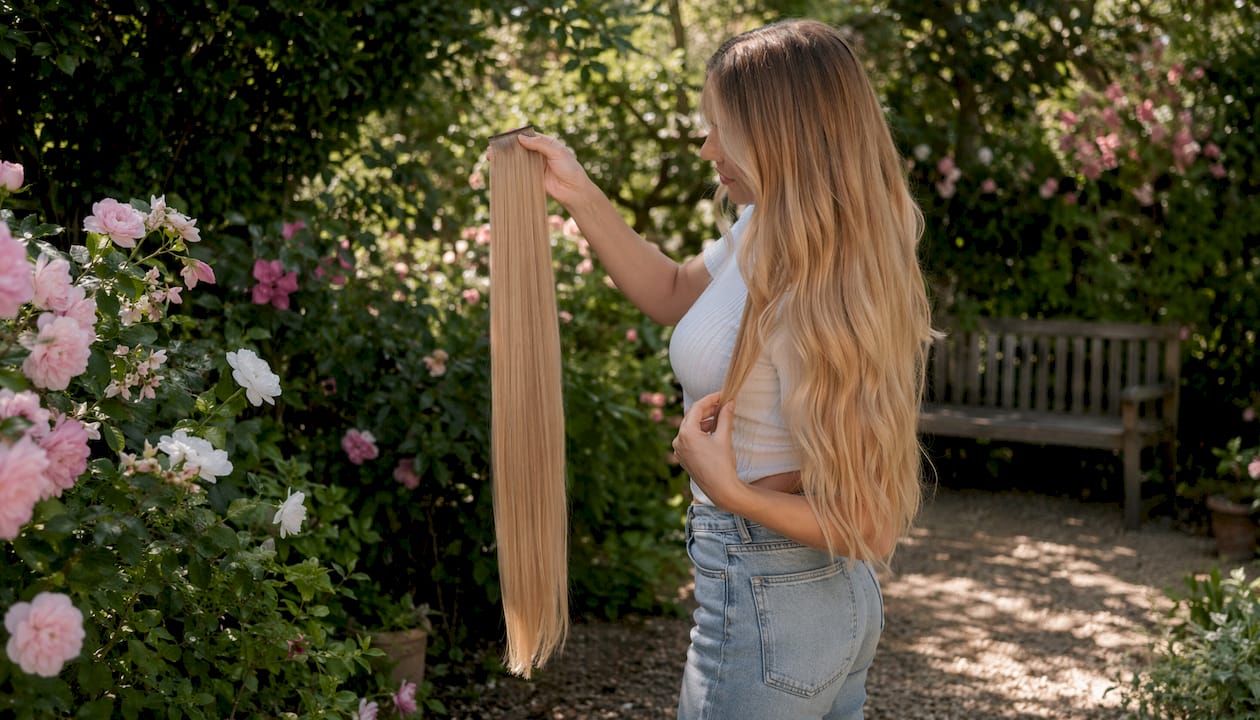
A 22-inch ponytail extension is a useful visual reference. Holding one against your back before purchasing gives you a concrete sense of where that length falls on your specific frame.
Key Takeaways
Choosing the right extension length requires matching your body frame, hair texture, and lifestyle before selecting any number from a hair extension size chart.
| Point | Details |
|---|---|
| Body frame determines ideal length | Petite frames suit 16–20 inches; taller frames carry 22–26 inches proportionally. |
| Texture shrinkage changes your order | Curly hair shrinks 20–30%, so order 4–6 inches longer than your target visual length. |
| Beginners should start at 16–18 inches | This range adds visible length without a steep increase in daily maintenance time. |
| Bundle quantity affects fullness | Longer lengths need 3–4 bundles; buying too few creates thin, stringy ends. |
| Measure from weft to tip, not from scalp | Extension length is labeled from the bond or weft top, not your scalp attachment point. |
What 30 years of fitting extensions has taught me about length
Most women come in asking for the longest length available. After working with clients for three decades, I can tell you that the women who end up happiest are almost never the ones who went longest. They are the ones who matched their length to their actual life.
A woman who travels constantly for work, wears her hair up most days, and washes it every second day does not need 26-inch extensions. She needs 18–20 inches that look polished with minimal effort. A woman who styles her hair every morning, loves a dramatic blowout, and has a tall frame? She will wear 24 inches beautifully.
The other thing I see constantly is women underestimating how much their natural texture changes the equation. A client with a loose wave orders 20-inch extensions expecting mid-back length. She gets them installed and they sit at her shoulder blades because the wave compresses the length. She is disappointed, and it was entirely preventable with one extra measurement step.
My honest recommendation is this: always try on a length before you commit. Hold the extension against your back. Look in the mirror. If you feel uncertain, go one length shorter than you think you want. You can always add length at your next appointment. You cannot undo the frustration of extensions that are too long to manage comfortably.
— HairLocks
Ready to find your perfect length with Hairlockshairextensions?
Hairlockshairextensions offers a full range of 100% human hair extensions across every length, texture, and application method, from micro bead and nano bead to keratin bond and weft. Every client gets access to a free personal color matching service so your extensions blend perfectly with your natural hair from day one.
The before and after gallery shows real clients across a range of lengths, textures, and body frames, giving you a concrete visual reference before your appointment. When you are ready to move forward, book a consultation with Michele and her team on the Gold Coast. Thirty years of experience means your length decision is backed by someone who has seen every hair type and every lifestyle need.
FAQ
What length hair extensions should I get as a beginner?
16–18 inch extensions are the best starting point for beginners. They add noticeable length and volume without significantly increasing your daily styling time.
How do I measure hair extensions correctly?
Extension length is measured from the top of the weft or bond to the tip of the strand, not from your scalp. Always account for this when comparing labeled length to your desired result.
What is the difference between 18 inch vs 22 inch extensions?
18-inch extensions fall just below the shoulder blades and suit most body frames and lifestyles. 22-inch extensions reach mid-back and work best on taller frames or women comfortable with more daily maintenance.
How many bundles do I need for longer extensions?
Longer extensions require 3–4 bundles to maintain fullness at the ends. Shorter lengths typically work with 2 bundles. Buying too few bundles for a long length is the most common purchase mistake.
Do curly hair extensions look shorter than labeled?
Yes. Curly and wavy textures shrink by 20–30% when dry, so the visual length is shorter than the labeled measurement. Order 4–6 inches longer than your target length to compensate.