


Are Hair Toppers Noticeable? The Honest Answer for Thinning Hair
A well-fitted hair topper is not noticeable to the average person. The catch is in that phrase “well-fitted.” When the base construction, hair type, color match, and placement are correct, a topper blends into your own hair within a few inches. When any one of those elements is off, even slightly, it shows.
Three things decide whether a topper reads as real or fake: the base material (lace, mono, or silk), whether the hair is human or synthetic, and how precisely it was fitted to your head. Get those right, and strangers see thicker hair, not a hairpiece.
Here are quick fixes if your current topper feels obvious:
- Shade match: hold the topper against your part in daylight, not indoor lighting.
- Density: ask a stylist to thin it if it looks thicker than your natural hair ever did.
- Clip placement: move clips slightly back from the hairline so they sit under your own hair, not on exposed scalp.
Pro Tip: Check your topper in natural daylight before you leave the house, and remove or reposition any front clip that leaves a visible ridge along the hairline.
Key Takeaways
A hair topper stays undetectable when material, base construction, color match, density, and professional fitting are all correct, and it becomes visible the moment any one of them is off.
| Point | Details |
|---|---|
| Base construction drives realism | Lace and silk bases hide the part best; PU offers the strongest hold for active wear. |
| Color match beats density obsession | A half-tone shade mismatch is more noticeable than slightly imperfect density. |
| Professional fitting solves most issues | Part ventilation, clip alignment, and trimming fix problems styling alone can’t. |
| Maintenance prevents long-term shedding | Replace a worn base before shedding creates a visible gap, not after. |
| HairLocks offers fitting and color matching | Free color-matching consultations and the Top~Lock V-Part Topper target discreet part coverage. |
Table of Contents
- Are Hair Toppers Noticeable? What Determines the Answer
- What Actually Makes a Hair Topper Look Fake?
- How Material and Base Construction Affect Realism
- How to Match Color, Density, and Texture Before You Buy
- What Happens at a Professional Fitting?
- Styling Techniques That Make a Topper Disappear
- Daily Wear and Maintenance for Long-Term Invisibility
- Hair Topper vs Wig: Which One Actually Hides Thinning Better?
- Why Professional Fitting Makes the Real Difference
- Can People Tell You’re Wearing a Topper? What Strangers Notice First
- Red Flags to Watch for When Buying a Hair Topper
- Long-Term Wear: Base Fatigue, Shedding, and Color Fade
- A Stylist’s Perspective on What Actually Matters
- How HairLocks Helps Your Topper Disappear
- Sources
- FAQ
Are Hair Toppers Noticeable? What Determines the Answer
A hair topper is a partial hairpiece that clips or tapes onto an area of thinning hair, most often the crown or part line, and blends with your remaining natural hair around it. It differs from a wig, which replaces your entire head of hair, and from extensions, which add length and volume to hair you already have in full. A topper’s entire job is targeted coverage: it fills in where hair has gone thin without touching the hair around it.
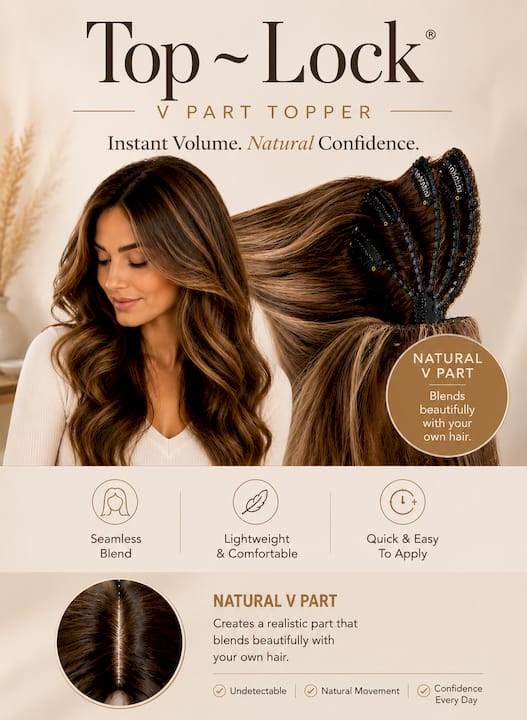
Most people reaching for a topper fall into a few categories: diffuse thinning across the scalp, crown thinning associated with hormonal changes or genetics, early-stage hair loss where a wig would be overkill, and camouflage needs after a scalp procedure or part-line surgery. In each case, the goal is the same: restore visual density without anyone knowing why your hair suddenly looks fuller.
Attachment methods vary by lifestyle and skin sensitivity:
- Clips sewn into the base, removable daily, good for occasional or part-time wear.
- Tape strips along the perimeter for a more secure, longer hold.
- Integrated parting, where your own hair is pulled through a gap in the base to disguise the transition.
Most toppers are designed for daily wear and removal at night, though some tape applications extend that to a week or more between reattachments.
What Actually Makes a Hair Topper Look Fake?
When someone spots a topper, it is rarely one glaring issue. It is usually one of these seven problems, and each has a specific fix.
-
Wrong base edge treatment. An unfinished or thick lace edge sits on top of the skin like a strip rather than disappearing into it. Run a finger along your hairline. If you feel a ridge, the edge needs thinning or a different lace grade.
-
Mismatched color or dimension. Real hair is never one flat shade. A topper cut from a single dye lot looks like a solid block of color next to hair with natural variation. Compare the topper to your roots and ends separately, not just at a glance.
-
Incorrect density. This is the single most common giveaway. Manufacturers often overstuff the base to look “full” in product photos, but real hair thins gradually at the hairline and part. If your topper looks like a helmet, it is too dense for realistic wear.
-
Unnatural shine, usually from synthetic fiber. Synthetic hair reflects light in a uniform sheen that human hair does not. Step outside. If your topper looks glossy under the sun in a way your natural hair never does, that shine is the tell.
-
Poor placement or attachment. A topper set too far forward, too far back, or angled wrong relative to your natural growth pattern creates a visible seam even with perfect color and density.
-
Visible clips or wefts. Clips positioned directly on visible scalp, rather than tucked beneath a layer of your own hair, catch light and catch eyes.
-
Wrong parting direction and lighting blind spots. A part that does not match how your hair naturally falls, combined with harsh overhead lighting, exposes the base color underneath.
Pro Tip: If density is your problem, ask your stylist to thin the topper with a razor rather than scissors. Razor-thinning removes bulk without leaving blunt-cut ends that catch light differently than the rest of your hair.
How Material and Base Construction Affect Realism
Human hair moves, reflects light, and takes heat styling the way your own hair does, which is why it remains the standard for anyone prioritizing a natural, undetectable look. It costs more and requires more maintenance, but it can be colored, curled, and flat-ironed to match changes in your own hair over time. Synthetic fiber holds a set style longer and needs less daily upkeep, but the fixed shine and inability to take heat styling make it harder to blend seamlessly, especially in bright or outdoor light.
Base construction matters just as much as the hair itself:
- Lace bases create the most realistic scalp illusion because light passes through the mesh the way it would through skin. They are also the most delicate and show wear fastest with rough handling.
- Monofilament (mono) bases are thicker and more durable than lace, with a slightly less transparent look at the part but excellent durability for daily wear.
- Silk bases hide knots completely, which makes the part look like it’s growing directly from the scalp. They are heavier and slightly less breathable than lace.
- Polyurethane (PU) bases offer the strongest hold for tape or adhesive application and are the most durable option for active lifestyles, though they can look slightly less airy at the hairline than lace or silk.
If you have a sensitive scalp, mono or silk tends to cause less irritation than PU adhesive systems. If you swim, work out daily, or sweat heavily, a PU base holds up better under moisture. If undetectability at the part is your top priority, silk or lace wins every time. HairLocks builds its Top~Lock V-Part Topper around this exact tradeoff, using a base designed to disappear at the part while standing up to regular wear.
How to Match Color, Density, and Texture Before You Buy
Getting the shade wrong is the fastest way to end up with a topper that photographs fine but fails in person. Test it properly before committing:
- Hold the topper against your hairline in natural daylight near a window, never under indoor bulbs.
- Compare it separately at the root and at mid-length, since your own hair likely has more than one tone.
- Look for subtle multi-tonal variation rather than a single flat color, which is what real hair actually does.
Density is a numbers game most people get wrong in the opposite direction they expect. Assess how thick your existing hair actually is around the area you’re covering, then choose a topper that matches or sits slightly below that density. It is far easier to ask a stylist to thin an overly dense topper than to add hair to a sparse one. If your topper arrives too full, request thinning and a few cut-in layers before your first wear.
Texture and curl pattern need to emulate your natural wave, not a generic “wavy” or “straight” preset. A topper with tighter or looser curls than your own hair creates two visibly different hair patterns side by side. Ask about porosity too. Higher porosity hair often looks slightly more matte, which can help synthetic-adjacent shine blend better.
Pro Tip: Order a topper with a slightly lighter root tone than you think you need and darker mid-lengths. Real hair lightens with sun exposure over time, and a subtle root-to-end gradient reads as far more natural than a single flat shade.
What Happens at a Professional Fitting?
A fitting appointment is where most of the “is this noticeable” problem actually gets solved, and it is the step people skip most often when buying online. A proper fit checklist includes measuring your crown size accurately, aligning the topper’s front edge with your natural hairline (not a guessed position), positioning clips so they sit beneath a layer of your own hair rather than on exposed scalp, and checking that the part width and direction matches how your hair naturally falls.
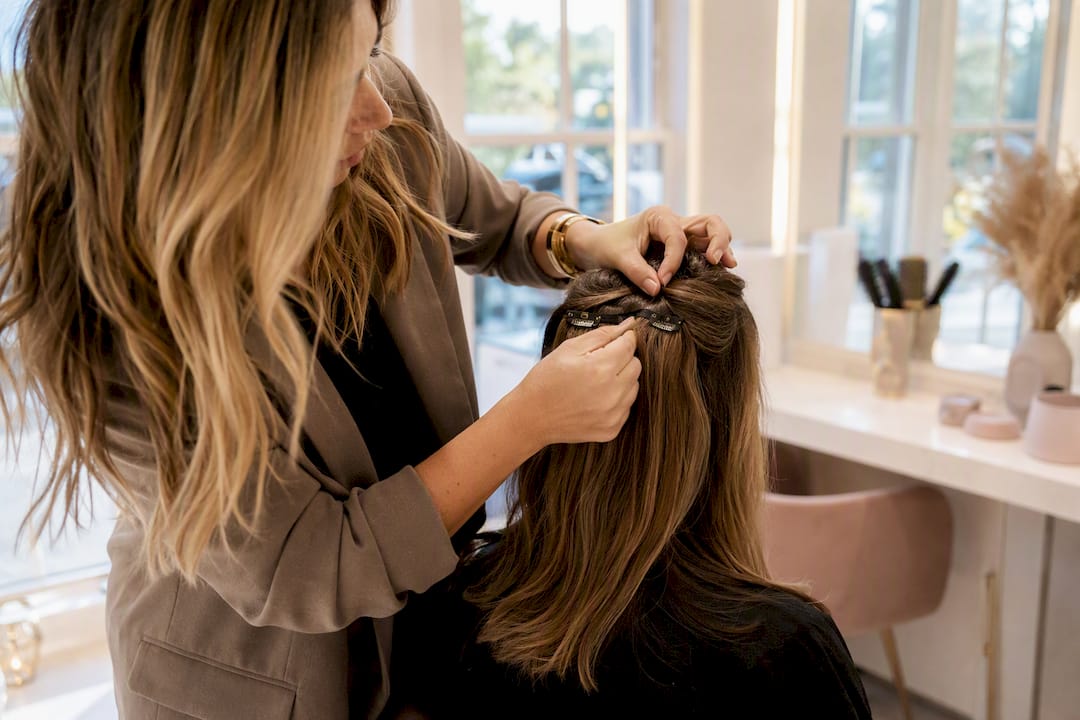
Customization at this stage is where a topper goes from “acceptable” to invisible. A stylist can trim the front edge to follow your actual hairline shape, ventilate the part by hand-knotting individual hairs into the base for a scalp-like appearance, thin dense wefts around the perimeter, and reposition clips to align with your own hair’s natural fall. HairLocks builds these adjustments into every consultation, and the professional colour-matching and fitting process documented on its site covers exactly this kind of hands-on customization.
Before booking, ask specifically:
- Can the part be hand-ventilated for a scalp-like look?
- What base material will you recommend for my hair thickness and lifestyle?
- Will the front edge be trimmed and blended to my actual hairline?
- How will you check clip placement for mobility, not just stillness?
Pro Tip: During your fitting, turn your head side to side and run your fingers through the hairline the way you would on a windy day. If the edge lifts or a seam appears, ask for adjustment before you leave. A topper that only looks natural sitting still is not fitted correctly.
Styling Techniques That Make a Topper Disappear
Styling is where a correctly fitted topper either stays invisible or slowly starts to look “off” as the day goes on. Start with the foundation: set your parting direction to match your natural growth pattern, then blend the root area where the topper meets your own hair using a fine-tooth comb to lightly cross strands from both sides.
Cutting in subtle layers around the perimeter, rather than leaving a single blunt length, helps the topper move the way multi-length natural hair does. For human hair toppers, gentle heat styling with a low-heat curling wand or flat iron helps match the day’s texture to your own hair, something synthetic fiber cannot do without melting or reverting.
Product choice matters more here than people expect:
- Dry texturizing spray adds grip and slight roughness at the roots, which mimics natural texture far better than a wet-look product.
- Silicone shine serums should be used sparingly or skipped entirely, since heavy shine products can make the topper’s hair reflect light differently than your natural hair.
- Root color powder or a color-matched root spray conceals the base at the part instantly and is one of the fastest fixes for a visible part line, a technique covered in detail in HairLocks’ professional blending guide.
Strategic teasing at the crown and a few loose baby hairs framing the face soften the line between topper and natural hair, which is often the single most visible seam in photos.
Pro Tip: Style with your actual lighting in mind. Office fluorescent lighting flattens color and exposes shine, daylight reveals true color depth, and camera flash amplifies any gloss. If you’re preparing for photos, test your look under flash beforehand, not just in the mirror.
Daily Wear and Maintenance for Long-Term Invisibility
A topper that looked perfect on day one can start looking obvious by week three if maintenance slips. Build a quick daily habit: spot-check clip placement each morning, comb gently from the ends upward to avoid stress on the base, skip heavy oils directly at the part since they cause visible flattening, and keep a root-touch spray on hand for any regrowth line that starts to show through.
A basic maintenance rhythm keeps the topper performing:
- Wash every 10 to 15 wears for clip-in toppers, more frequently for daily tape wear.
- Have tape or adhesive systems reattached every one to three weeks depending on your skin’s oil production.
- Replace the base itself, not just the hair, once it starts showing wear at stress points like the clips or part.
Adhesives and tapes create a flatter, more seamless edge than clips but require more frequent professional reattachment and can irritate sensitive skin over time. Clips are faster to remove and reposition daily but are more prone to becoming visible if placed even slightly wrong. Most visible edges months into wear trace back to a base that was never replaced on schedule, not a fitting mistake.
Hair Topper vs Wig: Which One Actually Hides Thinning Better?
The right choice depends on how much coverage you actually need, not which option sounds more dramatic. A topper covers a specific area, so it works best when you have thinning at the crown or part but still retain hair density everywhere else that the topper can blend into.
Consider these factors:
- Coverage needed: partial thinning favors a topper; full-scalp hair loss favors a wig.
- Styling flexibility: toppers let you keep your own hair visible and stylable at the perimeter; wigs offer a single consistent look.
- Daily convenience: toppers are generally quicker to attach and remove for partial wear; wigs involve more setup for full coverage.
- Budget: toppers typically cost less than full wigs of comparable quality since less hair and base material is used.
As a simple rule: if you’re covering a coin-sized or palm-sized area of thinning, a topper is almost always the more natural, less noticeable option. If you need to cover a fully bald or heavily thinned scalp, a well-fitted wig will look more even than a topper stretched beyond its intended coverage. A correctly matched topper is consistently less noticeable than a poorly fitted wig, since the topper only has to blend at its edges while a wig has to convince from every angle.
Why Professional Fitting Makes the Real Difference
Michele, HairLocks’ founder, has spent 30 years fitting hair extensions and toppers, and that experience shows up in the specific, small adjustments that separate a visible topper from an invisible one. A proper consultation isn’t a sales conversation. It’s a technical assessment of your hair density, scalp tone, growth pattern, and lifestyle before any product recommendation happens.
During an appointment, expect the stylist to inspect and adjust several things: shade match against both your roots and your ends, part ventilation to eliminate any visible base line, clip alignment relative to your natural hair’s fall, and overall density compared to your surrounding hair. These are the exact adjustments covered in HairLocks’ step-by-step blending techniques.
Real salon fixes that turn a visible topper invisible are rarely complicated: a ventilated part where individual hairs are hand-knotted into the base to mimic scalp, a trimmed frontal edge that follows your actual hairline instead of a generic curve, and thinned wefts around the perimeter where density typically looks heaviest.
Before you buy, it’s worth viewing a before-and-after gallery to see what professional customization actually looks like on real heads, and requesting a color-matching consultation rather than guessing a shade from a product photo.
Can People Tell You’re Wearing a Topper? What Strangers Notice First
Strangers rarely clock a topper by staring directly at your hair. What they notice, if anything, tends to be small and specific: an unnaturally straight or too-clean part line, a visible edge catching light at an odd angle, a shine that doesn’t match the rest of your hair, or a sudden density change right at the crown or part.
Community discussions on threads like r/Wigs on Reddit consistently point to a few practical, low-cost tests before assuming a topper needs replacing: removing a front clip that’s creating a ridge, checking the fit under natural daylight instead of bathroom lighting, and confirming the density actually matches the wearer’s own hair thickness rather than a generic “full” setting.
Run your own quick test before wearing a new topper in public: ask a friend to check it from multiple angles in natural light, and take photos both in daylight and with flash. If it passes both, it will hold up in real-world situations far better than a single mirror check ever tells you.
Red Flags to Watch for When Buying a Hair Topper
Not every seller or stylist is set up to deliver an undetectable result, and a few warning signs are worth checking before you commit money to a topper.
- No color-matching service offered. If a seller can’t help you match shade before purchase, you’re guessing.
- Product photos that are heavily edited or filtered. Ask for images in plain, unedited daylight.
- Vague or missing base specs. A legitimate seller should tell you clearly whether the base is lace, mono, silk, or PU, and let you see it in daylight, not just studio lighting.
- Density options with no customization mentioned. If thinning isn’t offered as a service, an overly dense topper will stay overly dense.
- Poor return policy. A seller confident in fit and color match will typically stand behind the product with a fair return or exchange window.
Ask directly: can the part be hand-ventilated? What exact base material am I getting, and can I see a sample in daylight? What happens if the color doesn’t match once I get it home? A clear warranty, repair, or replacement policy is one of the simplest trust signals a legitimate seller or salon will offer without hesitation.
Long-Term Wear: Base Fatigue, Shedding, and Color Fade
A topper that looked flawless on day one will not look identical six months later, and that’s normal, not a sign of a bad product. Base material weakens gradually with regular clipping and combing, and the knots holding individual hairs in a lace or mono base can loosen over time, leading to gradual shedding that thins the topper’s edges before the rest of it shows wear.
Color fading happens faster at the areas most exposed to sun and heat styling, typically the crown and front hairline, which means your topper’s shade can drift away from your natural hair’s shade even if it matched perfectly at purchase. This is one of the more overlooked causes of a topper becoming noticeable months into ownership, since the mismatch develops slowly enough that it’s easy to miss in the mirror day to day.
The fix is proactive maintenance rather than waiting for a visible problem. Schedule periodic professional checks to assess base integrity, especially around the clips and part where stress concentrates. Track color separately from fit, since a topper can still fit perfectly while the shade has quietly shifted. And treat the base itself as a wear item with a lifespan, not a permanent purchase. Replacing a worn base before it becomes visibly thin is far less noticeable than waiting until shedding creates a bald-looking gap.
A Stylist’s Perspective on What Actually Matters
After decades spent fitting hair extensions and toppers, one truth stands out above every other technique in this article: color matching and part ventilation solve more visibility problems than any density adjustment or styling trick ever will. People obsess over finding the “perfect” density, but a slightly imperfect density in the right shade, ventilated correctly at the part, will always look more natural than a perfectly dense topper in the wrong tone with a visible base line.
Most people trying to fix a noticeable topper on their own are solving the wrong problem. They thin the hair or change their styling routine when the actual issue is sitting at the root, literally, in an unventilated part or a shade that’s a half-tone off from their natural color.
Pro Tip: If you only have time or budget for one professional service before wearing a new topper in public, make it a color-matching consultation. It solves more visibility problems than any other single fix, and it’s worth booking before you invest in styling products or additional customization.
How HairLocks Helps Your Topper Disappear
Every fitting problem covered in this article, from part ventilation to density thinning to color drift, comes down to the same solution: a professional consultation instead of a guess. HairLocks builds its process around exactly that, starting with a free personal color-matching assessment before you ever commit to a purchase, followed by hands-on customization at fitting.
A HairLocks consultation typically includes shade matching against your actual roots and ends, base recommendation suited to your hair density and lifestyle, part ventilation for a scalp-like appearance, and clip or attachment placement checked for both stillness and movement. The Top~Lock V-Part Topper was specifically designed around discreet part coverage for crown and part-line thinning, using the same lace and human hair principles covered throughout this guide.
If you want to see what a professionally fitted topper actually looks like before you decide, browse the before-and-after gallery for real examples. When you’re ready to stop guessing at shade and fit, book a fitting appointment or start with the free color-matching service to get your shade right before you spend a dollar on a topper.
Sources
- New to toppers, advice please? : r/Wigs
FAQ
Can people tell if you’re wearing a hair topper?
Most people cannot tell when a topper is correctly matched in color and density and fitted with proper part ventilation and clip placement. Visibility issues almost always trace back to a mismatched shade, wrong density, or an unfitted base edge rather than the topper itself being inherently noticeable.
What are the disadvantages of hair toppers?
Toppers only cover a specific area, so they aren’t suited to full-scalp hair loss, and they require ongoing maintenance like reattachment, washing, and periodic base replacement to stay natural looking. Human hair versions also cost more and need more upkeep than synthetic options, though they blend and style far more realistically.
Is it better to wear a wig or a hair topper?
A topper works better for partial thinning at the crown or part where you still have surrounding hair density to blend into, while a wig suits full-scalp coverage needs. A well-fitted topper is typically less noticeable than a poorly fitted wig, since it only needs to blend at its edges.
Are hair toppers good for thin hair?
Yes, toppers are specifically designed for thinning hair, particularly diffuse thinning or crown thinning where targeted coverage is more practical than full replacement. Choosing a base like lace or silk and matching density to your existing hair are the key steps to keeping the result undetectable.
What are the most discreet hair toppers?
The most discreet options use lace or silk bases with hand-ventilated parts and human hair that matches your natural color and texture. HairLocks’ Top~Lock V-Part Topper is built specifically around discreet part and crown coverage using these same principles.
Recommended
- Thinning Hair Toppers: Best Australian Providers in 2026 – HairLocks Hair Extensions
- The Ultimate Guide to Hair Toppers: Restoring Volume and Confidence in – HairLocks Hair Extensions
- Hair Extensions for Alopecia: Safe Solutions That Work – HairLocks Hair Extensions
- Hair Topper Cost in Australia: 2026 Price Guide – HairLocks Hair Extensions