


Hand Tied vs Genius Weft: Which One Is Right for You?
For most people who want a low-profile, cuttable, and durable weft, Genius Weft is the stronger choice. Hand-tied wefts remain the preferred option when artisanal movement, precise color blending at the seam, or an extremely fine, traditional feel is the priority. The decision comes down to three things: seam thickness, whether the weft can be cut to fit, and how much volume you need per row.
Who should choose Genius Weft:
- Fine or sensitive scalps that need a flatter, ridge-free seam
- Clients who want fewer rows, faster installs, and a lower-profile feel day to day
- Anyone who needs the weft trimmed to fit their head circumference or a specific section
Who should choose hand-tied weft:
- Clients prioritizing artisanal blending or highly customized color work at the seam
- Those who prefer the traditional, softer movement of a hand-sewn construction
- Stylists working with very specific sectioning patterns where seam flexibility matters more than cut-ability
Key Takeaways
For most clients, Genius Weft delivers a flatter seam, higher volume per row, and the cut-ability that hand-tied wefts cannot offer without risk of unraveling.
| Point | Details |
|---|---|
| Seam thickness drives comfort | Genius Weft seams are thinner, creating a flatter feel; hand-tied seams are thicker, creating a small ridge. |
| Cut-ability is a practical advantage | Genius Weft can be trimmed anywhere; hand-tied seams require sealant before cutting to prevent unraveling. |
| Fewer rows, same volume | One double Genius Weft row can match the volume of several stacked hand-tied rows, reducing install time. |
| Hair type matters | Fine or sensitive scalps benefit most from Genius Weft’s lower profile and reduced row count. |
| Hairlockshairextensions’ recommendation | The 22" Double Drawn Genius Weft suits most clients seeking volume, flat seam feel, and custom sizing. |
Table of Contents
- How do hand tied and genius weft compare side by side?
- What hand-tied and genius wefts actually are
- Key structural differences you can actually measure
- How each weft feels during day-to-day wear
- Which weft can you actually cut, and why it matters
- Durability, lifespan, and daily care for both weft types
- Which weft suits your hair type and lifestyle?
- What to expect for install time and cost
- How to choose: the questions to ask before you book
- Hairlockshairextensions’ pick: when we recommend Genius Weft
- What stylists actually weigh when choosing between the two
- Ready to find your perfect weft match?
- Sources
- FAQ
How do hand tied and genius weft compare side by side?
The table below covers the core dimensions that most readers use to decide between these two weft types.
| Dimension | Hand-Tied Weft | Genius Weft |
|---|---|---|
| Seam height / thickness | thicker | thinner |
| Cut-ability | Not cuttable without sealing | Cuttable anywhere along the seam |
| Weight per weft | ~15–17 g (per comparable weft) | ~20–22 g (per comparable weft) |
| Scalp profile / lay | Small ridge from return-hair seam | Flat, no return-hair ridge |
| Durability / reusability | Good with proper care | Good with proper care |
| Best for hair types | Thick, artisanal blends, color work | Fine, sensitive scalps, high volume needs |
| Install time | Longer (more rows typically needed) | Shorter (90–120 min for a full install) |
| Maintenance effort | Moderate | Moderate |
| Approximate product cost | Moderate | Moderate to slightly lower per row needed |
The single dimension that most often drives the final decision is seam thickness and whether the weft can be cut to fit, because those two factors affect comfort, blending, and salon flexibility more than any other variable.
What hand-tied and genius wefts actually are
Hand-tied weft is constructed by hand, with individual hair strands tied one by one onto a thin thread base. Each strand loops back into the top stitch, creating what is called a return-hair seam. That loop is what gives the weft its characteristic softness and flexibility, but it also means the seam cannot be cut without the tied loops unraveling at the cut point.
Genius Weft is machine-produced using a process that bonds hair strands into an ultra-thin seam without the return-hair loop. The result is a flatter, more uniform seam that can be cut at any point without shedding or unraveling, according to Alove Hair’s complete guide to Genius Weft.
- Hand-tied: hand-sewn, return-hair seam, ~1.0–1.2 mm thick, not cuttable
- Genius Weft: machine-made, no return-hair, ~0.5–1.0 mm thick, fully cuttable
Key structural differences you can actually measure
Seam thickness is where the two wefts diverge most clearly. BetterHairExtensions’ multi-dimensional comparison reports that genius wefts measure a thinner seam than hand-tied wefts. That difference may create a visible or palpable ridge, particularly on fine hair.
The return-hair construction in hand-tied wefts is the reason for that extra thickness. Each tied strand loops back into the top stitch, which adds a second layer of hair at the seam. Genius Weft eliminates that loop entirely, producing a single-layer seam that lies flat against the scalp.
Seam thickness at a glance: Genius Weft seams measure approximately 0.5–1 mm; hand-tied seams typically run 1.0–1.2 mm. That difference directly affects how visible the install line is and how the weft feels against the scalp.
Density per row is the other structural difference worth knowing. Because Genius Weft packs more hair into a thinner seam, a single row can deliver the volume that might otherwise require multiple stacked hand-tied rows. Alma’s construction comparison notes that one row of a double Genius Weft can match the volume of several stacked hand-tied rows, which directly reduces install time and the number of beads or rows placed against the scalp.
- Genius Weft seam: ~0.5–1.0 mm, no return-hair, flat lay
- Hand-tied seam: ~1.0–1.2 mm, return-hair loop, small ridge at install line
- Genius Weft weight per comparable weft: ~20–22 g vs. hand-tied ~15–17 g, reflecting higher density per row
How each weft feels during day-to-day wear
Comfort comes down to two things: how the seam sits against your scalp and how much total weight is distributed across your rows. Genius Weft’s flat, ridge-free seam means most wearers don’t feel it when sleeping or exercising. Hand-tied wefts, with their slightly thicker return-hair seam, can produce a small but noticeable ridge, particularly when lying on a pillow or wearing a tight ponytail.
Weight per row is where the picture gets more nuanced. A single Genius Weft row carries more hair (and therefore more grams) than a single hand-tied row, but because fewer rows are typically needed to achieve the same volume, the total scalp load is often comparable or lower. For fine or thinning hair, that reduced row count matters. Hairlockshairextensions’ guidance on extensions for fine hair specifically highlights seam thickness and weft profile as key factors when choosing for fine or sensitive scalps.
- Genius Weft: flat seam, less ridge sensation, fewer rows needed
- Hand-tied: softer seam flexibility, but small ridge can be felt with pressure
- Fine or sensitive scalps: Genius Weft’s lower profile is generally the safer choice
Pro Tip: Ask your stylist to place the first row slightly higher than the nape hairline, with bead spacing no tighter than 1.5 cm apart. This distributes weight more evenly and reduces pressure points regardless of which weft type you choose.
Which weft can you actually cut, and why it matters
Genius Weft can be cut anywhere along its length without the seam unraveling or shedding. The machine-bonded construction holds each strand in place even after the seam is trimmed, which is why it is the preferred choice for custom sizing. Hand-tied wefts cannot be cut along the seam without risk of unraveling, because the return-hair loop becomes an open end the moment it is severed. Sealing the cut edge with a weft sealant or bonding agent is required if a hand-tied weft must be trimmed.
Cut-ability matters more than many buyers initially realize:
- Short head circumferences: A weft that cannot be trimmed may wrap too far around the head, creating bulk at the join points.
- Half-head or partial installs: Genius Weft can be sized precisely to the section being filled.
- Color blocking or panel work: Cutting the weft to a specific width lets the stylist place color exactly where it belongs.
- Reducing bulk at the nape: Trimming the weft to the exact width of each row prevents doubling at the ends.
When a hand-tied weft does need to be shortened, a clear weft sealant applied to the cut edge before trimming will prevent unraveling. This adds a step that Genius Weft simply does not require.
Durability, lifespan, and daily care for both weft types
The hair itself typically holds up well; it is the seam and the attachment method that determine how long a set stays wearable. With consistent care, a quality weft set generally supports several reinstalls before the hair shows significant wear.
Daily care applies equally to both types:
- Brushing: Use a soft-bristle or loop brush, starting at the ends and working upward. Never brush from the roots down through a weft seam.
- Washing: Use a sulfate-free shampoo and conditioner formulated for 100% human hair. Wash in a downward motion to avoid tangling at the seam.
- Heat styling: Apply a heat protectant before any tool use. Keep flat irons and curling wands below 380°F to preserve the hair cuticle.
- Removal: Both weft types should be removed by a trained stylist. Forcing beads or stitching out without proper tools risks breakage to your natural hair at the attachment point.
- Reinstallation: Genius Weft’s flatter seam tends to make reinstallation slightly faster because the stylist does not need to account for a ridge when re-beading.
Pro Tip: Store your wefts flat in a silk or satin pouch between appointments, not coiled or folded. Folding a weft repeatedly at the same point can weaken the seam over time, regardless of construction type.
Which weft suits your hair type and lifestyle?
Matching the weft to your hair profile is where the decision gets personal.
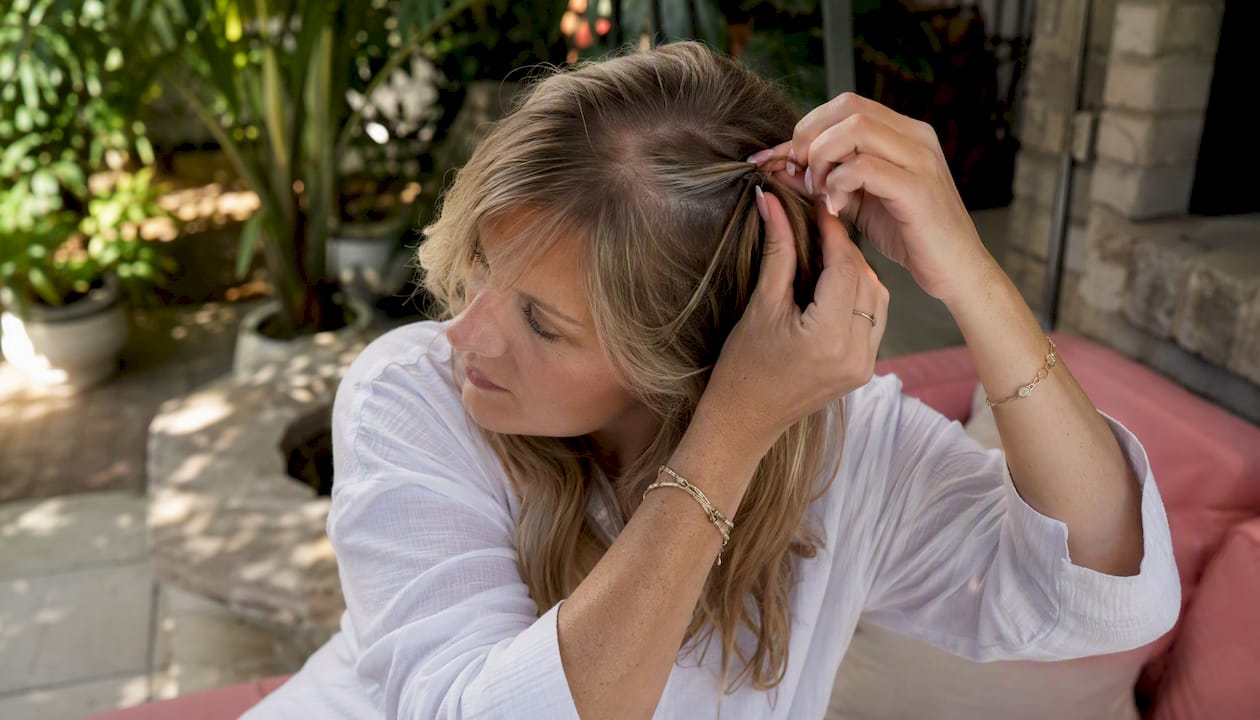
Fine or thinning hair: Genius Weft’s lower seam profile and reduced row count make it the more protective choice. Fewer attachment points mean less tension on fine strands. For clients dealing with thinning, a hair topper may also be worth considering alongside or instead of a full weft install.
Thick hair seeking dramatic volume: Either weft type works well. Genius Weft’s higher density per row can reduce the total number of rows needed, which some clients prefer for a cleaner install.
Active lifestyles (swimming, gym): Genius Weft’s flat seam holds up well under frequent washing and sweat. Both types require the same post-swim care: rinse immediately with fresh water and allow to air dry before brushing.

Frequent color changes: Hand-tied wefts are often preferred here. The return-hair seam can be colored and shaded in ways that help the install line blend with highlighted or balayage natural hair, as Mourning Hair’s stylist guide notes.
Thinning or alopecia concerns: A full weft install may not always be the right starting point. Hairlockshairextensions’ V-Part Topper is designed specifically for discreet coverage in these cases and may be a better fit than a sewn-in weft for diffuse thinning.

What to expect for install time and cost
Install time varies by the number of rows required and the stylist’s familiarity with the weft type. A full Genius Weft install typically runs 90–120 minutes, according to Alma’s trade comparison. Hand-tied installs often run longer because more rows are commonly needed to achieve the same volume, and each row requires precise placement to avoid ridge stacking.
Cost is driven by three factors: product price, the number of wefts needed, and salon labor time.
- Product cost: Genius Weft’s machine production can translate to a lower per-unit cost, and needing fewer rows per install can reduce the total product spend per appointment.
- Labor: Faster installs mean lower chair time, which matters if your salon charges by the hour.
- Maintenance appointments: Both weft types typically need a move-up appointment every 6–8 weeks as your natural hair grows. The wefts themselves are repositioned rather than replaced at each visit.
For a detailed breakdown of what weft installs typically cost, Hairlockshairextensions’ weft extensions cost guide covers the key variables.
How to choose: the questions to ask before you book
Use this checklist before your salon appointment or at checkout:
- Hair density: Is your natural hair fine, medium, or thick? Fine hair benefits most from Genius Weft’s lower profile.
- Scalp sensitivity: Do you feel pressure easily or sleep on your side? A flatter seam reduces nighttime discomfort.
- Activity level: Do you swim or work out daily? Both wefts handle activity well, but Genius Weft’s flat seam is slightly easier to maintain under frequent washing.
- Budget: How many rows will you need, and how does that affect total product and labor cost?
- Color and blend goals: Do you need the seam shaded or colored for a seamless blend? Hand-tied may give your stylist more flexibility here.
- Longevity: How long between reinstalls are you comfortable with? Both types support multiple cycles with proper care.
Questions to ask your stylist:
- How many rows will I need for my target volume?
- Can you cut the seam to fit my head circumference?
- What is the expected reorder cycle for this weft?
- Will the seam be visible with my natural parting?
Pro Tip: Before committing to a full install, ask your stylist to place a single test row in a hidden section. Wear it for a week to assess comfort, seam feel, and how the hair blends before proceeding with the full set.
Hairlockshairextensions’ pick: when we recommend Genius Weft
Hairlockshairextensions recommends Genius Weft for most clients, particularly those with fine or medium hair who want a flat seam, high volume per row, and the flexibility to cut the weft to fit.
The Genius Weft’s machine-bonded seam delivers a flatter profile than traditional hand-tied construction, which means less ridge at the install line, fewer rows for the same volume, and the freedom to cut the weft precisely to each client’s head shape. For most clients, that combination is simply more practical.
The Hairlockshairextensions Genius Weft in 22" Double Drawn concentrates longer lengths throughout the weft, which increases fullness per row and reduces the total number of rows needed for a complete install. That makes it a strong choice for clients who want dramatic length and volume without a heavy or layered feel at the scalp.
Hairlockshairextensions recommends Genius Weft when:
- The client has fine or sensitive hair and needs a low-profile seam
- A full-volume install is the goal but fewer rows are preferred
- The weft needs to be cut to fit a specific section or head circumference
- The client wants a product that supports multiple reinstalls with consistent quality
What stylists actually weigh when choosing between the two
In a back-to-back appointment schedule, install speed matters. Genius Weft’s higher density per row means a stylist can achieve a full result in fewer placements, which keeps appointment times predictable and reduces client fatigue in the chair. Hand-tied installs, while not dramatically slower, do require more rows in most cases, and each row adds time for beading, stitching, and checking the seam profile.
Color blending is where hand-tied still holds its ground in the salon. When a client has a complex balayage or needs the install line shaded to disappear into their natural root, the return-hair seam gives the stylist something to work with. The seam can be colored and stitched through in ways that a machine-bonded seam does not always accommodate as naturally.
A practical example: a client with medium-density, shoulder-length hair who wants 22" extensions and a clean, flat result is almost always a Genius Weft candidate. A client with a heavily highlighted crown who needs the install line to disappear into a specific color pattern is the case where a stylist might still reach for hand-tied, as Alma’s construction guide and Mourning Hair’s stylist comparison both confirm.
Ready to find your perfect weft match?
Choosing between weft types is easier when you have the right product in front of you and someone experienced to guide the fit. Hairlockshairextensions offers personalized consultations so you can get a recommendation based on your actual hair density, scalp sensitivity, and style goals, not a generic answer.

The Genius Weft in 22" Double Drawn is Hairlockshairextensions’ top recommendation for clients who want high volume, a flat seam, and a weft that can be sized to fit. Browse the full range and see real results in the HairLocks before-and-after gallery, or visit Hairlockshairextensions to book a consultation with Michele’s team and get a personalized recommendation for your hair.
Sources
- Genius Weft Vs Hand-tied Weft: Multi-dimensional Comparison – BetterHairExtensions
- # Genius Weft vs Hand-Tied. The Construction Difference Your Clients Will Feel. | Alma
- Hand-Tied vs. Genius Wefts: How to Choose the Right One – Mourning Hair
- What Is Genius Weft Hair Extensions? Complete Guide - Alove Hair
FAQ
What is the difference between genius weft and hand-tied weft?
Genius Weft uses a machine-bonded seam (~0.5–1.0 mm thick) with no return-hair, so it lies flat and can be cut to size. Hand-tied weft is hand-sewn with a return-hair loop, producing a slightly thicker seam (~1.0–1.2 mm) that cannot be cut without sealing the edge.
Are machine wefts better than hand-tied?
For most clients, Genius Weft’s flatter seam, higher density per row, and cut-ability make it the more practical choice. Hand-tied remains preferable when precise color blending at the seam or a traditional artisanal feel is the priority.
Are hand-tied wefts better than tape-ins?
Hand-tied wefts are sewn in using beads and thread, which many stylists consider gentler on the natural hair than adhesive tape-ins, particularly for fine hair. The right method depends on your hair density, lifestyle, and how often you want to change or move the extensions.
What is the best weft hair extension for fine hair?
Genius Weft is generally the stronger choice for fine hair because its thinner seam (~0.5–1.0 mm) and reduced row count place less tension on fine strands. Hairlockshairextensions’ 22" Double Drawn Genius Weft is specifically suited to clients who need volume without a heavy or layered feel at the scalp.
Recommended
- Genius Weft | Human Hair | 22" Length | Double Drawn – HairLocks Hair Extensions
- Best Weft Extensions for Natural Volume in Australia – HairLocks Hair Extensions
- How to Make Hair Extensions Look Natural: The Professional Blending Gu – HairLocks Hair Extensions
- The Ultimate Guide to Hair Toppers: Restoring Volume and Confidence in – HairLocks Hair Extensions