


What Do Human Hair Grades Actually Mean?
Human hair grades (the 3A to 10A scale you see on nearly every extension listing) are not a regulated quality standard. They are marketing shorthand invented and defined differently by each supplier. A “10A” from one seller can be lower quality than an “8A” from another, so the number alone tells you almost nothing about how the hair will actually perform.
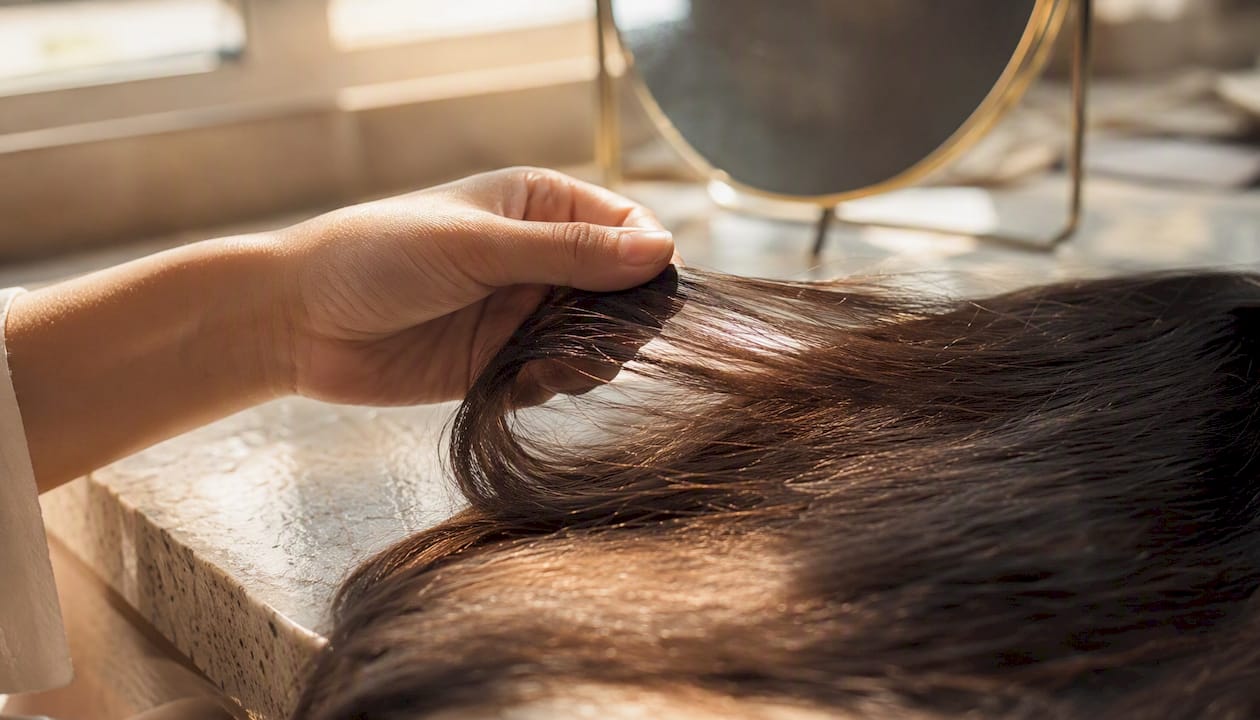
What matters instead is whether the cuticle is intact and aligned, whether the hair is virgin or has been chemically processed, and how it’s drawn (the ratio of long to short strands in a bundle). When a listing gives you only a grade and nothing else, ask for close-up photos, a stated processing history, and a clear return policy before you buy.
Key Takeaways
Human hair grades are unregulated marketing labels, so verified cuticle alignment, accurate bundle weight, and documented processing history matter more than the number on the tag.
| Point | Details |
|---|---|
| Grades aren’t standardized | The same “9A” or “10A” label means different things across suppliers with no governing body checking the claim. |
| Cuticle alignment matters most | Remy hair with root-to-tip cuticle direction resists tangling far better than any grade number suggests. |
| Verify draw and weight | Double-drawn bundles at true advertised gram weight signal real quality more reliably than a grade claim. |
| Watch for red flags | Vague origin claims, no strand photos, and bargain pricing on “top grade” hair usually mean grade inflation. |
| HairLocks verifies before listing | HairLocks checks cuticle alignment, sourcing, and weft construction on every bundle, including Genius Weft and Top~Lock V-Part Toppers. |
Table of Contents
- Human Hair Grades Explained: 3A Through 10A
- What Really Determines Extension Quality?
- Why Can’t You Trust the A-Grade Scale Alone?
- How Do You Choose the Right Hair Grade for Your Needs?
- How Can You Verify Hair Quality Before and After You Buy?
- How HairLocks Sources and Verifies Every Bundle
- Skip the Grade Guesswork With Transparent Sourcing
- Sources
- FAQ
Human Hair Grades Explained: 3A Through 10A
Most sellers use the A-grade scale as an internal shorthand for hair quality, but the meaning behind each number shifts from one supplier to the next. The pattern below reflects what the labels typically signal and what you can realistically expect on delivery.
- 3A to 5A: Often blended with synthetic fibers or lower-cost donor hair. Expect visible shedding, thinner tips, and shorter realistic wear before matting starts (note: these grade categories vary by supplier without standard definitions).
- 6A to 7A: Usually marketed as single-drawn human hair. Mid-range durability, but cuticles may run in mixed directions, which can increase tangling over weeks of wear (grade numbers are not standardized).
- 8A: A common “premium” label for cuticle-aligned hair with moderate processing. Tip fullness and softness vary widely between suppliers using this same descriptor (no universal meaning).
- 9A: Frequently marketed as virgin or lightly processed hair with a fuller double-drawn look. Reasonable durability claims, though definitions differ among sellers and verification is necessary.
- 10A: Marketed as the top tier, often claimed to be raw, unprocessed, single-donor hair. Some listings meet this description, but many do not; grade inflation is common and numbers alone are unreliable.
Grade inflation is the industry’s open secret. A seller can rename the same bundle “9A” one year and “10A” the next without changing a single fiber, and industry grading histories confirm there’s no governing body checking the claim. Vendor education guides consistently tell buyers to treat the number as one data point among several, not the deciding factor.
Two terms show up alongside almost every grade claim, and they matter more than the number itself. Remy hair has its cuticle layer intact and running in the same direction, root to tip, which is what actually prevents tangling. Non-Remy hair has been sorted by hand or machine with mixed cuticle direction, so even a high grade label on non-Remy hair will mat faster than a lower grade on true Remy hair. Add to that the reality that natural human hair itself falls into four broad type categories, straight, wavy, curly, and coily, and you can see why a single number was never going to capture the full picture of quality or blend compatibility.
What Really Determines Extension Quality?
Cuticle alignment is the single biggest factor in how long extensions last, more than any grade number printed on a listing. The hair shaft has three layers, the medulla, cortex, and cuticle, and it’s the cuticle’s scale-like structure that either lies flat and smooth (when aligned root-to-tip) or catches against itself and causes matting (when it’s mixed or stripped).
Beyond cuticle direction, a handful of measurable factors separate genuinely good extensions from dressed-up marketing:
- Draw: Single-drawn bundles include more short hairs mixed with long ones, giving thinner tips. Double-drawn bundles are sorted so nearly every strand matches the full length, producing fuller ends. This distinction, not the grade number, is the more reliable indicator of a fuller-looking bundle.
- Bundle weight: A listing claiming 100 grams should weigh 100 grams once it arrives, not 80.
- Processing history: Bleached, dyed, or permed hair loses some cuticle integrity regardless of what grade it’s sold under. Chemical resilience depends on the hair’s actual condition, not the number on the tag.
- Porosity: Coarser, more porous strands absorb color faster but also sustain more damage from processing, which shortens their usable life.
- Weft construction: Hand-tied wefts, like those used in Genius Weft styles, lie flatter against the scalp and shed less than thick, machine-stitched tracks.
Pro Tip: Rub a small strand between your fingers, root to tip and then tip to root. Genuine Remy hair feels smooth going one direction and slightly rougher the other. If it feels identical both ways, the cuticle may have been stripped and re-coated.
You’ll encounter these quality factors most directly in weft-based options and bead attachment methods, like micro-bead extensions, and in coverage pieces such as the Top~Lock V-Part Topper, where weft flatness and cuticle direction determine how naturally the piece blends at the part line.
Why Can’t You Trust the A-Grade Scale Alone?
There’s no accrediting body issuing hair grades. No third-party lab verifies that an “8A” listing meets a specific cuticle-alignment percentage or processing standard. Each supplier assigns numbers internally, which means grade inflation costs a seller nothing and can raise their price point considerably.
Watch for these red flags on any human hair grade listing:
- Vague origin claims like “premium quality hair” with no mention of donor country or collection method.
- No close-up photos of the actual weft or loose strand, only styled model shots.
- A “grade 10A” price that undercuts comparable double-drawn virgin bundles by a wide margin.
- Inconsistent bundle weights between the product description and customer reviews.
- No stated processing history, meaning you can’t tell if the hair was ever bleached or chemically treated.
If a listing gives you nothing but a grade number, ask directly for strand photos, a weighed sample, and confirmation of cuticle direction before paying.
How Do You Choose the Right Hair Grade for Your Needs?
Start with your use case, not the grade label. Someone wearing extensions for a weekend event has different priorities than someone wearing them daily for months, and the checklist below reflects that.
- Define your use case. Occasional wear tolerates more compromise; daily wear demands Remy cuticle alignment and durable weft construction.
- Check cuticle alignment first. Ask directly whether the hair is Remy, and request photographic proof if it’s not stated clearly.
- Review draw and grams. A double-drawn Genius Weft at true advertised weight outperforms an underweight “high grade” bundle every time.
- Ask about processing history. If you plan to color your extensions later, virgin or lightly processed hair holds up far better than hair that’s already been bleached once.
- Confirm the return and inspection policy. A seller confident in their product will offer a real window to inspect before final sale.
Questions worth asking any seller directly: Can you send a sample photo of a loose strand? Where was this hair sourced? Has it been chemically treated? What’s the exact gram weight per bundle? Do you offer color matching?
On pricing, a full 100 gram double-drawn bundle from documented single-donor hair will always cost more than a same-length single-drawn bundle, and that gap is legitimate, not inflated. If you see genuinely premium claims at bargain prices, be skeptical. For a broader sense of what different methods and lengths typically cost, and how long various quality tiers realistically last, it helps to compare against current market pricing before you commit to a listing.
How Can You Verify Hair Quality Before and After You Buy?
Before you pay, take these steps:
- Request high-resolution photos of a single strand and the weft edge, not just styled model shots.
- Ask for the exact gram weight per bundle and get it in writing.
- Request the processing history and any available color swatches for matching.
Once your order arrives, weigh each bundle on a kitchen or postal scale against the advertised weight. Wash a small section in plain water; if it turns dull, tangles immediately, or sheds a waxy residue, it was likely coated in silicone to fake smoothness. Check cuticle direction visually by running strands both ways, as described earlier.
Pro Tip: Silicone-coated hair feels impressively soft in the package but that softness is a coating, not the hair’s real condition. One wash usually reveals the truth underneath.
How HairLocks Sources and Verifies Every Bundle
HairLocks was founded by Michele, who brings 30 years of experience to every personalized consultation, both online and in-salon. That background shapes how the brand treats hair sourcing: verification comes before marketing.
Before any product reaches a customer, HairLocks checks:
- Cuticle alignment and direction on every batch of raw hair.
- Donor sourcing consistency, so bundles match in texture and tone.
- Weft construction quality across product lines, including Genius Weft and micro-bead extensions.
- Accurate bundle weights, confirmed against what’s listed for sale.
Every listing includes real photos and honest descriptions, and the Top~Lock V-Part Topper is built with the same cuticle-integrity standard applied across the full weft and bead range. Buyers also get access to a personalized color-matching consultation and a clear inspection window on delivery.
A Stylist’s Quick Read on Grade Labels
When a client shows me a “10A” listing, the grade number is the last thing I look at. I go straight to the weft edge first, checking whether the stitching lies flat and whether the strands catch or slide smoothly when I run my fingers root to tip.
My go-to tip for anyone shopping online: always ask the seller for a close-up photo of the weft’s thread line and a strand dipped in water. If they hesitate or can’t produce either, that tells you more than any number could.
Skip the Grade Guesswork With Transparent Sourcing
Grade labels leave you guessing, so HairLocks builds trust through documentation instead of a number. Every bundle we sell comes with verified cuticle alignment, accurate gram weights, and real weft photos, not a marketing tier invented to justify a higher price.
That transparency extends to service. Every customer gets access to our free personal color-matching consultation, so you’re not guessing at shade compatibility from a screen. You can browse real client results in our before-and-after gallery, explore Genius Weft double-drawn bundles built for fuller tips, or look at our full collection of weft and bead extensions to compare attachment methods side by side.
Ready to skip the guesswork entirely? Book a consultation with Michele’s team and get hair matched, fitted, and verified in person.
Sources
FAQ
What Is the Best Grade in Human Hair?
There isn’t one universal “best” grade because the scale isn’t standardized across sellers. A well-documented 9A bundle with verified cuticle alignment often outperforms an unverified “10A” from a different supplier.
Is Grade 10A Hair Good Quality?
It can be, but only if the seller backs the claim with strand photos, confirmed weight, and stated processing history. Without that documentation, a “10A” label alone doesn’t guarantee quality.
Is Grade 9A Hair Good Quality?
Grade 9A is frequently marketed as virgin or lightly processed double-drawn hair, which does tend to perform well. The label itself still needs verification, since 9A means something different at each supplier.
What Does 8A Grade Human Hair Mean?
8A is commonly used as a mid-to-premium marketing tier for cuticle-aligned hair with moderate processing, but the exact definition shifts between sellers. Check cuticle direction and processing history rather than relying on the number alone.
Recommended
- Professional Hair Extensions Gold Coast: The Ultimate Guide to Luxury – HairLocks Hair Extensions
- HUMAN HAIR EUROPEAN / RUSSIAN – HairLocks Hair Extensions
- The Ultimate Guide to Hair Toppers: Restoring Volume and Confidence in – HairLocks Hair Extensions
- Hair Extension Length Guide: Find Your Perfect Match – HairLocks Hair Extensions