


Best Keratin Bond Extensions for Natural, Long-Wear Results
For buyers who want the most natural-looking, longest-lasting extension method available, Hairlockshairextensions is the recommended choice. Their keratin bond extensions use human hair with cuticle-aligned strands, salon-grade K-tip engineering, and the guidance of founder Michele’s extensive professional experience. If you’re ready to move forward, booking a personalized shade-match consultation is the smartest first step.
- Recommended option: Hairlockshairextensions keratin bond extensions
- Core reason: 100% human hair + precision-engineered keratin tips + professional salon application
- Immediate next step: Book a free color-match consultation before purchasing
Table of Contents
- Why Hairlockshairextensions stands out for keratin bonds
- What actually makes keratin bond extensions the best?
- Are keratin bond extensions worth it?
- What to expect from installation, removal, and costs
- What makes a good keratin adhesive and what tools professionals use
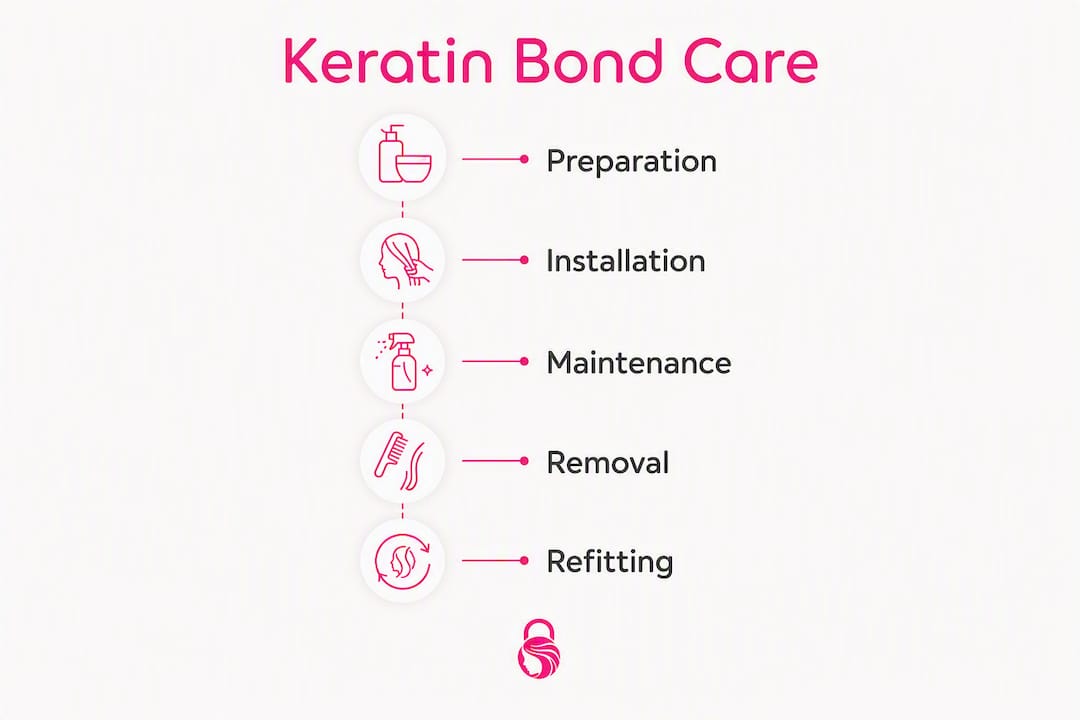
- How to care for keratin bonds day to day
- How to choose the right technician for keratin bonds
- Key Takeaways
- What 30 years of experience actually changes
- Ready to get started with Hairlockshairextensions?
- Useful sources and next steps
- FAQ
Why Hairlockshairextensions stands out for keratin bonds
Three things separate a genuinely great keratin bond extension from one that looks good in photos but fails within weeks: hair quality, tip engineering, and the skill of whoever applies them. Hairlockshairextensions delivers on all three.
- Hair quality: 100% human hair, cuticle-aligned for a natural root blend and reduced tangling
- Keratin tip engineering: Compact, cleanly formed tips that melt evenly and resist shedding, which expert technicians consistently rank above brand name alone
- Professional installation: Salon-only application guided by Michele’s three decades of hands-on experience
The before and after gallery at Hairlockshairextensions gives you a real look at client results, not stock photography. For long-term wearers who want seamless blending and minimal daily fuss, this is the right fit. If you need something you can remove at home on a whim, a clip-in or halo extension is a better starting point.
What actually makes keratin bond extensions the best?
The industry term for this method is K-tip or hot-fusion extensions. “Keratin bond” is the common consumer phrase for the same technique: a small pre-tipped strand of hair fused to your natural hair using a heat tool. Quality varies enormously, and cuticle alignment and tip engineering matter more than the brand label when judging any product.
Here’s the checklist that separates premium from mediocre:
- Hair origin and cuticle alignment: All strands should run in the same direction. Misaligned cuticles cause rapid tangling and a dull finish.
- Tip size and shape: A compact, uniform tip melts cleanly at the correct temperature. Oversized or irregular tips create bulky bonds that are visible and harder to remove safely.
- Melt temperature and bond behavior: Quality keratin adhesives melt smoothly without burning or producing a strong chemical odor.
- Shedding resistance: Strands should not slip from the tip during normal handling before application.
- Shade range and density: Double-drawn thickness and a wide color range allow for precise matching.
- Consistent strand counts: Reputable suppliers package consistent gram weights per bundle, so your technician can plan the install accurately.
For clients with fine hair, bond sizing and distribution require extra care to avoid placing too much weight on individual strands.
Pro Tip: Before your appointment, ask to hold a loose strand and gently tug the tip. A quality bond will feel firm and smooth, not gummy or brittle. If it flexes or crumbles at room temperature, that’s a sign of low-grade adhesive.
Are keratin bond extensions worth it?
For the right person, yes. For someone who wants to remove extensions frequently, probably not.
Pros:
- Most natural root blend of any extension method
- Long wear time with proper maintenance
- Full styling flexibility, including heat tools and updos
- Low daily management once you learn the routine
Cons:
- Higher upfront cost than clip-ins or halos
- Professional installation and removal are required, not optional
- Incorrect placement too close to the scalp can cause root matting or breakage
- Not reusable after removal; a fresh strand is needed each time
Who benefits most:
- Women wanting long-term, seamless length and volume without daily attachment
- Those comfortable scheduling maintenance appointments regularly
- Anyone willing to invest in professional installation for a natural-looking result
When to consider a lower-commitment alternative: if your schedule doesn’t allow regular salon visits, or if you want to change your look frequently, a clip-in or halo extension gives you flexibility without commitment.
What to expect from installation, removal, and costs
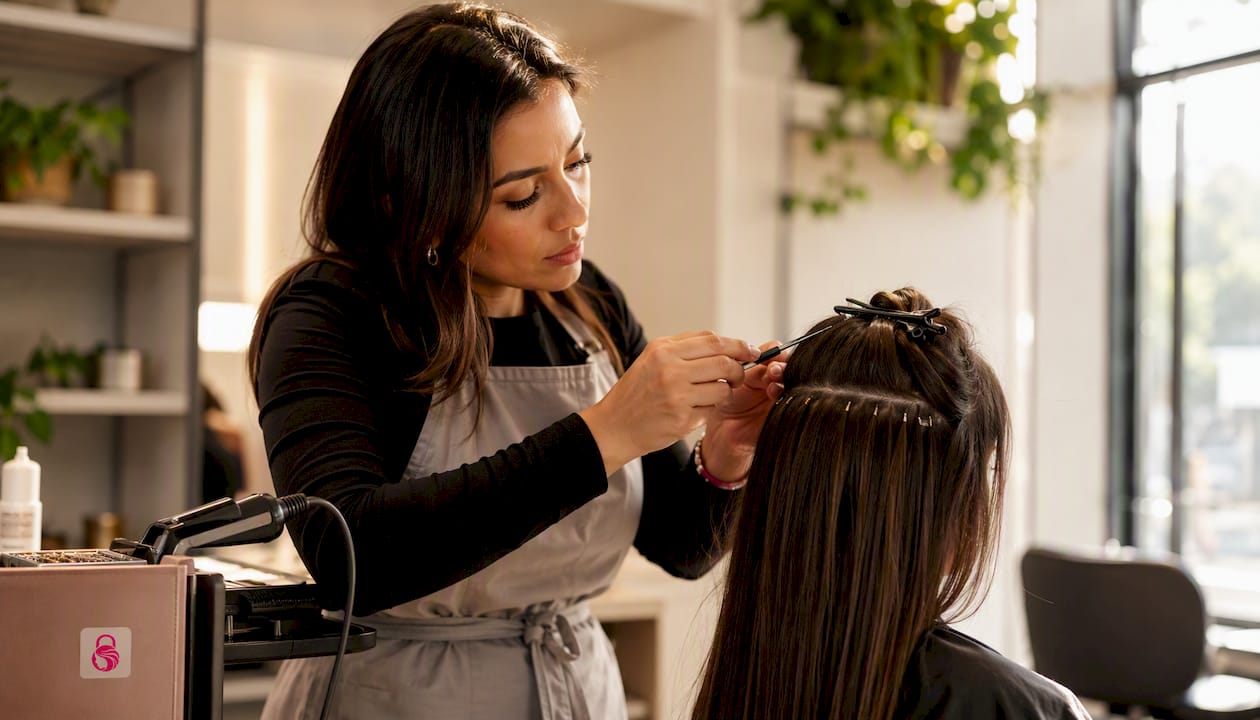
A full-head keratin bond install typically runs several hours depending on hair density and number of strands. Here’s the general workflow your technician will follow:
- Consultation and color match (30–60 minutes, often a separate appointment)
- Sectioning of natural hair into clean, even partings
- Fusion application using a temperature-controlled iron to melt each K-tip bond
- Blending and styling to check evenness and natural fall
Removal is a separate appointment, typically lasting some time and should always be done professionally. A technician applies a bond-dissolving solvent, then gently slides each bond free. Skipping professional removal is one of the most common causes of breakage. Hairlockshairextensions publishes a step-by-step removal guide that walks through each stage clearly.
Costs for hair purchase, salon installation, full first-time package, and maintenance/refits vary widely depending on strand count, hair length, and salon location. Ranges vary by strand count, hair length, and salon location. A detailed cost breakdown helps you budget before your first appointment.
Note: Heat is applied close to the scalp during fusion. A skilled technician maintains a safe distance from the root to protect your natural hair and scalp.
What makes a good keratin adhesive and what tools professionals use
K-tips are a hot-fusion method. The keratin adhesive is pre-applied to each strand tip and re-melted during installation using a fusion iron. This differs from I-tips (cold fusion), which use micro-rings and can often be reinstalled with new beads. K-tips generally require a fresh strand after removal, which affects your long-term cost planning.
A quality keratin adhesive should:
- Melt cleanly at a controlled temperature suitable for keratin adhesives
- Produce minimal odor during application
- Form a smooth, non-brittle bond that flexes slightly rather than snapping
- Grip the natural hair evenly without excess overflow onto the scalp
Professional tools matter as much as the adhesive. Reputable technicians use temperature-controlled fusion irons (not household flat irons), bond-dissolving removal solvents, fine-tooth sectioning tools, and extension-specific brushes.
Pro Tip: If a technician reaches for a standard flat iron to apply K-tips, that’s a red flag. Fusion irons are purpose-built to apply consistent, controlled heat to a small surface area. A flat iron distributes heat unevenly and can scorch the bond or your natural hair.
How to care for keratin bonds day to day
A consistent routine makes the difference between bonds that last 3–6 months, with proper care extending wear time toward the upper end of that range.
Daily habits:
- Brush from ends upward using a soft-bristle or loop extension brush
- Sleep with hair in a loose braid or low ponytail to prevent matting
- Dry bonds thoroughly after washing; damp bonds left overnight weaken faster
Products to use:
- Sulfate-free shampoo applied to the scalp only, not worked through the bonds
- Lightweight, bond-safe conditioner from mid-length to ends
- Leave-in conditioner or detangling spray formulated for extensions
Hairlockshairextensions maintains a guide to extension-friendly products that lists specific shampoo and conditioner types safe for K-tip bonds.
Products to avoid:
- Oily scalp serums or heavy waxes applied near the bonds
- High-alcohol sprays, which dry out and weaken the adhesive
- Dry shampoo used directly on bond attachment points
Environmental factors that shorten bond life:
- Chlorine (pool water) softens adhesive; wear a swim cap or rinse immediately after swimming
- Salt water has a similar effect; rinse thoroughly after ocean exposure
- Frequent high-heat styling without a heat protectant accelerates bond degradation
Aim for a maintenance check-ins every few weeks to months. Many clients schedule a full refit every few months.
How to choose the right technician for keratin bonds
Technician skill is the single biggest variable in whether your extensions look natural and last the full wear period. Here’s how to evaluate before you book.
Questions to ask:
- How many years have you been applying K-tip extensions specifically?
- Can I see recent before-and-after photos of clients with similar hair?
- What is your color-matching process, and do you offer a strand test?
- How do you handle removal, and is it included or priced separately?
- What aftercare support do you provide after installation?
Red flags to watch for:
- Rushed consultations with no strand or color matching
- No clear removal policy or an unwillingness to discuss it
- Inconsistent tip sizing on the hair they’re working with
- Using non-professional tools (see the flat-iron warning above)
- No gallery, no testimonials, and no willingness to show recent work
Before you commit, request a consult that separates the hair cost from the labor quote. A reputable technician will give you both figures clearly. Viewing a before-and-after gallery and asking for a live consultation are the fastest ways to verify real-world results.
Key Takeaways
The best keratin bond extensions combine 100% cuticle-aligned human hair, precision-engineered K-tips, and a skilled professional installer, with Hairlockshairextensions offering all three under one roof.
| Point | Details |
|---|---|
| Wear time | Properly maintained K-tip bonds last 3–6 months before a refit is needed. |
| Total cost reality | First-time installs typically carry a moderate to high cost combining hair and labor. |
| Technician skill matters most | Cuticle alignment and tip engineering outperform brand name alone; choose your installer carefully. |
| Daily care extends bond life | Sulfate-free products, thorough drying, and avoiding oily bonds near attachment points protect longevity. |
| Hairlockshairextensions recommendation | Book a free shade-match consultation to get a personalized quote and see the before-and-after gallery. |
What 30 years of experience actually changes
Most articles on this topic focus on product specs. What they underestimate is how much the installer’s judgment shapes the outcome. Placing a bond 2 mm too close to the scalp, using a tip that’s slightly too large for the client’s natural strand, or skipping a proper color consultation are all decisions that look fine on day one and cause real problems by week six.
Michele’s three decades of hands-on work at Hairlockshairextensions means the consultation isn’t a formality. It’s where bond sizing, placement strategy, and shade matching are decided with precision. That level of personalized assessment is what separates a result that looks natural for six months from one that needs emergency removal at eight weeks.
The other thing worth saying plainly: the best keratin bond extensions aren’t a product you can fully evaluate from a product page. The hair quality matters, but the system, including the hair, the adhesive, the tools, and the person applying them, is what you’re actually buying. Prioritize the installer’s track record at least as much as the brand name on the packaging.
Ready to get started with Hairlockshairextensions?
Hairlockshairextensions offers premium keratin bond installations using 100% human hair, with personalized consultations that cover shade matching, strand count planning, and realistic cost estimates before you commit to anything. Every install is backed by Michele’s extensive professional experience and a clear aftercare and removal policy.
The before-and-after gallery shows real client results across a range of hair types and lengths. If you’re comparing options or simply want to see what’s possible for your specific hair, the gallery is the best place to start. From there, a free color-match consultation gives you a personalized quote and a clear picture of what your install will involve. Book your consultation today at Hairlockshairextensions.
Useful sources and next steps
- Keratin Bond Removal: Safe Steps for Healthy Hair — Hairlockshairextensions’ professional removal guide; read this before your removal appointment.
- Keratin Bond Extensions Cost: What to Budget — Detailed pricing breakdown to help you plan your first install budget.
- Extension Friendly Hair Products Guide — Specific shampoo, conditioner, and styling product recommendations safe for K-tip bonds.
- Best Extensions for Fine Hair — Guidance on bond sizing and method selection for finer hair textures.
- Before and After Gallery — Real client results from Hairlockshairextensions installs.
- Book a Consultation — Pricing and booking page for keratin bond installs and consultations.
FAQ
What is the best brand of K-tip extensions?
The best K-tip extensions combine 100% cuticle-aligned human hair with precision-engineered keratin tips and professional installation. Hairlockshairextensions is a strong choice for buyers in the US market who want salon-quality results backed by 30 years of founder expertise.
Are keratin bond extensions worth it?
Yes, for clients who want long-term, natural-looking results. K-tip bonds last 3–6 months with proper care, making them one of the most durable extension methods available, though they require professional installation and removal.
How long do keratin bonds last?
With proper maintenance and routine salon refits, keratin bond extensions typically last 3–6 months. Environmental factors like chlorine, salt water, and frequent high-heat styling can shorten that window.
What is the best keratin glue for extensions?
A quality keratin adhesive melts cleanly at a controlled temperature, produces minimal odor, and forms a smooth, slightly flexible bond. Professional-grade adhesives are applied by trained technicians using purpose-built fusion irons, not household tools.
What’s the total cost of a keratin bond install?
A first-time full-head install typically runs several hundred to over a thousand dollars in the US, combining hair purchase and salon labor. Maintenance refits occur every few months and add additional cost per visit.
Recommended
- Keratin Bond Extensions Cost in Australia: What to Budget – HairLocks Hair Extensions
- Keratin Bond Removal: Safe Steps for Healthy Hair – HairLocks Hair Extensions
- Before and After Hair Extensions Gallery - HairLocks – HairLocks Hair Extensions
- Extension Friendly Hair Products: Your 2026 Australia Guide – HairLocks Hair Extensions