


Can You Dye Extensions? Safe Steps for Lasting Color
Yes, you can dye human hair extensions, but only under specific conditions and with the right products. The material matters most: 100% human hair extensions, including Remy and virgin hair, accept color the same way natural hair does. Synthetic extensions do not. Beyond material, two rules apply before you touch a dye brush: always perform a strand test first, and keep your developer at 10-volume or lower.
The safest approach, in order of preference:
- Use a professional colorist with documented experience coloring extensions
- Choose semi-permanent or demi-permanent dye rather than permanent color
- Avoid bleach on pre-treated or factory-colored extensions
- Perform a strand test on a spare weft before treating the full set
- Color-match before you buy to eliminate the need for chemical adjustment entirely
Pro Tip: The single most effective way to avoid dye damage is to get the color right before purchase. Hairlockshairextensions offers a free personal color-matching service that matches your shade precisely, so you never need to reach for a dye bottle.
Table of Contents
- Which extension types can actually be dyed?
- Which dyes and developers are safe for extensions?
- How to safely dye extensions at home: step by step
- When should you hire a colorist instead?
- How dyeing affects extension lifespan and your warranty
- How to perform a strand test correctly
- Hairlockshairextensions’ expert advice on coloring extensions safely
- Key Takeaways
- The real cost of chasing the perfect shade
- Get the right color without the risk
- Useful sources
- FAQ
Which extension types can actually be dyed?
The answer depends entirely on what the extensions are made of, and how they were processed before they reached you.
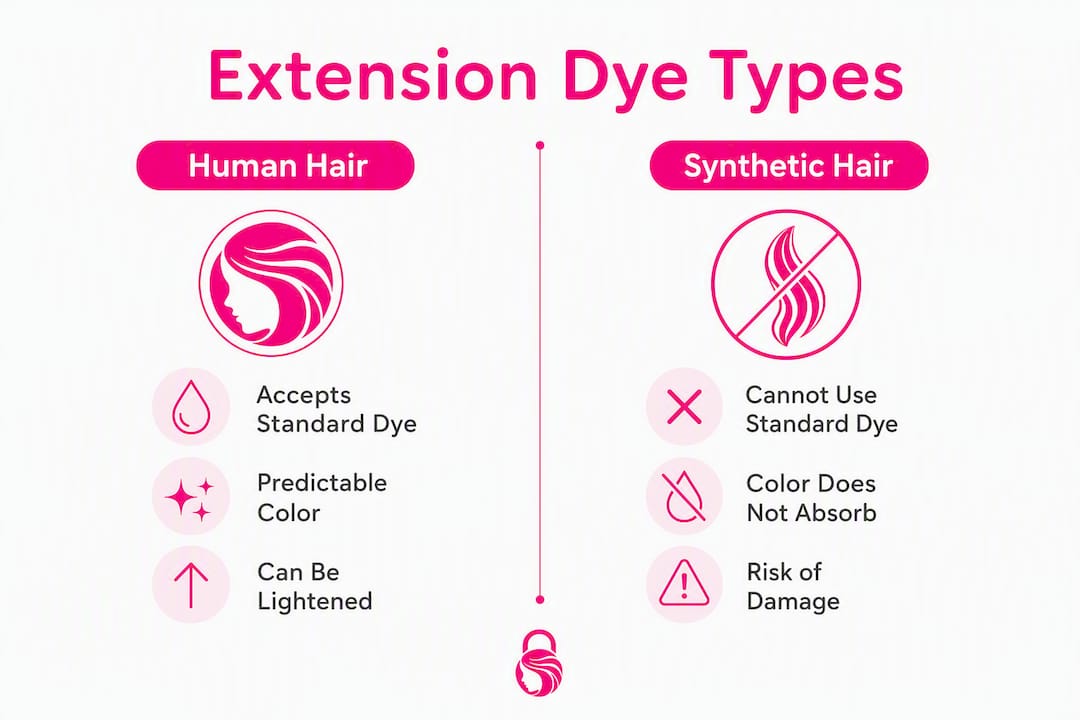
100% human hair extensions (Remy, virgin, or double-drawn) accept color reliably because their cuticle structure behaves like natural hair. Virgin extensions, which have never been chemically processed at the factory, offer the most predictable results. Remy extensions, which are aligned root-to-tip but may carry a light factory treatment, also accept color well, though results can vary slightly depending on the coating.
Synthetic extensions cannot be safely dyed with standard hair color. The fibers are made from acrylic or polyester, which repel oxidative dye and can melt or frizz under developer. Some synthetic fibers accept fabric dye or specially formulated synthetic-hair color, but the results are unpredictable and the process is not recommended for wearable sets.
Pre-colored or heavily processed extensions present a different challenge. Factory-applied color often involves a sealant coating that blocks dye absorption, meaning color sits unevenly on the surface rather than penetrating the cortex. Going darker on pre-colored extensions is usually manageable. Lightening them is where damage accelerates quickly.
Clip-in base materials are worth a separate note. The fabric or silicone weft base does not absorb color the way hair does. Dye applied carelessly to the base can stain it, weaken the weft stitching, or leave patchy color at the root line.
| Feature | 100% Human Hair | Synthetic Hair |
|---|---|---|
| Accepts standard hair dye | Yes | No |
| Predictable color results | High (virgin) / Moderate (Remy) | Very low |
| Safe developer use | 10-vol or lower | Not applicable |
| Repairable after damage | Partially (deep conditioning) | No |
| Bleach-safe | Only with professional care | Never |
The material description on any Hairlockshairextensions product page clearly states whether the set is 100% human hair or synthetic, which is the first thing to confirm before planning any color service.
Which dyes and developers are safe for extensions?
The chemistry of extension coloring is simpler than most people expect, and the core rule is consistent: deposit color, do not strip it.
Semi-permanent and demi-permanent dyes are the recommended choice for most extension color jobs. Semi-permanent formulas contain no developer and no ammonia, coating the outside of the hair shaft rather than penetrating it. Demi-permanent dyes use a very low-volume developer (typically 10-volume or less) to open the cuticle slightly, allowing deeper color deposit with minimal structural damage. Both options are far gentler than permanent color on hair that cannot regenerate from a scalp.
Developer volume is where most DIY dye jobs go wrong. Standard at-home permanent color kits often include 20-volume or 30-volume developer. On extensions, that level of oxidation erodes the cuticle, raises porosity, and accelerates dryness. The industry standard for safe extension coloring is 10-volume developer or lower when depositing color, and professional guidance for anything involving lightening.
What to avoid:
- High-volume developer (20-vol and above) for deposit-only color changes
- Bleach on any extension that has been factory-colored, heat-treated, or chemically processed
- Box dyes with undisclosed peroxide levels, which frequently contain 20-vol developer
- Alcohol-heavy or sulfate-heavy formulas that strip moisture during the color process
Ammonia-free, low-alkaline dyes are the practical middle ground for at-home use. Brands that produce professional ammonia-free lines give you color deposit without the harsh pH spike that breaks down the cuticle. Color-depositing conditioners are a gentler alternative still, useful for toning or refreshing existing color rather than making a significant shade change.
Pro Tip: If you want to tone extensions, purple shampoo works on human hair extensions the same way it works on natural blonde hair. Use it for 3–5 minutes maximum; leaving it longer can cause uneven violet staining that is difficult to correct.
How to safely dye extensions at home: step by step
Before starting, confirm three things: the extensions are 100% human hair, you have a spare weft or single clip section for a strand test, and your dye kit uses 10-volume developer or lower.
-
Inspect the extensions. Check the product label or order details for material confirmation. Note the current color depth (how light or dark they are) and whether they have been previously colored or heat-styled heavily.
-
Condition first. Apply a lightweight protein treatment or deep conditioner 24–48 hours before coloring. Extensions that are already dry or porous absorb dye unevenly. This step improves color consistency.
-
Perform a strand test. Take a small section from a spare weft or the least visible clip. Apply your mixed dye at the planned developer volume, time it precisely, rinse, and dry. Photograph the result next to your natural hair or a color swatch. Do not skip this step.
-
Mix your dye. Use a non-metallic bowl and brush. Mix semi-permanent or demi-permanent color with 10-volume developer (or use the semi-permanent formula straight, with no developer). Follow the product’s ratio instructions exactly.
-
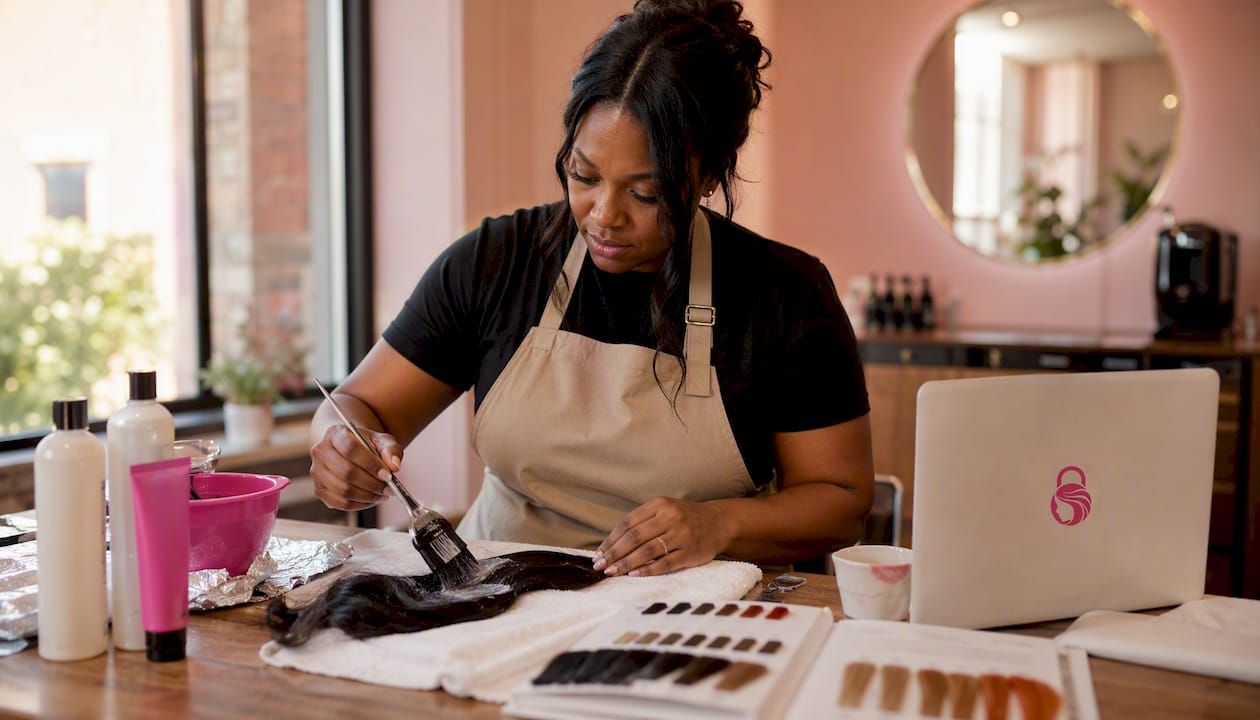
Work in small weft sections. Lay each weft flat on a foil sheet or coloring board. Apply dye from mid-length to ends first, then work toward the weft base. Avoid saturating the weft stitching or any adhesive/tape area.
-
Time carefully. Semi-permanent color typically processes in 20–30 minutes. Demi-permanent may take slightly longer. Check every 5 minutes after the minimum time. Do not leave color on longer than the product recommends, as extensions cannot repair over-processing the way natural hair can.
-
Rinse thoroughly with cool water. Warm or hot water opens the cuticle and allows color to bleed out faster. Cool water seals the cuticle and locks in the deposit.
-
Deep condition immediately. Apply a sulfate-free, alcohol-free deep conditioner and leave it on for at least 10–15 minutes before rinsing. This step is not optional; it replaces the moisture the dye process removed.
-
Air dry or use low heat. Avoid heat styling for at least 48 hours post-color. The cuticle needs time to re-seal. When you do return to heat tools, use a heat protectant rated for chemically treated hair.
Safety warnings to keep in mind:
- Never apply bleach to tape-in or keratin bond extensions without professional supervision. The chemicals can dissolve the adhesive and cause the bonds to fail.
- Do not process the same set twice in one week. Space color applications by at least 4–6 weeks.
- If the strand test shows brittleness, excessive dryness, or uneven color, stop and consult a professional before treating the full set.
Pro Tip: Process each weft separately on its own foil sheet rather than stacking them. Stacked wefts trap heat unevenly and produce inconsistent color, especially near the fold.
The Hairlockshairextensions care guide for permanent extensions covers post-color maintenance steps in detail and is worth reviewing before you start.

When should you hire a colorist instead?
Some color changes are straightforward enough for a careful DIY approach. Others carry real risk of irreversible damage, and knowing the difference saves both your extensions and your money.
Go to a professional when:
- You need to lighten extensions by more than one shade
- The extensions are already factory-colored, highlighted, or chemically treated
- You are working with tape-in, keratin bond, or nano bead extensions that are currently attached
- You want to blend multiple wefts from different lots or textures into a single cohesive color
- You have had a previous dye attempt that produced uneven or unexpected results
Attached extensions require particular caution. Tape-in bonds and keratin bonds are adhesive-based, and chemical services applied near the bonds can cause slippage, bond failure, or uneven color at the attachment point. A colorist experienced with extensions knows how to protect the bonds during the process.
Questions to ask before booking:
- Have you colored extensions before, and what attachment types have you worked with?
- What developer volume do you use for extension color services?
- Will you perform a strand test before treating the full set?
- How do you protect tape or keratin bonds during the color process?
- What aftercare do you recommend, and which products are safe for my extension type?
- Does coloring affect the return or exchange policy on my set?
Appointment prep checklist:
- Bring a spare weft or single clip section for the colorist to test on
- Note your current home-care routine and any products you use regularly
- Use Hairlockshairextensions’ free color-matching service beforehand to arrive with a precise target shade
- Confirm whether the colorist has access to ammonia-free or low-developer professional lines
For complex color work, Hairlockshairextensions’ salon consultation service connects you with experienced professionals who understand extension-specific color requirements. Local specialist salons, including partner resources like Awani Hair Braiding, can also provide expert guidance for textured or specialty extension types.
Pro Tip: Ask the colorist to show you the developer volume on the product they plan to use. If they reach for 20-vol without explanation, that is a signal to ask why, or to find someone else.
How dyeing affects extension lifespan and your warranty
Extensions cannot repair themselves. Natural hair benefits from scalp oils that continuously condition each strand from root to tip. Extensions receive no such support, which means every chemical service accelerates the aging process in a way that cannot be reversed.
Specific damage mechanisms from dye and bleach:
- Cuticle erosion: Developer lifts and roughens the cuticle layer. Repeated lifting leads to permanent roughness, increased tangling, and a dull appearance.
- Raised porosity: A more porous hair shaft absorbs moisture and product unevenly, leading to frizz and inconsistent color results on future applications.
- Increased shedding: Weakened bonds between the cuticle and cortex cause more strand breakage during brushing and washing.
- Adhesive failure: For tape-in and keratin bond extensions, chemical exposure near the bonds can dissolve or weaken the adhesive, causing premature slippage.
Coloring extensions should be treated as a customization that shortens their usable lifespan. Choosing the correct shade upfront through a consultation reduces the need for chemical adjustments later and preserves the full value of your investment.
Dyeing also has direct implications for return eligibility. Hairlockshairextensions’ refund and exchange policy excludes sets that have been chemically processed or damaged. Before you apply any dye, confirm the policy for your specific set. Once color is applied, the option to return or exchange is typically no longer available.
Aftercare to preserve extension health post-color:
- Deep condition once per week with a sulfate-free, alcohol-free mask
- Use a protein treatment every 4–6 weeks to reinforce the hair shaft
- Reduce heat styling frequency and keep tools below 350°F
- Switch to extension-friendly shampoo and conditioner formulated without sulfates or high-alcohol content
- Brush gently from ends upward using a loop brush or soft-bristle paddle brush
The extension-friendly product guide from Hairlockshairextensions lists specific product types and routines that support post-color hydration and longevity.
How to perform a strand test correctly
A strand test is the single most reliable tool for predicting how your extensions will respond to color. It takes 30–45 minutes and can prevent an irreversible mistake on a full set worth hundreds of dollars.
Step-by-step strand test process:
- Select your sample. Use a single clip weft or a small piece cut from a spare weft. It should come from the same set you plan to color, not a different lot.
- Label the sample. Write the date, dye brand, developer volume, and mix ratio on a piece of tape attached to the foil.
- Apply the dye mixture. Use the exact formula you plan to use on the full set. Coat the sample evenly from mid-length to end.
- Set a timer. Start timing from the moment dye is applied. Check at the minimum recommended time, then every 5 minutes after.
- Rinse with cool water. Rinse thoroughly until the water runs clear.
- Dry completely. Air dry or use a low-heat dryer. Do not assess color on wet hair; wet hair always appears darker.
- Photograph the result. Place the dried sample next to your natural hair or a color swatch in natural light.
- Assess tactile quality. Run the sample between your fingers. It should feel smooth, not gritty or brittle.
What to record:
- Processing time used
- Developer volume and dye brand
- Mix ratio (dye to developer)
- Before and after photographs
- Color shift notes (warmer, cooler, lighter, darker than expected)
- Tactile assessment (smooth, dry, rough, brittle)
| Assessment Point | Pass Criteria | Fail Criteria |
|---|---|---|
| Color match | Within one shade of target | More than one shade off, or uneven |
| Texture | Smooth, similar to pre-test feel | Gritty, brittle, or significantly drier |
| Color evenness | Consistent root to end | Patchy, banded, or blotchy |
| Elasticity | Stretches slightly without breaking | Snaps immediately under tension |
If the strand test fails on any point, do not proceed with the full set. Tone correction with a color-depositing conditioner may address minor shade issues. Significant texture damage means the extensions are not suitable for chemical color and a professional consultation is the next step.
Hairlockshairextensions’ expert advice on coloring extensions safely
Hairlockshairextensions was founded by Michele, whose 30 years of experience in hair extensions informs every recommendation the brand makes. The guidance here is not generic; it reflects what actually works for clients who want to customize their color without shortening the life of a premium set.
Core recommendations from the Hairlockshairextensions team:
- Use the free personal color-matching service before purchasing. Arriving at the right shade from the start eliminates the most common reason clients reach for dye.
- Choose pre-colored extension sets whenever possible. Hairlockshairextensions’ product range includes weft, micro-bead, tape-in, and ponytail extensions in a wide range of shades, reducing the need for post-purchase color adjustment.
- For complex color changes, book an in-salon appointment rather than attempting it at home. The salon service includes professional consultation and application by specialists familiar with extension-specific color requirements.
A practical weekly aftercare routine post-color:
- Wash day: Sulfate-free shampoo, followed by a moisturizing conditioner from mid-length to ends
- Weekly: Apply a deep conditioning mask for 15–20 minutes before rinsing
- Every 4–6 weeks: Use a protein treatment to reinforce the hair shaft
- Daily: Brush gently with a loop brush; avoid brushing when wet
- Heat styling: Keep tools below 350°F and always apply a heat protectant first
The most common mistake clients make is buying extensions in the wrong shade and then trying to fix it with dye. Getting the color right before purchase is always the better investment, both for the health of the extensions and for the final result.
Pro Tip: When toning hair extensions with purple shampoo or a toning conditioner, apply it to dry extensions for more controlled results. Wet hair dilutes the toner and makes it harder to predict the final tone.
Key Takeaways
Human hair extensions can be safely dyed using semi-permanent or demi-permanent color with 10-volume developer or lower, provided you perform a strand test first and commit to a consistent deep conditioning routine afterward.
| Point | Details |
|---|---|
| Human hair only | Only 100% human (Remy or virgin) extensions accept standard hair dye safely. |
| Use gentle color formulas | Semi-permanent or demi-permanent dye with 10-volume developer minimizes cuticle damage. |
| Strand test every time | Test on a spare weft before treating the full set to predict color and texture results. |
| Dyeing shortens lifespan | Chemical processing accelerates dryness and wear; strict aftercare is required to preserve the set. |
| Hairlockshairextensions color-matching | Use the free color-matching service to get the right shade before purchase and avoid dye altogether. |
The real cost of chasing the perfect shade
There is a tension that comes up in almost every color consultation: the desire for an exact shade versus the practical reality of what chemical processing does to extensions over time. The honest answer is that dyeing extensions is a trade-off, not a solution.
When a client wants to go slightly darker or add a warm tone, a careful semi-permanent application with low-volume developer is a reasonable choice. The risk is manageable, the result is predictable with a proper strand test, and the aftercare commitment is straightforward. That is a trade-off worth making.
When a client wants to lighten significantly, match a very specific highlighted pattern, or correct a factory color that missed the mark, the calculus changes. Bleach and high-volume developer on extensions that cannot regenerate will shorten their usable life in ways that no amount of deep conditioning fully reverses. In those cases, the better decision is almost always to return to the source: use a color-matching service, order a set in the correct shade, or book a professional consultation before any chemicals are applied.
Michele’s 30 years of experience consistently points to the same conclusion: the clients who are happiest with their extensions long-term are the ones who got the color right before purchase, not the ones who tried to adjust it afterward. That is not a limitation; it is the smarter approach to protecting an investment.
Get the right color without the risk
Hairlockshairextensions takes a different approach to color than most extension providers. Rather than leaving clients to figure out shade-matching on their own and reach for a dye kit when something is off, the brand offers a free personal color-matching service that matches your exact shade before you purchase. For clients who want to see realistic outcomes first, the before and after gallery shows real client results across a range of shades and extension types.
The full product range, including weft, micro-bead, tape-in, and ponytail extensions in 100% human hair, covers a wide spectrum of shades so most clients find their match without any chemical adjustment. For those who do need a color service, the salon team handles it professionally, with the strand testing and developer guidance this article covers built into every appointment. Book your consultation at Hairlockshairextensions and get the color right the first time.
Useful sources
The following resources were used to build the guidance in this article. Internal Hairlockshairextensions pages are listed first, followed by external references.
- Personal Hair Colour Matching Service for FREE, Hairlockshairextensions — Details the free shade-matching service available before purchase.
- Care Sheet Permanent Hair Extensions, Hairlockshairextensions — Step-by-step maintenance guidance for permanent extension types post-color.
- Extension Friendly Hair Products Guide, Hairlockshairextensions — Product recommendations for sulfate-free and alcohol-free care routines.
- Refund & Exchange Policy, Hairlockshairextensions — Policy details covering return eligibility after chemical processing.
- SALON, Hairlockshairextensions — In-salon consultation and professional application services.
- Before and After Gallery, Hairlockshairextensions — Real client color and styling results for setting realistic expectations.
- Dyeing Do’s & Don’ts, Luxy Hair Support — Industry guidance on developer volumes and strand testing for extensions.
- Hair Extensions You Can Dye: The Ultimate Guide to Safe Coloring & Maintenance, Moresoo Support — Covers how dyeing affects extension lifespan and the value of pre-purchase consultation.
FAQ
Can you dye hair extensions the same way as natural hair?
Human hair extensions accept color using the same dye chemistry as natural hair, but they require gentler products because they cannot regenerate from scalp oils. Use semi-permanent or demi-permanent color with 10-volume developer or lower, and always perform a strand test first.
Will a hairdresser dye extensions?
Most professional colorists will color extensions, but you should confirm they have specific experience with extension types before booking. Ask about their developer volume preference and whether they perform a strand test, particularly for tape-in or keratin bond sets.
What happens if you dye extensions incorrectly?
Over-processing with high-volume developer or bleach causes cuticle erosion, raised porosity, increased shedding, and in adhesive-based extensions, bond failure. The damage is largely irreversible because extensions cannot self-repair.
Can you change the color of extensions to a lighter shade?
Lightening extensions is possible but carries significant risk, especially on pre-colored or processed sets. Any lightening beyond one shade should be handled by a professional colorist using the lowest effective developer volume, with a strand test completed beforehand.
Does dyeing extensions void the return policy?
At Hairlockshairextensions, sets that have been chemically processed are excluded from the standard refund and exchange policy. Check the policy for your specific set before applying any color, as the option to return is typically removed once dye has been applied.