


Discreet Hair Extensions: 7 Best Low-Visibility Options
The most discreet hair extensions are ultra-thin tape-ins, nano and micro-bead systems, PU/skin wefts, low-profile keratin bonds, and hand-tied or nano wefts — each designed to stay hidden through flat bases, minimal attachment hardware, and precise color and texture matching. The industry term for this category is “undetectable” or “invisible” extensions, and the difference between a method that blends and one that shows comes down to three things: how flat the base sits against the scalp, how closely the hair matches your own texture and color, and where the attachment points are placed.
- Book a free color-matching consultation before committing to any method — color is the single fastest way an extension gets noticed.
- Try a low-profile clip-in test at home first to assess how well a shade and texture match your own hair in natural light.
Pro Tip: Before your salon appointment, take a photo of your hair in natural daylight and again under fluorescent light. Extensions that blend in one lighting condition often show in the other — sharing both photos with your stylist sets a higher standard for the color match.
Key Takeaways
The most discreet hair extensions combine an ultra-flat base, exact color and texture matching, and correct placement — without all three, even a premium method will show.
| Point | Details |
|---|---|
| Flat base is the foundation | Choose methods with bases under 1mm thick — nano wefts, tape-ins, and PU wefts sit flattest. |
| Color match before installation | A professional color match prevents the most common detection point; Hairlockshairextensions offers this service free. |
| Texture match for coily hair | For 3C–4A patterns, curl-matched extensions are required — mismatched textures show in motion. |
| Follow the maintenance schedule | Tape-ins need reapplication every 6–8 weeks; skipping visits creates visible gaps and loosened placement. |
| Hairlockshairextensions for discreet results | The Genius Weft, Micro-Bead 2.8mm, nano bead, keratin bond, and Top~Lock Topper each address a specific visibility challenge with 100% human hair. |
Table of Contents
- What design features make discreet hair extensions truly invisible?
- Which discreet extension methods are the most undetectable?
- How do you choose the right discreet method for your hair and lifestyle?
- How do you maintain invisible extensions and keep them undetectable?
- What do discreet hair extensions typically cost in the U.S.?
- Which Hairlockshairextensions products solve specific visibility problems?
- What 30 years of experience teaches you about invisible extensions
- Ready to find your perfect discreet extension match?
- Useful sources and further reading
- FAQ
What design features make discreet hair extensions truly invisible?
Invisible extensions rely on ultra-thin bases, skin-like headers, and accurate color and texture matching to remain undetectable. Understanding exactly which design details create that result helps you evaluate product claims and salon quotes with confidence.
The core features that separate a truly hidden extension from one that shows are:
- Ultra-thin or flat base: The thinner the weft or attachment point, the flatter it lies against the scalp. A nano weft measuring 0.4mm thick sits dramatically closer to the root than a standard machine weft at 1.7mm.
- Scalp-colored or skin-like header: PU (polyurethane) skin wefts and lace-top wefts mimic the look of a natural scalp parting. Tape-in panels with a clear or flesh-toned adhesive strip disappear against the root.
- Exact color and texture match: A shade that is even slightly off reads as a stripe in direct light. Texture mismatch — straight extensions on wavy hair — creates visible inconsistency in motion.
- Lightweight panels: Heavy wefts pull away from the scalp over time, creating a visible gap. Lighter panels stay flush longer.
- Low-profile attachment hardware: Micro or nano rings (2.8mm or smaller) are far less detectable than standard clamp beads.
- Strategic placement and layering: Extensions placed too high or too close to the hairline show during updos and ponytails. Correct sectioning keeps attachment points hidden under the natural hair.
How hair density, cut, and movement interact with extensions also matters. Fine hair with low density provides less coverage over attachment points, so flat bases and precise placement become even more critical. Wind, ponytails, and updos all expose placement zones that look fine when hair is down. A blending cut that feathers the extension hair into the natural length removes the visible “shelf” line that appears when lengths are mismatched.
Checklist: How to assess a product or salon claim
- Does the base measure under 1mm in thickness?
- Is the header skin-toned, clear, or lace?
- Does the salon offer a color-match service before installation?
- Are attachment points placed at least 1.5 inches from the hairline?
- Is the hair 100% human and matched to your texture?
Pro Tip: Ask to see the extension base before it is applied. Run your finger across it — if you can feel significant bulk, it will show under fine or medium-density hair.
Which discreet extension methods are the most undetectable?
Tape-in extensions create an invisible result because their thin, flexible panels lay flat and distribute weight evenly when applied correctly. Each method below has a different visibility profile, and the right choice depends on your hair type, lifestyle, and how long you want the result to last.
Tape-in (ultra-thin / invisible tape)
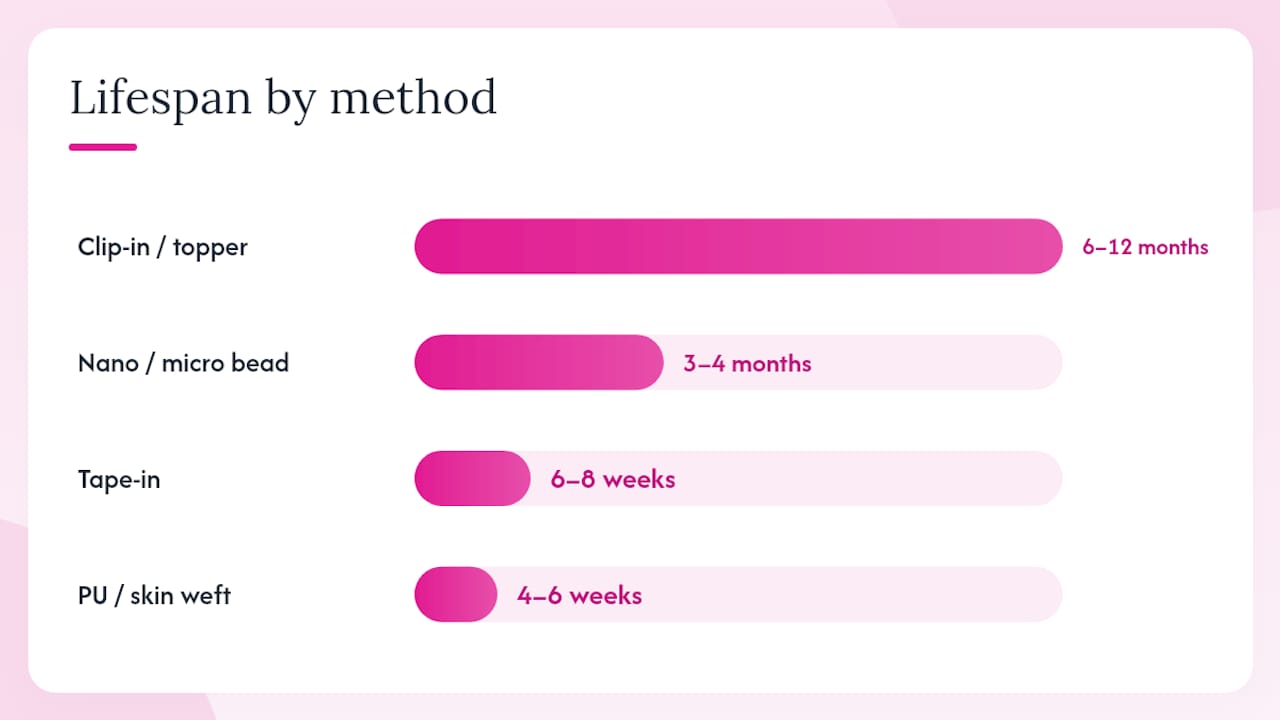
Thin adhesive panels sandwich a section of natural hair between two strips, lying flat against the scalp. Cross-stitched panel construction and a natural taper allow broader coverage with fewer panels and improve reusability. Best for fine to medium hair. Lifespan: 6–8 weeks before reapplication. Salon-applied. Damage risk is low when removed correctly.
Pros: Very flat, reusable panels, widely available, good for fine hair. Cons: Adhesive can weaken with oil-based products; not ideal for very thick or coily hair.
Nano and micro-bead (micro-ring) systems
Tiny silicone-lined rings clamp individual strands of extension hair to small sections of natural hair. The Micro-Bead Hair Extensions 2.8mm from Hairlockshairextensions use rings small enough to stay hidden under most hair densities. No heat or adhesive is involved. Best for medium to thick hair. Lifespan: 3–4 months before tightening. Salon-applied. Damage risk is low with correct placement and regular maintenance.
Pros: No glue or tape, reusable hair, adjustable placement. Cons: Rings can be felt if placed too close to the scalp; not ideal for very fine hair.
PU / skin wefts
A thin polyurethane strip holds the hair in a panel that mimics a scalp parting. The skin-like header disappears against the root. Best for fine to medium hair. They typically last several weeks before requiring maintenance. Salon-applied. Damage risk is low.
Pros: Extremely flat, scalp-like appearance, good for straight to wavy textures. Cons: Less flexible for textured or coily hair; adhesive requires careful removal.
Keratin bond (low-profile hot fusion)
Individual strands are bonded to natural hair with a small keratin tip, fused with a heat tool. The bond point is small and sits close to the root. Hairlockshairextensions offers keratin bond extensions using 100% human hair. Best for medium to thick hair. Typically lasts several months. Salon-applied. Damage risk is moderate if bonds are not removed professionally.
Pros: Very natural movement, long lifespan, individual strand placement. Cons: Removal requires a professional; heat application is involved.
Hand-tied / nano wefts
Machine-sewn or hand-tied wefts with ultra-thin bases lie flat against the scalp. Nano weft dimensions of 0.4mm thickness allow closer placement to the hairline than standard wefts. The Hairlockshairextensions Genius Weft is a hand-tied option in this category. Best for medium to thick hair. Lifespan: 6–8 weeks between move-ups. Salon-applied. Damage risk is low with correct bead placement.
Pros: Minimal bulk, natural movement, good for adding volume discreetly. Cons: Requires a skilled stylist for invisible placement; not DIY-friendly.
Low-profile clip-ins and toppers (V-Part / Top~Lock)
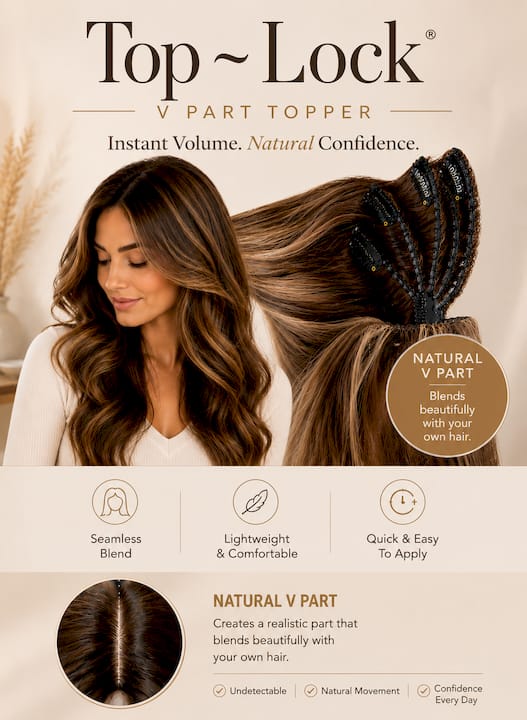
Clip-in extensions attach and remove without salon visits. The Top~Lock V-Part Topper from Hairlockshairextensions is designed specifically for thinning crowns, with a V-shaped parting that blends into natural hair. Some clip-in designs perform well for specific curl patterns, including 3C–4A textures, when matched correctly. Best for all hair types depending on product. Lifespan: reusable for 6–12 months with proper care. DIY-friendly. Damage risk is minimal.
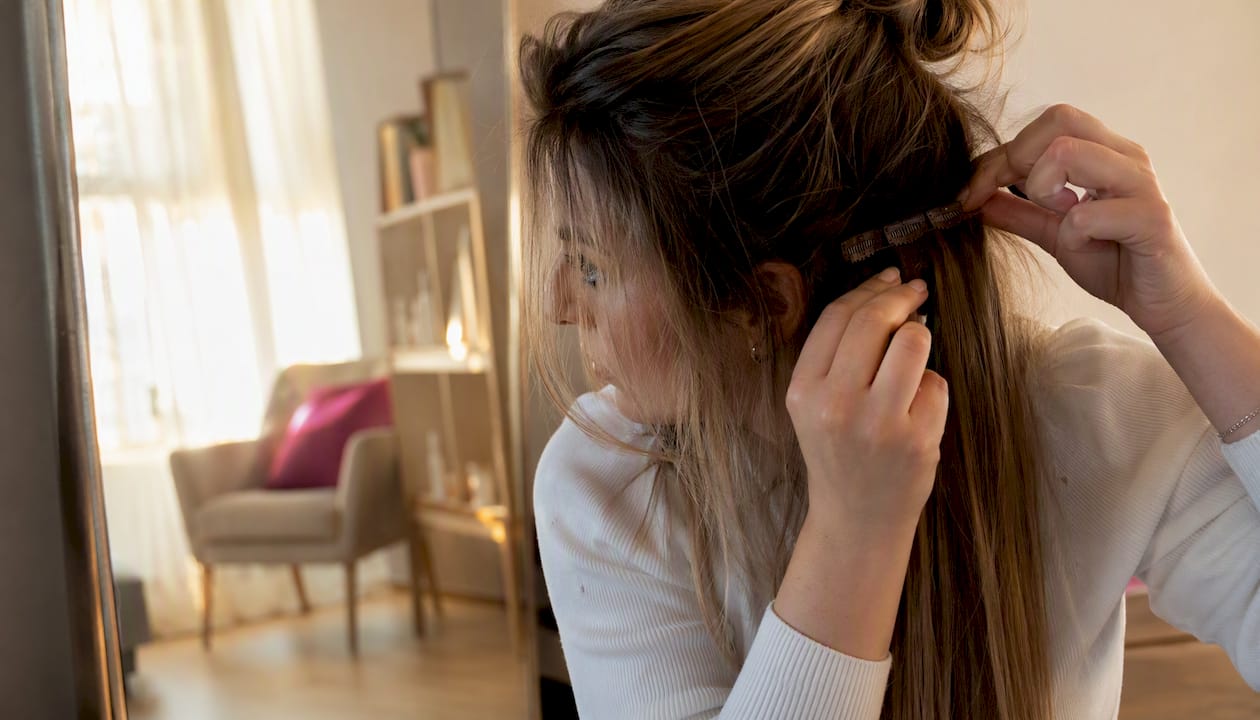
Pros: No commitment, removable daily, good for thinning hair coverage. Cons: Clips can show in fine hair if not placed carefully; not suitable for all-day wear in every style.
Sew-in / weft (when done invisibly)
A weft of hair is sewn onto a cornrow base or concealed link weft header with built-in ring pockets, keeping attachment hardware hidden during updos and ponytails. Best for medium to thick and coily hair. Lifespan: 6–8 weeks. Salon-applied. Damage risk depends on braid tension.
Pros: Long-lasting, good for thick and textured hair, no adhesive. Cons: Cornrow base can be visible if hair is fine; requires professional installation.
Pro Tip: For 3C–4A curl patterns, experts recommend matching extensions engineered to the same curl pattern rather than forcing a different texture to blend. Ask your stylist specifically about curl-matched options — straight extensions on coily hair will always show in motion.
| Method | Visibility / flatness | Best hair type | Application | Lifespan | Damage risk |
|---|---|---|---|---|---|
| Tape-in | Very flat | Fine to medium | Salon | 6–8 weeks | Low |
| Nano / micro bead | Flat, minimal hardware | Medium to thick | Salon | 3–4 months | Low |
| PU / skin weft | Extremely flat | Fine to medium | Salon | 4–6 weeks | Low |
| Keratin bond | Small bond point | Medium to thick | Salon | 3–4 months | Moderate |
| Hand-tied / nano weft | Ultra-flat (0.4mm) | Medium to thick | Salon | 6–8 weeks | Low |
| Clip-in / topper | Varies by product | All types | DIY | 6–12 months | Minimal |
| Sew-in / weft | Depends on base | Medium to thick, coily | Salon | 6–8 weeks | Moderate |
How do you choose the right discreet method for your hair and lifestyle?
The right invisible extension method is the one that matches your hair’s density and texture, fits your maintenance schedule, and stays within your budget for both the initial install and upkeep. Working through these factors before your consultation saves time and prevents costly mistakes.
Factors to assess before booking:
- Hair texture and density: Fine hair needs the flattest possible base (tape-in, PU weft, or nano weft). Thick or coily hair can support micro-bead or sew-in methods.
- Desired longevity: If you want to go 3–5 months between salon visits, keratin bonds or micro-bead systems are more practical than tape-ins.
- Styling habits: Frequent heat styling, swimming, or updos affect which adhesives and attachment types hold up. Ponytails and up-styles require placement that keeps hardware hidden.
- Scalp sensitivity: Adhesive-based methods (tape-in, keratin) can irritate sensitive scalps. Bead systems avoid adhesive entirely.
- Budget: Initial install costs vary significantly by method and coverage. Factor in reapplication frequency — a method with a lower upfront cost but monthly reapplication can cost more annually.
- Parting and ponytail options: If you wear your hair up regularly, ask specifically about placement that keeps attachment points hidden in those styles.
Questions to ask at your consultation:
- How do you match color and texture before installation?
- Where exactly will the attachment points be placed?
- What is the reapplication timeline and what does each visit cost?
- How are extensions removed, and what is your damage-mitigation process?
- Can I see before-and-after photos of clients with a similar hair type?
Red flags to watch for:
- Bulky bases or thick weft headers shown as samples
- Vague answers about lifespan (“it depends” with no range given)
- No color-matching process before the install day
- A stylist who recommends maximum volume at the first visit without testing a small section
Pro Tip: For extensions on fine hair, ask the stylist to apply a single test row before committing to a full install. This lets you assess flatness, color match, and comfort before the full cost is committed.
How do you maintain invisible extensions and keep them undetectable?
Maintenance is what keeps extensions looking natural over time. Skipping scheduled appointments is the most common reason extensions become visible — loosened attachment points, grown-out placement, and product buildup all create detection points that were not there at installation.
Typical maintenance schedules vary by method and client needs but generally involve visits every few weeks to a few months depending on system and hair growth.
Maintenance habits that protect invisibility:
- Brush from ends to roots using an extension-safe loop brush, never pulling from the attachment point.
- Use extension-friendly hair products — avoid sulfate shampoos and oil-based conditioners near tape or bead attachment zones.
- Sleep with hair in a loose braid or silk bonnet to prevent matting at the weft line.
- Avoid applying dry shampoo or heavy product directly onto attachment points, which causes buildup and loosens bonds.
DIY removal is one of the most common causes of damage and visible extension failure. Tape adhesive pulled without a proper remover solution can strip the natural hair cuticle. Keratin bonds removed without the correct tool can break natural strands at the bond point. Professional removal protects both the natural hair and the extension hair for reuse.
When you notice loosened placement, increased shedding at the attachment zone, or extensions that no longer sit flat, book a maintenance appointment rather than waiting for the next scheduled visit.
What do discreet hair extensions typically cost in the U.S.?
Cost varies significantly by method, coverage, hair grade, and stylist location. The figures below reflect typical U.S. market ranges for 100% human hair extensions installed by an experienced stylist.
| Method | Initial install | Maintenance visit |
|---|---|---|
| Tape-in | $200 | $100 |
| Micro / nano bead | $300 | $150 |
| Keratin bond | $500 | $200–$500 |
| Hand-tied / nano weft | $500 | $200–$500 |
| PU / skin weft | $200–$500 | $100 |
| Clip-in / topper | $100 (product only) | None (home care) |
Factors that drive cost up or down:
- Hair grade: 100% Remy human hair costs more than non-Remy but lasts longer and blends better, reducing total annual cost.
- Grams and coverage: More hair means more panels or strands, which increases both product and labor cost.
- Stylist experience and location: A specialist in invisible methods in a major metropolitan area charges more than a general salon, but the result is typically worth the premium for fine or textured hair.
- Color-matching services: A professional color match before installation prevents costly color corrections later.
- Reapplication frequency: Methods with shorter maintenance cycles (tape-in, skin weft) accumulate higher annual costs than longer-lasting methods (keratin bond, micro bead).
Tips to reduce long-term cost without sacrificing invisibility:
- Invest in a professional color match at the outset — correcting a mismatched shade costs more than getting it right the first time.
- Choose reusable tape panels; quality panels can be reapplied 3–4 times before replacement.
- Follow the maintenance schedule precisely — skipping appointments leads to more damage and higher correction costs.
Which Hairlockshairextensions products solve specific visibility problems?
Hairlockshairextensions offers a focused range of 100% human hair extension methods, each suited to a different visibility challenge. Michele, the founder, brings 30 years of experience to every product recommendation and consultation, and the range reflects that depth of knowledge.
Genius Weft (hand-tied weft)
The Genius Weft is a hand-tied weft with an ultra-thin base, designed to lie flat against the scalp and add volume without visible bulk. Best for medium to thick hair that needs discreet density. The thin construction means the weft stays hidden under the natural hair even in movement.
Micro-Bead Hair Extensions 2.8mm
The Micro-Bead Hair Extensions 2.8mm use small silicone-lined rings that avoid adhesive entirely. The 2.8mm ring size keeps the attachment point minimal and undetectable under most hair densities. Ideal for clients who want a long-lasting, no-glue option and can commit to 3–4 month maintenance visits.
Keratin bond extensions
Hairlockshairextensions’ keratin bond options use 100% human hair bonded in individual strands for the most natural movement of any salon-applied method. Each bond point is small and sits close to the root. Best for medium to thick hair where individual strand placement creates the most convincing natural result.
Nano bead extensions
Nano bead extensions use rings even smaller than the micro-bead system, making them one of the flattest attachment options available. Suited to finer hair densities where a standard micro bead would create visible bulk.
Top~Lock V-Part Topper
The Top~Lock V-Part Topper addresses thinning at the crown with a V-shaped parting that blends directly into natural hair. It is the most discreet solution for clients experiencing hair loss or thinning at the top of the head, and it requires no salon application. For more context on choosing a topper, the thinning hair toppers guide covers fit and placement in detail.
Before and after results: The Hairlockshairextensions before and after gallery shows real client outcomes across these methods, giving you a realistic preview of what discreet placement looks like on different hair types.
Free personal color-matching consultation: Hairlockshairextensions offers a free personal colour-matching service — a critical step for anyone prioritizing invisibility. Color is the most common reason extensions are detected, and getting it right before installation prevents the need for costly corrections.
Pro Tip: When reviewing the gallery, filter for clients with a similar hair density and texture to your own. A result that looks natural on thick hair may require a different product or placement strategy on fine hair.
| HairLocks product | Best for | Visibility strength |
|---|---|---|
| Genius Weft | Medium to thick hair, volume | Ultra-flat hand-tied base |
| Micro-Bead 2.8mm | Medium to thick, no-adhesive preference | Small ring, no glue |
| Keratin bond | Medium to thick, natural movement | Individual strand, small bond |
| Nano bead | Fine to medium hair | Smallest ring size |
| Top~Lock V-Part Topper | Thinning crown, DIY-friendly | V-part blends into parting |
What 30 years of experience teaches you about invisible extensions
The conversation around discreet extensions tends to focus on method names — tape-in, micro-bead, keratin bond — as if the label alone determines the result. After three decades working with clients across every hair type and texture, the reality is more nuanced. The method is a framework. What actually determines whether extensions are invisible is the precision of the color match, the flatness of the base, and the skill of the blending cut that follows installation.
Clients often arrive having researched methods extensively but having given almost no thought to color matching. They have picked a method, a length, and a weight, but they have not seen the actual hair next to their own in natural light. That is where most invisible extension results fail before they begin. At Hairlockshairextensions, the free color-matching consultation exists precisely because this step is too important to skip. The before-and-after gallery reflects what happens when color, texture, and placement are all addressed together — results that genuinely look like the client’s own hair.
The other underestimated factor is maintenance. Extensions that were perfectly invisible at installation become detectable when the attachment zone grows out and the client delays their reapplication visit. Invisibility is not a one-time result; it is maintained through a consistent schedule.
Ready to find your perfect discreet extension match?
Getting extensions that stay genuinely hidden starts with two things: the right method for your hair type and a color match that is exact, not approximate. Hairlockshairextensions offers both, backed by Michele’s 30 years of experience and a product range built specifically around natural-looking results.
The free personal colour-matching service means you can confirm your shade before any product is ordered or applied. The before and after gallery shows real results across the Genius Weft, Micro-Bead 2.8mm, keratin bond, nano bead, and Top~Lock V-Part Topper — so you can see what discreet placement looks like on hair similar to your own. When you are ready to book, the pricing and booking page outlines what to expect at your first appointment, including timing and cost. Bring photos of your hair in natural and indoor light, and come ready to discuss your styling habits and maintenance availability.
Useful sources and further reading
- The 11 Best Hair Extensions of 2025, Tested and Reviewed
- Invisible Hair Extensions: What Makes Extensions Truly Undetectable?
- Undetectable Tape Extensions
- Nano Weft - Melia Hair Extensions
- Perfectress Concealed Link Weft - PerfecTress International Hair Extension Systems
FAQ
What is the most discreet hair extension method?
Nano and micro-bead systems and ultra-thin tape-ins are consistently rated the most discreet for most hair types because their attachment points are minimal and their bases lie flat against the scalp. For thinning crowns, a V-Part Topper like the Top~Lock from Hairlockshairextensions offers targeted, DIY-friendly coverage.
What hair extensions are not visible at the scalp?
Extensions with bases under 1mm thick — including nano wefts, PU/skin wefts, and tape-ins with clear adhesive strips — are the least visible at the scalp. Correct placement at least 1.5 inches from the hairline and a professional color match are equally important for keeping them hidden.
How much do invisible extensions cost in the U.S.?
Initial installation ranges from around $200 for tape-ins to $500 for hand-tied nano wefts, depending on coverage and stylist experience. Maintenance visits typically run $100–$500 every 4–12 weeks depending on the method.
What is the most invisible hair extension method for fine hair?
Ultra-thin tape-ins, PU/skin wefts, and nano bead extensions are the best options for fine hair because their flat bases and minimal hardware are less likely to show through low-density hair. A professional color match and careful placement are essential for fine hair specifically.
Can extensions look natural on curly or coily hair?
Yes, when the extension hair is matched to the same curl pattern as the natural hair. For 3C–4A textures, curl-matched hand-tied wefts or sew-in methods with concealed link headers give the most natural result. Forcing straight or loosely wavy extensions onto coily hair creates a texture break that shows in motion.