


How to Sleep With Hair Extensions Without Damage
Yes, you can sleep with hair extensions — but only if you follow a few simple nightly habits to prevent tangling, bond damage, and scalp discomfort. The three core risks are friction against your pillow, tension from unsecured hair, and moisture trapped near the bonds. A consistent routine addresses all three in under five minutes. With the right nightly habits, you can keep extensions soft and tangle-free every morning.
Tonight’s quick checklist:
- Make sure your hair is completely dry before lying down
- Gently detangle from ends to roots with an extension-safe brush
- Secure hair in a loose braid or low ponytail with a soft scrunchie
- Remove clip-in extensions and store them flat
- Sleep on a silk or satin pillowcase
Key Takeaways
Sleeping safely with hair extensions comes down to three non-negotiables: fully dry hair, a loose secured style, and a low-friction sleep surface.
| Point | Details |
|---|---|
| Always dry before bed | Damp extensions mat overnight and can weaken adhesive bonds at the attachment point. |
| Detangle ends to roots | Start at the tips and work upward to avoid forcing tangles through bond or bead attachment points. |
| Use silk or satin | Silk pillowcases and bonnets reduce friction, the primary cause of overnight tangling and cuticle damage. |
| Choose loose, low styles | Loose braids, low ponytails, and soft buns distribute weight evenly and keep tension off the bonds. |
| Hairlockshairextensions care | The Hairlockshairextensions care sheet outlines nightly habits and maintenance intervals for every extension method. |
Table of Contents
- What should you expect the first night sleeping with hair extensions?
- Your step-by-step before-bed checklist for extensions
- Which overnight hairstyles protect your extensions best?
- Which accessories protect extensions while you sleep?
- What should you do if your extensions get wet before bed?
- How to detangle and brush extensions nightly
- Which products are safe to use overnight near bonds and tape?
- When should you contact your stylist about overnight discomfort?
- Salon-grade tips that most guides leave out
- A note from the HairLocks team
- Ready for extensions that feel great day and night?
- Sources
- FAQ
What should you expect the first night sleeping with hair extensions?
The most common first-night sensations are mild tightness, a slight “helmet head” feeling, and pressure at the attachment points. These are normal. Your scalp is adjusting to the added weight and the placement of bonds, beads, or wefts along the hairline and nape. Most people find the tightness eases noticeably after a few days as the scalp relaxes and the hair settles.
The pressure you feel is not the same as pain. Mild soreness around the attachment rows is expected, especially with micro bead or keratin bond methods where the bonds sit close to the scalp. Sharp, stabbing pain or a persistent burning sensation is different — that signals a problem worth addressing with your stylist.
Pro Tip: If the tightness feels significant on night one, try a soft, wide headband positioned just behind the hairline before bed. It cushions the bond row against the pillow without adding tension.
Your step-by-step before-bed checklist for extensions
The single most important pre-bed step is making sure your hair is fully dry and detangled before you lie down. Wet or damp extensions mat overnight, and even a small tangle left at the roots can tighten into a knot by morning.
Follow this sequence every night:
- Check for moisture. Run your fingers along the roots and bonds. If anything feels damp, blow-dry on a low, cool setting before proceeding.
- Start detangling at the ends. Hold the hair a few inches above the tips and work a wide-tooth comb or loop brush through the ends first, then gradually move upward toward the mid-lengths.
- Work up to the roots carefully. Once the ends are smooth, use an extension-safe paddle brush to gently brush from mid-length to root, supporting the bonds with your free hand to avoid tugging.
- Apply a light leave-in only to mid-lengths and ends. A small amount of leave-in spray or lightweight serum on the ends prevents overnight dryness. Keep all product away from the bond, tape, or bead attachment zone.
- Remove clip-in extensions. Clip-ins should always come out before sleep to prevent the clips from snagging natural hair and to preserve the weft. Store them flat or on a hanger.
- Secure with a loose style. A single loose braid or low ponytail held with a silk scrunchie keeps hair contained without pulling on the bonds.
- Protect your pillow. Switch to a silk or satin pillowcase, or pull on a silk bonnet before you sleep.
What not to do: Never go to bed with wet hair, never use a tight elastic band, and never skip detangling even if you’re exhausted. Skipping one night is how matting starts.
Which overnight hairstyles protect your extensions best?
The right overnight style reduces friction, distributes weight evenly, and keeps the bonds from pressing directly against the pillow. Loose and low is the guiding principle — stylist-backed guidance consistently recommends loose braids, low ponytails, and silk protection over any tight or high style.
Variations by length and texture:
For longer extensions (18 inches and above), a single loose three-strand braid down the back keeps the most hair contained and prevents the ends from wrapping around the bonds. For shorter lengths, two loose braids or a low soft bun held with a scrunchie work better because a single braid can feel bulky. If your extensions are on wavy or curly hair, a two-strand twist preserves the curl pattern while still containing the hair.
Styles to avoid:
Tight high ponytails and tight top-knot buns place concentrated tension directly on the bond row, which can loosen tape or micro beads over time. Tight braids that start at the hairline create the same problem. Sleeping with hair completely loose is also risky — it allows free movement against the pillow all night, which is the primary cause of friction-related tangling.
| Overnight style | Protection level | Tension risk | Best for |
|---|---|---|---|
| Loose low braid | High | Low | All lengths, straight to wavy |
| Low loose ponytail | Medium-high | Low-medium | Medium to long extensions |
| Soft low bun (scrunchie) | Medium | Low | Short to medium lengths |
| Two-strand twist | High | Low | Wavy or curly textures |
| Tight high ponytail | Low | High | Not recommended |
| Loose (unsecured) | Low | Medium-high | Not recommended |
Which accessories protect extensions while you sleep?
Friction is the primary overnight enemy for extensions. Switching to silk or satin surfaces reduces that friction significantly and extends the life of your bonds and wefts. The fabric difference matters because standard cotton pillowcases create microscopic resistance every time your head moves, gradually roughing up the hair cuticle and loosening attachment points.
Accessories worth using:
- Silk or mulberry silk pillowcase: The most passive protection available. You don’t have to do anything differently — just swap the pillowcase. Mulberry silk is the highest-quality option, but any tightly woven silk works.
- Silk or satin bonnet: Covers the entire head and stays in place through the night. Particularly useful if you move around a lot while sleeping, since a pillowcase alone won’t protect hair that shifts off it.
- Silk scrunchies: Use these instead of regular elastics for your overnight braid or ponytail. Standard elastics create a pressure point directly on the hair shaft and can snap individual strands.
- Hair net or snood: A loose mesh net over a braid adds a second layer of containment without adding tension. Useful for very long extensions or for anyone who tends to toss and turn.
- Satin alternatives: If silk is outside your budget, satin (typically polyester-based) provides a similar low-friction surface at a lower price point. It’s a practical fallback that still outperforms cotton.
Pro Tip: When buying a silk bonnet, check the seam placement. A bonnet with a seam running across the crown will press against your bonds all night. Look for seamless designs or bonnets with the seam at the perimeter edge only.
What should you do if your extensions get wet before bed?
Sleeping with wet hair extensions commonly causes tangling and matting — and for bonded or tape-in methods, moisture near the attachment zone can weaken the adhesive over time. If you’ve washed your hair late or got caught in the rain, drying before bed is the priority, not optional.
Emergency drying steps:
- Blot gently with a microfiber towel. Never rub — rubbing roughens the cuticle and creates immediate tangling.
- Detangle carefully from ends to roots while the hair is still damp, using a wide-tooth comb with light tension.
- Apply a small amount of heat protectant to the mid-lengths and ends.
- Use a blow-dryer on a low-heat setting, held at least six inches from the bonds. Direct high heat at the attachment points can melt keratin bonds or loosen tape adhesive.
- Once dry, do a final detangle and secure in your overnight style before sleeping.
If the bonds feel slippery, sticky, or if any attachment point has shifted, do not try to fix it yourself. Book a maintenance appointment.
How to detangle and brush extensions nightly
Always start at the ends and work upward. Brushing from root to tip drags tangles downward and forces them into knots, which puts direct stress on the bonds. Starting at the tips lets you clear each section before moving higher, so you never pull a tangle through an attachment point.
Recommended tools:
- Loop brush (also called a micro bead brush): The looped bristles flex around bonds and beads without catching on them. The best choice for nano bead and micro bead methods.
- Wide-tooth comb: Ideal for initial detangling on damp or heavily tangled hair. Gentler than a brush for the first pass.
- Extension-safe paddle brush: Flat, flexible base with widely spaced pins. Good for the final smoothing pass once tangles are cleared.
What to avoid: Fine-tooth combs, boar bristle brushes with dense packing, and any brush that catches on the bonds during the stroke.
Technique and frequency: Do a full detangle at night before securing your hair, and a quick pass in the morning after removing your overnight style. Two minutes each time is enough if you’ve kept the hair secured overnight. For gentle cleansing routines that complement nightly detangling, use a sulfate-free shampoo applied in downward strokes, never circular scrubbing at the roots.
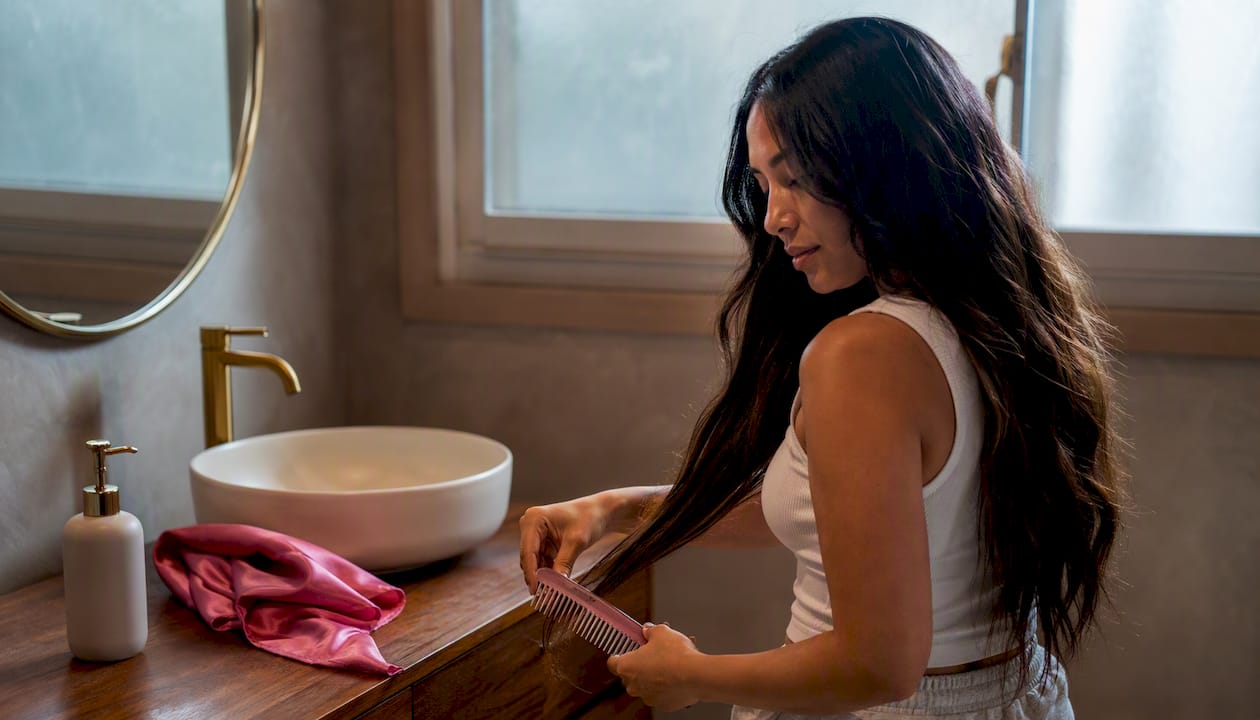
For clip-in wearers, remove the wefts before detangling your natural hair, then brush each clip-in weft separately before storing it flat.
Which products are safe to use overnight near bonds and tape?
Light, water-based leave-ins applied to the mid-lengths and ends are safe for overnight use. Heavy oils, silicone-rich serums, and alcohol-based sprays applied near the bond or tape zone are not. Extension-friendly product guidance consistently flags oil buildup at the roots as a leading cause of bond slippage and tape lifting.
Safe overnight products (applied to mid-lengths and ends only):
- Lightweight leave-in conditioning spray
- Water-based detangling spray
- Lightweight argan or camellia serum (ends only, not roots)
- Silk protein spray
Products to avoid near bonds, tape, or beads:
- Heavy coconut or castor oil (breaks down adhesive)
- Alcohol-rich finishing sprays (dries out the hair shaft and weakens bonds)
- Thick overnight conditioning masks applied at the root
- Dry shampoo sprayed directly at the bond row (causes buildup that loosens tape)
The application zone rule is simple: anything you put on your hair overnight should stay at least two inches below the attachment point.
When should you contact your stylist about overnight discomfort?
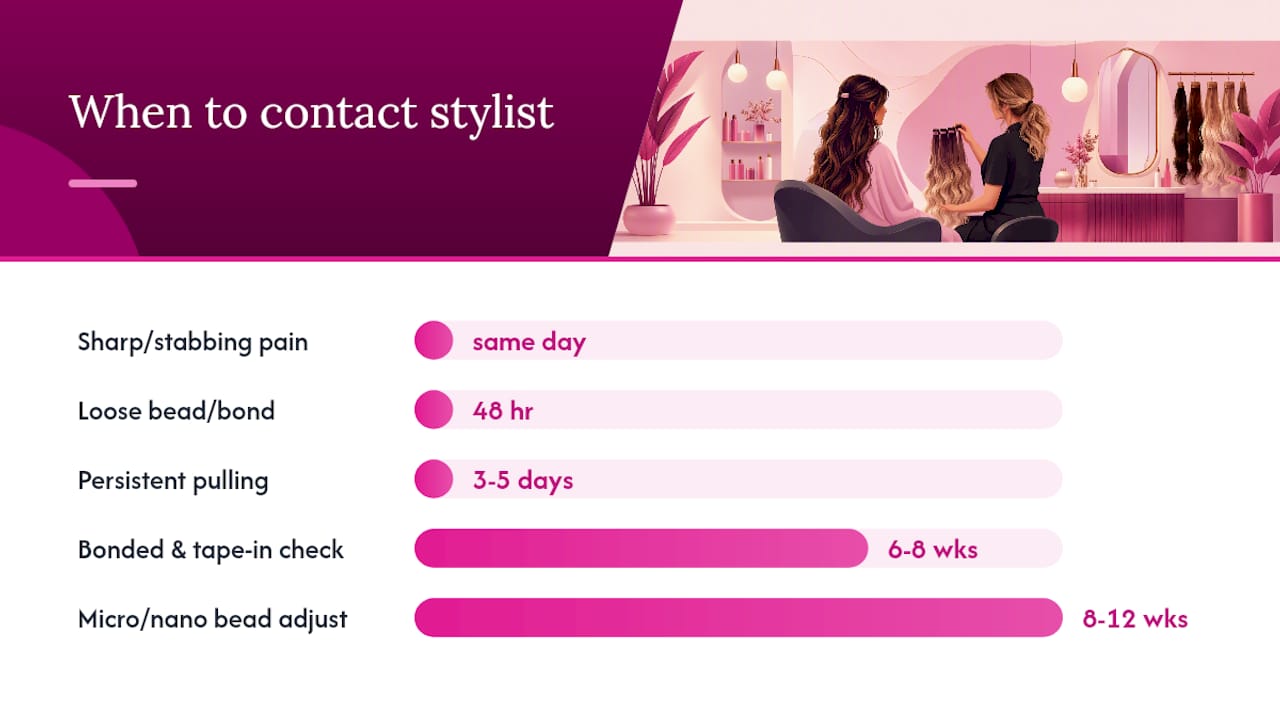
Seek your stylist’s input for sharp pain, persistent pulling, loose beads or tape, matting at the weft, or any sign of scalp irritation. These are not problems a nightly routine can fix on its own.
Red flags and recommended actions:
- Sharp or stabbing pain at the scalp: Remove any tight style immediately and contact your stylist the same day. This can indicate a bond placed too close to the scalp or a bead that has tightened.
- Persistent pulling sensation after three to five days: Normal tightness resolves within a week. If it hasn’t, book a comfort check. Your stylist can loosen specific attachment points without removing the full set.
- A loose bead, bond, or lifted tape tab: Do not pull it. Secure the section loosely with a scrunchie and book an appointment within 48 hours.
- Matting at the weft that won’t detangle: Stop brushing through it. Apply a small amount of detangling spray and work with your fingers before attempting a brush. If it doesn’t release, call your stylist.
- Scalp redness, itching, or tenderness that persists: Could indicate an allergic reaction to adhesive or product buildup. See your stylist and, if symptoms are severe, a dermatologist.
Maintenance intervals: Most bonded and tape-in methods need a salon check every six to eight weeks. Micro bead and nano bead methods typically need adjustment every eight to twelve weeks. Staying on schedule prevents the kind of bond migration and tension buildup that causes overnight discomfort.
Salon-grade tips that most guides leave out
Small nightly habits compound over weeks. Stylists consistently recommend a specific sequence: brush from ends to roots, apply a light leave-in to mid-lengths and ends, secure in a loose style, then sleep on silk. That sequence takes about 60 seconds once it becomes habit, and it covers every major overnight risk in one pass. The Hairlockshairextensions care sheet outlines this sequence alongside recommended maintenance intervals for each extension method.
Stylist-sourced tips you won’t find in most short posts:
- Layer products in the right order. Apply detangling spray first on damp hair, then a leave-in once the hair is dry. Applying leave-in to wet hair dilutes it and pushes product toward the roots.
- Refresh bonds between appointments with a bond-strengthening serum. A small amount applied around the bond perimeter (not on the adhesive itself) keeps the surrounding hair strong and reduces breakage at the attachment point.
- After exercise or humidity exposure, do a quick dry-and-detangle before bed. Sweat and humidity create the same matting risk as a late-night shower. A five-minute blow-dry on cool air is enough to reset the hair before your overnight routine.
- Use a silk sleep cap over your braid on high-humidity nights. The cap creates a sealed environment that prevents the hair from absorbing ambient moisture while you sleep.
Pro Tip: For a 60-second pre-bed routine on busy nights: one pass with a loop brush from ends to roots, a spritz of leave-in on the ends, a loose braid secured with a silk scrunchie, and a silk bonnet over the top. That’s it. Consistency matters more than perfection.
A note from the HairLocks team
Every client’s hair is different — your extension method, your natural texture, your sleep habits, and even your pillowcase material all affect how your extensions feel and perform overnight. The guidance in this article covers the fundamentals, but the most reliable routine is one that’s been tailored to your specific method and lifestyle by a stylist who knows your hair.
If your extensions feel uncomfortable at night, or if you’re unsure whether what you’re experiencing is normal, reach out. A brief comfort check appointment can make a significant difference, and adjustments are almost always simpler than clients expect. You don’t need to wait until your scheduled maintenance visit to ask for help.
— HairLocks.
Ready for extensions that feel great day and night?
The nightly routine covered in this article works best when your extensions are fitted correctly from the start. Poorly placed bonds, incorrect tension, or the wrong method for your hair type are the most common causes of overnight discomfort — and no amount of silk pillowcases will fully compensate for a fit that needs professional attention.

Hairlockshairextensions offers professional fittings, maintenance appointments, and a full range of application hair extensions across weft, nano bead, micro bead, and keratin bond methods, each fitted by Michele with 30 years of hands-on experience. If you’re experiencing tension, discomfort, or you simply want extensions that hold beautifully through the night, book a consultation at Hairlockshairextensions to find the right method and fit for your hair.
Sources
Key sources for nightly extension care, stylist guidance, and product safety:
- How to Sleep With Hair Extensions: Everything You Need to Know
- Sleeping With Your Hair Extensions Wet - Why It Is Not Worth The Risk
FAQ
Is it okay to sleep with hair extensions?
Yes, with the right precautions. Keep hair fully dry, detangled, and secured in a loose low style, and sleep on a silk or satin surface to minimize friction and bond stress.
What happens if you go to sleep with wet hair extensions?
Wet extensions mat and tangle overnight, and moisture near adhesive bonds or tape can weaken the attachment over time. Always blow-dry on a low setting before bed if your hair is damp.
Do you have to wear a bonnet every night with extensions?
A bonnet is highly recommended but not strictly required if you sleep on a silk pillowcase and keep your hair secured in a loose braid or low ponytail. The bonnet adds a second layer of friction protection, which is especially useful for active sleepers.
How long until hair extensions stop hurting at night?
Mild tightness and pressure typically ease within three to five days as the scalp adjusts. If sharp pain or persistent pulling continues beyond one week, contact your stylist for a comfort check, as specific bonds may need adjustment.
1 comment
Hi HairLocks Editorial Team, I’m Kathy from Taihu Snow, a publicly listed mulberry silk manufacturer based in Suzhou. We produce OEKO‑TEX certified 6A‑grade mulberry silk sleep accessories for hair‑ and‑skin protection.
I read your practical guide about how to sleep safely with hair extensions. You lay out a complete pre‑bed routine for extension wearers, and you recommend silk pillowcases and silk bonnets as key low‑friction sleep‑surface solutions to reduce tangling, cuticle damage and stress on hair‑extension bonds.
We created our in‑depth educational guide explaining real‑world silk pillowcase benefits for hair and skin. It breaks down mulberry‑silk fiber properties, friction‑reduction mechanics, moisture‑retention features, real‑silk vs synthetic‑satin comparisons, realistic improvement timelines, plus guidance to distinguish genuine mulberry silk from imitations: https://taihusnow.com/silk-pillowcase-benefits-silk-for-hair-skin.html
Would you consider adding this link as further‑reading for your audience who wear hair extensions? We can link back to hairlockshairextensions.com.au on our blog.
No worries if this does not fit your article layout. Thank you for sharing such actionable night‑time hair‑extension maintenance advice.
Best regards
Kathy Ye