


How Long Do Nano Bead Extensions Last With Proper Care?
Nano bead extensions typically last 3 to 12 months, with most people seeing the full 6 to 12 months when they stick to a regular maintenance schedule. The single biggest factor in reaching that upper range is professional refits every 6 to 8 weeks. Skip those and even premium human hair beads can start slipping or matting within a couple of months.
Three things push your results toward the high end or the low end:
- Hair quality — Remy human hair holds its integrity through repeated refits; synthetic or non-Remy hair breaks down faster
- Installation — correct bead size, proper tension, and the right number of strands per bead prevent early slippage
- Aftercare — sulfate-free washing, gentle brushing, and keeping product away from the bonds all extend wear time
Get all three right, and one set of nano beads can carry you through several refit cycles before you need fresh hair.
Key Takeaways
Nano bead extensions reach their full 6 to 12 month lifespan almost entirely through consistent refits every 6 to 8 weeks paired with gentle, bond-conscious aftercare.
| Point | Details |
|---|---|
| Lifespan range | Expect 3 to 12 months overall, with 6 to 12 months typical when maintenance is kept up. |
| Refit cadence | Book a move-up appointment every 6 to 8 weeks to prevent matting and bead slippage. |
| Reuse potential | The same hair can often go through two to three refit cycles before it needs replacing. |
| Bond-area care | Skip oils, silicone serums, and alcohol-based sprays near the beads to preserve grip. |
| Hairlockshairextensions | Offers Remy human hair nano bead extensions with personalized consultations to match bead sizing to your hair type. |
Table of Contents
- What Affects Nano Bead Longevity the Most
- What Happens at a Nano Bead Maintenance Appointment
- Daily Habits That Extend Your Extensions’ Life
- Signs Your Nano Beads Are Slipping or Damaging Your Hair
- Salon-Tested Rules for Getting More Life From One Set
- Why the Maintenance Conversation Matters More Than the Lifespan Number
- Get a Nano Bead Set Built to Last
- Sources
- FAQ
What Affects Nano Bead Longevity the Most
The gap between a 3-month set and a 12-month set almost never comes down to luck. It comes down to a handful of variables that compound over time, and most of them are things you can actually control.
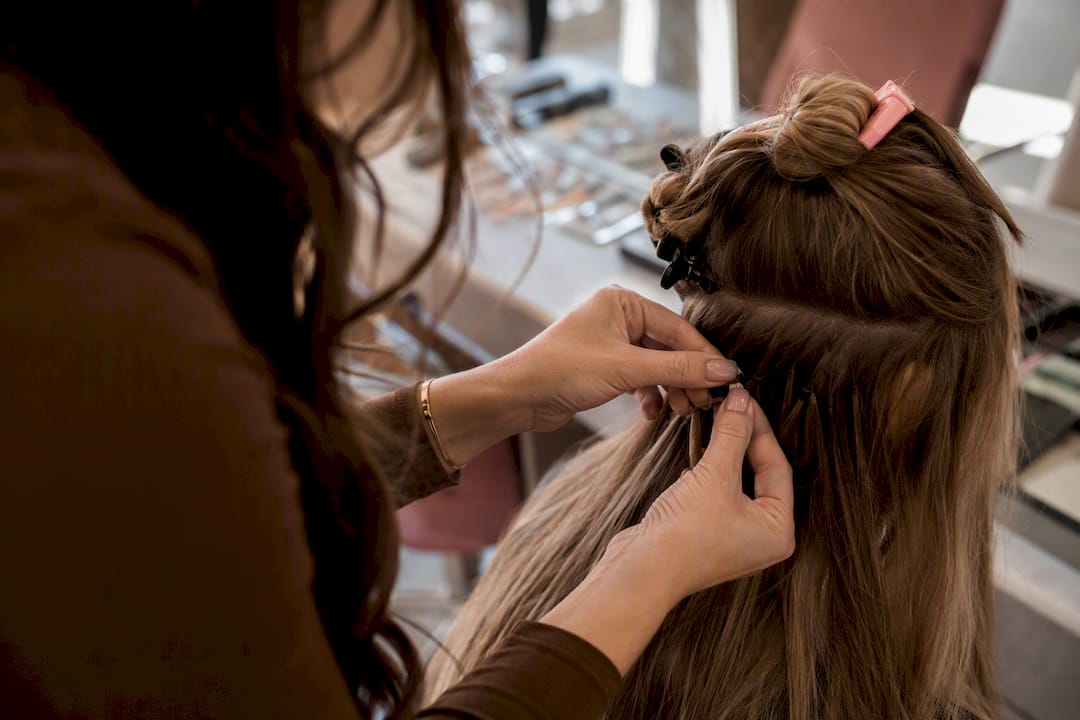
Hair quality sits at the top of the list. Remy human hair keeps its cuticle layer intact and aligned in one direction, so it resists tangling and holds its shine through washing and heat styling far longer than synthetic fiber, which frays and dulls after a fraction of the wear. That difference alone explains why two people can install extensions on the same day and end up with wildly different results six months later.
Installation technique matters just as much as the hair itself. A skilled stylist sizes each bead to the strand thickness, distributes the right number of natural hairs per bond, and avoids clamping too tight against the scalp. Beads set with too much tension pull on the root and loosen early; beads set too loose slip out within weeks. This is also where the stylist decides how much weight sits on each bond, and overloading a single bead with too many extension strands is one of the fastest ways to shorten a set’s life.
Your own hair plays a role too. Fine hair and an oily scalp both loosen beads faster than thick, drier hair, simply because natural oils travel down the shaft and reduce the bead’s grip. A faster growth rate also means the bead migrates from the scalp sooner, which is part of why refit timing varies from person to person.
Lifestyle habits round out the picture: frequent heat styling, daily washing, and regular swimming in chlorinated or salt water all wear on bond strength over time.
With good care, most people report a lifespan of 6 to 12 months — and high-quality sets maintained diligently can stretch to 9 to 12 months or longer.
What Happens at a Nano Bead Maintenance Appointment
Maintenance appointments are where longevity is actually won or lost. Skipping them is the single most common reason a set that should have lasted a year barely makes it to month four.
A typical refit follows a predictable sequence:
- Your stylist assesses each bond for slippage, position, and how far it has migrated from the scalp
- Old beads are removed and the strands are checked for tangling or matting at the root
- Beads are repositioned closer to the scalp to account for new hair growth, and any damaged strands are set aside
- Fresh beads are reapplied using the same hair, which is why nano extensions are considered reusable rather than disposable
- The stylist checks overall bond distribution to make sure no single area is carrying too much weight
Refits every 6 to 8 weeks are the standard recommendation, timed to match average hair growth before beads drift too far from the root. Some stylists extend that to 8 to 12 weeks for clients with slower growth or looser installations, though waiting longer than that raises the risk of matting and bead loss. A full removal and replacement, rather than a simple move-up, becomes necessary once the hair itself shows heavy shedding, split ends near the bond, or visible thinning. Budget roughly an hour to ninety minutes per refit appointment, spaced every six to eight weeks, as your ongoing maintenance rhythm.
Daily Habits That Extend Your Extensions’ Life
What you do between salon visits matters just as much as the visits themselves. Small daily habits are what separate a set that limps to month four from one that comfortably reaches month ten.
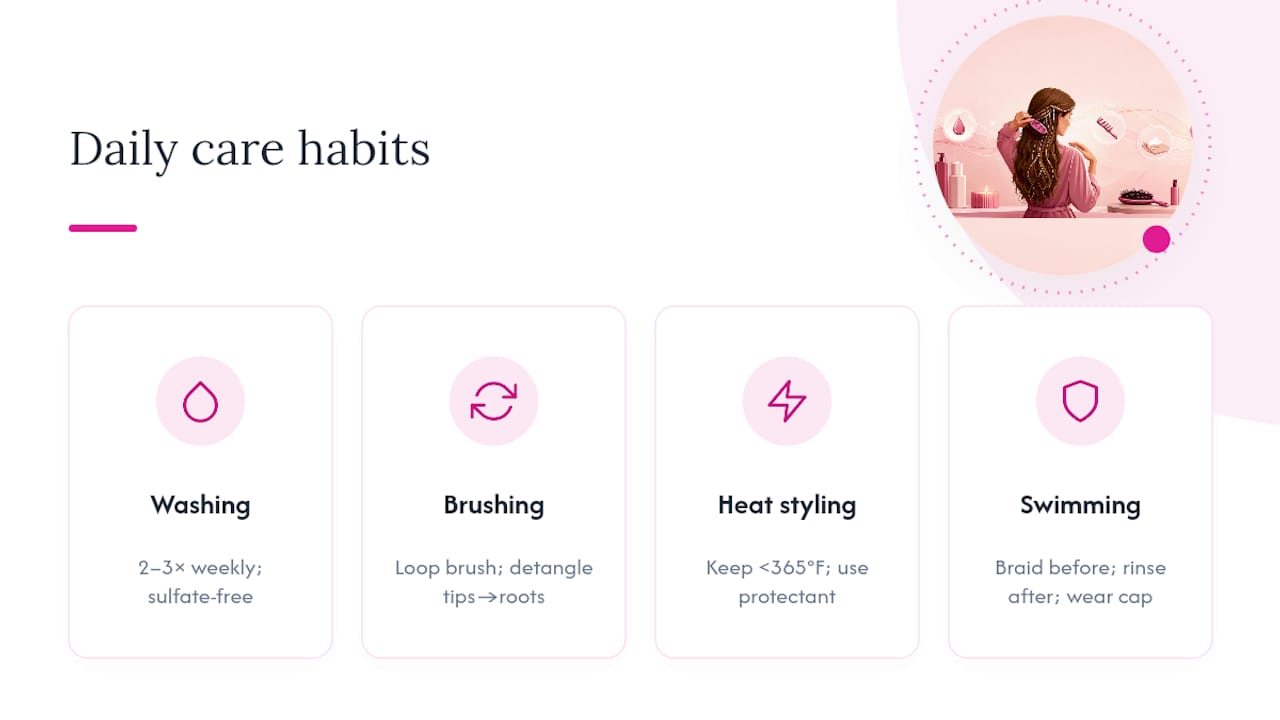
Washing: Wash two to three times a week rather than daily, and always work shampoo in a downward motion instead of scrubbing at the scalp. Stick to sulfate-free shampoo and conditioner, which clean without stripping the moisture that keeps hair strands flexible around the bond.
Brushing: Use a loop brush or an extension-safe brush, and start detangling at the tips before working upward toward the roots. Brush before bed to prevent overnight tangling, which is one of the fastest routes to matting at the bond.
Heat styling: Keep styling tools below 365°F, apply a heat protectant every time, and keep direct heat at least an inch away from the beads themselves. Heat weakens the bond material and can cause beads to slip.
Swimming and sports: Braid your hair before swimming, rinse thoroughly afterward, and use a swim cap when possible. Chlorine and salt water both dry out and corrode bead material over repeated exposure.
Avoid at the bond area: heavy oils, silicone-based serums, and alcohol-heavy sprays. These products build up around the bead and gradually loosen its grip.
Pro Tip: Apply oils and leave-in treatments only from mid-shaft to ends, never at the roots or bonds. Even a small amount of buildup near the bead is often what causes slippage weeks before a scheduled refit.
For a broader rundown of which products actually work well with extensions, our guide to extension-friendly hair products covers specific brands and ingredients to look for.
Signs Your Nano Beads Are Slipping or Damaging Your Hair
Some shedding is completely normal with any bead-based extension. The problem is knowing where “normal” ends and “something’s wrong” begins.
Watch for these three failure modes:
- Bead slippage — beads that slide down the strand or feel loose when you run your fingers along the hairline
- Matting at the root — tangles that form specifically around the bond area rather than through the length of the hair
- Traction breakage — thinning or snapping of your natural hair right at the point where it meets the bead, usually from bonds set too tight
Losing a handful of beads over several weeks is typical wear. Losing multiple beads in a single day, or noticing thinning concentrated in one section, signals a real problem, not routine shedding.
If you notice any of these signs, cut back on styling immediately and book a maintenance appointment rather than waiting for your next scheduled visit. Never try to remove slipping or matted beads yourself with force. If you see consistent breakage of your own hair at the bond, or scalp irritation that doesn’t resolve, full removal is the right call to protect your natural hair from lasting damage.
Salon-Tested Rules for Getting More Life From One Set
After 30 years of fitting and maintaining extensions, Michele at Hairlockshairextensions has one consistent observation: most longevity problems trace back to bead sizing and distribution, not the hair itself. A bead that’s slightly too large for a fine strand, or a bond carrying more weight than it should, sets a set up to fail early regardless of hair quality.
That’s also why a proper consultation matters more than most people expect. Bead placement needs to account for your natural hair density, growth pattern, and scalp condition, not just a standard sizing chart.
With correct sizing and consistent refits, the same hair can typically be refitted multiple times before it needs replacing, since nano beads reuse the existing hair rather than discarding it at each appointment. Before any refit, a quick check for split ends, tangling, and bead wear tells your stylist whether that hair is still a good candidate for reuse.
If you’re weighing whether nano beads suit your natural hair type, consider non-drug options proven helpful, as explained in the overview of non-pharmaceutical hair thinning remedies that work, alongside our guide on extensions for fine hair that walks through weight-per-bond considerations in more detail.
Why the Maintenance Conversation Matters More Than the Lifespan Number
Most articles on this topic treat lifespan like a fixed spec, as if a set of nano beads comes with a warranty date stamped on the box. That framing misses the point. The 6 to 12 month range isn’t a property of the beads. It’s a property of how consistently someone shows up for refits and how carefully they treat the bond area at home.
The overlooked detail is that reuse, not replacement, is where the real value sits. Hair that’s still in good condition doesn’t need to be thrown out at the first sign of a loose bead. It needs a stylist who checks it properly and refits it with the correct bead size and tension. Conventional advice tends to overemphasize product recommendations and underemphasize the installation quality that determines whether those products even matter.
If there’s one thing to prioritize, it’s finding a stylist who takes bead distribution seriously at the first appointment. Everything else, the shampoo, the brushing routine, the heat protectant, only protects an investment that was sized correctly to begin with.
Get a Nano Bead Set Built to Last
That combination is exactly what determines whether you land at the 3-month end of the lifespan range or the 12-month end.

Rather than guessing at bead size or hoping a generic install holds up, you get a fitting matched to your hair’s density, growth pattern, and scalp condition from the start, the same factor Michele identifies as the top predictor of longevity. Browse real results in the before and after gallery, or visit the Hairlockshairextensions site to book a consultation and get bead sizing done right the first time.
Sources
Figures in this article draw on salon guidance from ShunSalon, Alpha Hair Extension, ThanHanHair, and Deadline News.
- Nano Bead Hair Extensions: How Long Do They Last? | ShunSalon
- How Long Do Nano Hair Extensions Last? The Honest Guide - Deadline News
FAQ
How long do nano beads last?
Most people get 6 to 12 months from a set of nano bead extensions with proper care, refits every 6 to 8 weeks, and consistent aftercare. High-quality Remy hair maintained diligently can reach 9 to 12 months or longer.
Are nano bead extensions damaging?
Nano beads are considered one of the gentler extension methods since installation uses no heat or glue, but tight bonds, excess weight per bead, or neglected aftercare can still cause traction breakage or matting at the root.
How many nano beads is it normal to lose?
Losing a small number of beads gradually over several weeks is typical wear and tear. Losing several beads in a single day, or noticing thinning concentrated in one area, points to a fitting or aftercare issue that a stylist should check.
Why am I losing so many nano extensions?
Frequent bead loss usually traces back to beads set too loose or too tight, heavy oils or silicone products used near the bond, or skipping scheduled refits past the 6 to 8 week window, all of which loosen the bead’s grip on the strand.