


Choosing Sunscreen That Won't Discolor Hair Extensions
Use a mineral sunscreen with zinc oxide or titanium dioxide, and skip formulas with avobenzone or octocrylene whenever you can. These chemical filters have been linked to discoloration in lighter hair extensions, especially blondes and balayage pieces, so keeping them off your strands matters as much as choosing the right one for your skin.
A few habits protect both:
- Apply sunscreen to your face and shoulders first, then tie your hair up or tuck it under a hat before it touches your neckline.
- Reapply with a cotton pad or your fingertips instead of rubbing product straight into your hairline.
- Run a strand test on any new sunscreen before a full day outdoors, and ask your stylist if you notice tackiness or a color shift.
Pro Tip: Keep a small travel-size mineral sunscreen in your beach bag just for your neck and hairline. It’s one less excuse to smear your regular sunscreen anywhere near your extensions.
Key Takeaways
Mineral sunscreens with zinc oxide or titanium dioxide protect your skin without the discoloration risk that avobenzone and octocrylene carry for hair extensions.
| Point | Details |
|---|---|
| Choose mineral filters | Zinc oxide and titanium dioxide sit on skin instead of absorbing, lowering reaction risk with extensions. |
| Avoid avobenzone and octocrylene | These chemical filters are the ones most linked to orange or yellow discoloration in lighter extensions. |
| Test before full use | Run a strand test on a hidden section and check for color change or tackiness after 15 to 20 minutes. |
| Keep sunscreen off your hairline | Apply to skin first, let it absorb, then tie hair up or wear a hat before styling. |
| See a stylist for stubborn stains | Widespread brassiness or discoloration on bonded extensions calls for professional toning, not more shampoo. |
Table of Contents
- Sunscreen Hair Extensions Checklist Before You Buy or Pack
- Why Do Some Sunscreens Turn Hair Extensions Orange?
- How to Read Sunscreen Labels and Test Before Full Use
- How to Apply Sunscreen Without Damaging Your Extensions
- Hair-Safe Sun Products and Aftercare That Preserve Color
- When a Salon Visit Beats a DIY Fix
- What Salon-Approved Sun Protection Actually Requires
- Sources
- FAQ
Sunscreen Hair Extensions Checklist Before You Buy or Pack
Read the active ingredients list before anything else lands in your cart.
- Look for zinc oxide or titanium dioxide as the active ingredient. These mineral filters sit on top of skin rather than absorbing into it, which lowers the odds they’ll interact with your extensions.
- Avoid avobenzone (butyl methoxydibenzoylmethane) and octocrylene. These chemical filters are the ones most often flagged in salon reports of extension discoloration.
- Choose fragrance-free, non-greasy formulas that won’t leave residue behind, and pack a hat or scarf as backup protection.
- Throw a small bottle of clarifying shampoo in your bag so you can rinse out any accidental transfer the same day.
Why Do Some Sunscreens Turn Hair Extensions Orange?
The discoloration comes down to chemistry, not bad luck. Avobenzone absorbs UVA rays and breaks down when it’s exposed to sunlight over time, a process called photodegradation. As it degrades, it can form new compounds, and when those compounds land on keratin protein (the stuff hair extensions and your natural hair are made of), they sometimes bind to it and shift the color toward orange or yellow.
Octocrylene often gets paired with avobenzone in sunscreen formulas to stabilize it, but that combination shows up repeatedly in salon and extension-industry accounts of staining.
Mineral filters work differently. Zinc oxide and titanium dioxide are physical blockers. They sit on the surface and reflect UV rays rather than absorbing them, so there’s far less chemical reaction available to react with hair pigment in the first place.
Chlorine, saltwater, and sweat don’t cause discoloration on their own, but they speed it up. A humid pool day with a chemical sunscreen and repeated sun exposure creates the perfect setup for a color shift that a dry, shaded afternoon wouldn’t.
It’s worth saying plainly: not every chemical sunscreen will ruin every extension. Reaction likelihood depends on the specific formulation, how much product touches the hair, and how many hours of UV exposure follow. Lighter extensions (blonde, balayage, gray) tend to show the change faster and more visibly than darker shades.
How to Read Sunscreen Labels and Test Before Full Use
Flip the bottle over before you flip it onto your scalp.
- Avoid: avobenzone, octocrylene, oxybenzone (also worth watching, since it shares similar photostability issues).
- Prefer: zinc oxide, titanium dioxide, or sunscreens explicitly labeled “mineral” or “physical.”
- Mixed formulas: some sunscreens combine mineral and chemical filters. Treat these the same as chemical sunscreens until you’ve tested them, since even a small percentage of avobenzone can still cause a reaction.
A strand test takes five minutes and saves you a bad surprise at the beach:
- Apply a small amount of sunscreen to a hidden section of extension, ideally near the nape.
- Let it sit for 15 to 20 minutes, roughly what it would experience during a normal application.
- Check for color change, a tacky or waxy feel, or an odd smell.
- Rinse and inspect again once dry.
Pro Tip: Take a photo of the tested strand before and after. Memory is unreliable, but a side-by-side photo isn’t, especially if you need to show a stylist later.
If you spot any discoloration or texture change, log which product caused it and skip it going forward. Bring that note to your stylist if the reaction seems severe.
How to Apply Sunscreen Without Damaging Your Extensions
Order of operations matters more than most people realize.
- Apply sunscreen to your face, chest, and shoulders first, and let it fully absorb (or dry down, for spray formulas) before you touch your hair or put it up.
- Style your hair after sunscreen has set. A high bun or braid keeps your ends away from your neck and shoulders where sunscreen tends to pool.
- Wear a wide-brim hat or scarf during peak sun hours, particularly if you’re sitting still at the beach or a pool for hours at a stretch.
- When reapplying, use your fingertips or a cotton pad on exposed skin only, and avoid spray sunscreens near your hairline. Aerosol mist drifts, and it’s nearly impossible to control where it lands.
- Before swimming, braid your hair to reduce tangling and limit surface area exposed to chlorine or salt. Rinse with fresh water immediately after you get out, then follow with a clarifying rinse once you’re home.
Pro Tip: Salon guidance consistently points to one simple fix: tie hair up and keep extension ends away from sunscreen-covered skin. It sounds almost too basic to matter, but it prevents the majority of accidental transfer.
Hair-Safe Sun Products and Aftercare That Preserve Color
Sunscreen protects your skin. Your hair needs a different kind of protection, and that’s where hair-specific UV products come in.
Leave-on UV mists and lightweight hair milks are formulated to deposit antioxidants and UV filters onto the hair shaft without the same reactive chemistry found in skin sunscreens. Look for:
- UV filters designed specifically for hair, not repurposed skin sunscreen
- Antioxidant ingredients (vitamin E, green tea extract) that help offset UV-driven protein breakdown and color fade
- A lightweight, non-greasy feel that won’t attract sand or trap sunscreen residue against the extension bonds
After a day in the sun, rinse with fresh water as soon as possible, even if you didn’t swim. Sweat and airborne sunscreen mist accumulate more than people expect. Follow with a clarifying shampoo once or twice a week during peak summer, then a moisturizing conditioner or mask to replace lost moisture. Skip heavy oils on sun-exposed days. They trap sand, chlorine, and leftover sunscreen against the hair, which accelerates buildup and can make any existing discoloration worse.
If you notice brassiness or a stubborn stain that doesn’t rinse out, that’s your cue for a professional toning or clarifying service rather than another round of at-home shampoo.
| Situation | Recommended Action |
|---|---|
| Mild residue after a beach day | Rinse with fresh water, follow with clarifying shampoo |
| Noticeable brassiness or orange tint | Book a professional toning appointment |
| Sunscreen buildup over several weeks | Increase clarifying shampoo frequency to twice weekly |
| Uncertain product safety | Run a strand test before full application |
When a Salon Visit Beats a DIY Fix
Some sunscreen reactions are minor enough to handle at home. Others need a trained eye. At Hairlockshairextensions, founder Michele brings 30 years of experience to exactly this kind of diagnosis, from strand testing to color matching to professional toning.
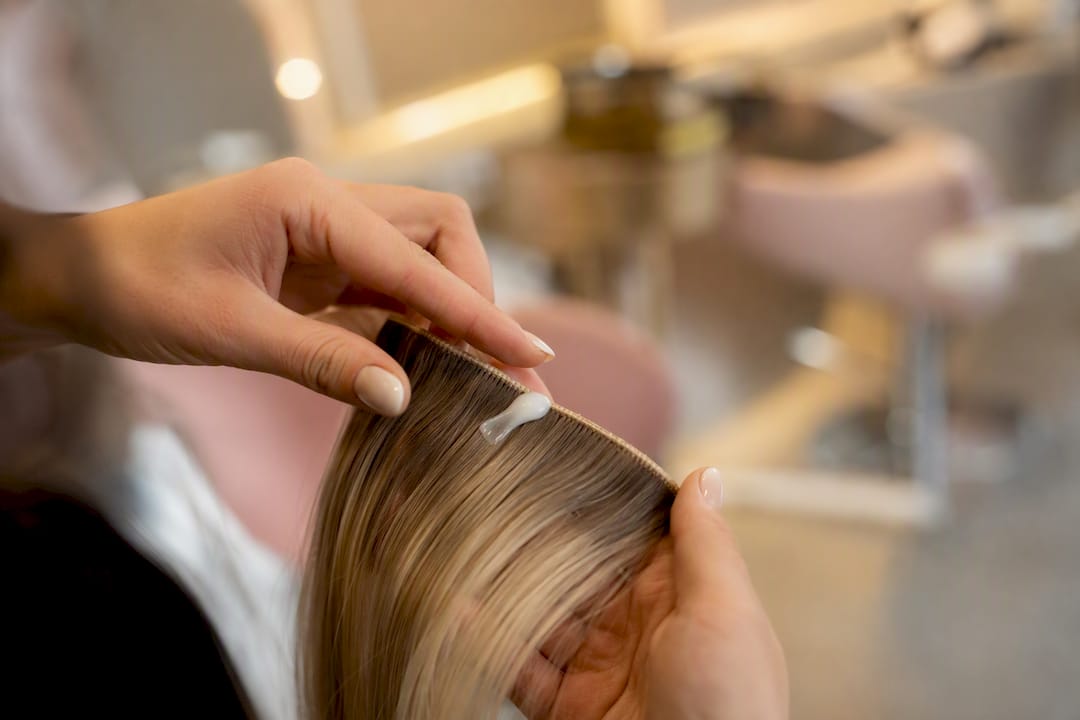
A stylist can usually tell within minutes whether discoloration is surface-level residue or a deeper chemical reaction with the hair itself. Salon fixes typically start with a gentle clarifying treatment, move to professional toning if the tint is stubborn, and in rare cases involve replacing an extension if the bond or fiber has been compromised.
- Try a DIY rinse and clarifying shampoo first for light discoloration on wefts or tape-ins.
- Book a consultation if the color change is widespread, affects bonded or fusion extensions, or doesn’t budge after two washes.
- Bring details: the sunscreen’s name, how long you wore it, and how many days of sun exposure came before you noticed the change.
A stylist who knows your extension type and attachment method can usually pinpoint the cause faster than a search engine ever will, and catch a fix before it becomes a replacement.
What Salon-Approved Sun Protection Actually Requires
The conventional advice on this topic tends to stop at “avoid chemical sunscreen,” which is true but incomplete. The bigger issue is habit, not ingredient lists. Most discoloration happens because sunscreen gets applied without a second thought to where hands end up next: brushing hair back, adjusting a ponytail, tucking a strand behind an ear.
Formulation matters, but behavior matters just as much. A person using a mineral sunscreen carelessly can still stain their extensions if they touch their hair repeatedly with sunscreen-covered fingers. Meanwhile, someone using a chemical sunscreen with disciplined habits (tying hair up, reapplying only on exposed skin) may never see an issue at all.
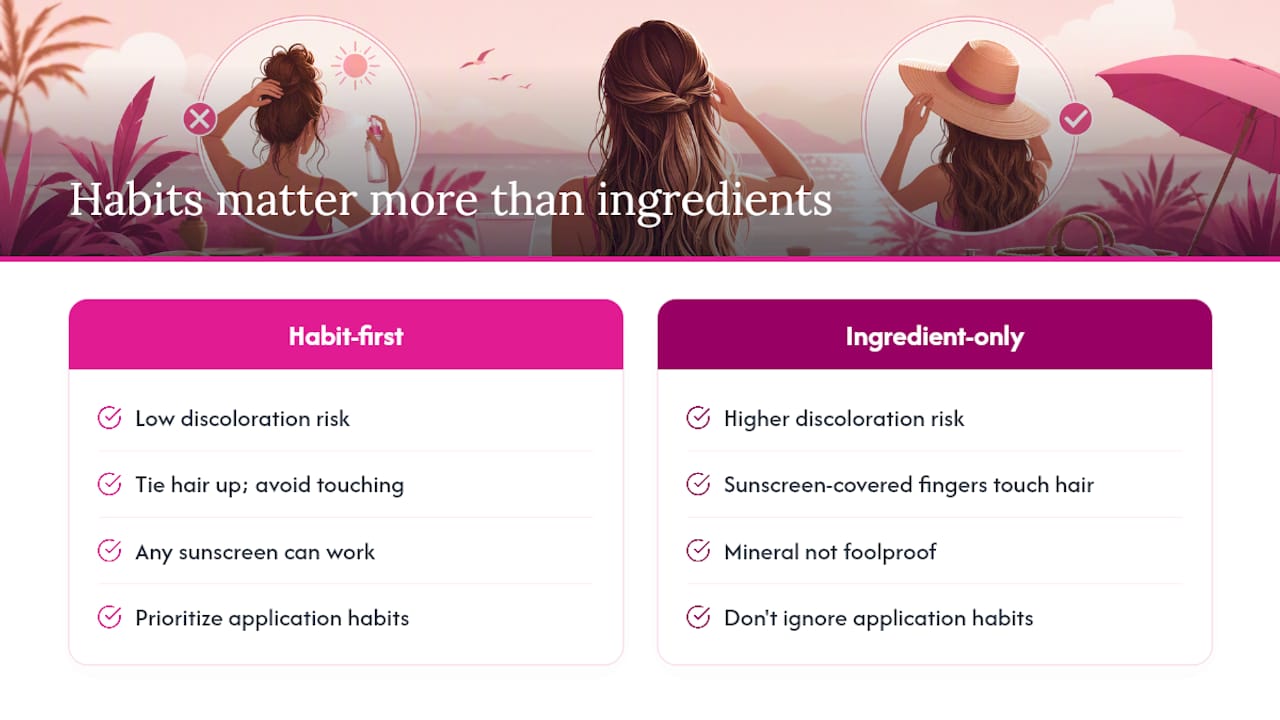
If you take one thing from this, prioritize the habit before you agonize over ingredient lists. Read labels, yes, but also change how you apply. That combination, not the sunscreen bottle alone, determines whether your extensions still look salon-fresh at the end of summer.
Sources
- Avobenzone (PubChem compound summary)
- Is Your Sunscream Ruining Your Hair Extensions? What You Need to Know… - Maxwell Melia Academy
FAQ
Can I use sunscreen with hair extensions?
Yes, but mineral sunscreens with zinc oxide or titanium dioxide are safer choices than chemical formulas, and keeping sunscreen away from your hairline and ends reduces risk further.
What turns hair extensions orange in sunscreen?
Chemical UV filters, particularly avobenzone paired with octocrylene, can break down under sunlight and bind to keratin protein, shifting lighter extensions toward orange or yellow.
What is the ingredient in sunscreen that ruins hair extensions?
Avobenzone is the ingredient most frequently linked to discoloration, especially when combined with octocrylene in the same formula.
How do I know if my sunscreen is safe for my extensions?
Run a strand test on a hidden section of extension, wait 15 to 20 minutes, and check for color change, tackiness, or odor before applying it near your hair regularly.
Should I see a stylist if my extensions change color?
Book a consultation if discoloration is widespread, affects bonded or fusion extensions, or doesn’t improve after clarifying shampoo, since a professional toning treatment often resolves what a DIY rinse can’t.
Recommended
- Extension Friendly Hair Products: Your 2026 Australia Guide – HairLocks Hair Extensions
- Best Shampoo for Extensions: Top Picks in Australia – HairLocks Hair Extensions
- Before and After Hair Extensions Gallery - HairLocks – HairLocks Hair Extensions
- Best Extensions for Fine Hair: Safe Methods That Work – HairLocks Hair Extensions