


Protect Your Scalp: 5 Steps to Sleep in a Hair Topper Safely
Yes, you can sleep in a hair topper occasionally, but nightly wear raises real risks. Clip-in toppers are built for daytime removal, and clips or friction against a pillow can tangle hair, stress the base, and shorten the piece’s lifespan. Permanent or 24/7 toppers are designed differently. The details below cover both, plus the prep steps that make overnight wear safer.
TL;DR:
- Sleeping overnight in clip-in toppers significantly increases risks of tangling, clip tension, and faster wear, especially with habitual nightly use.
- Regular friction against cotton pillowcases causes knotting and fiber degradation, which can shorten a topper’s lifespan and damage hair.
- Proper preparation, including detangling, loose securing, and using silk or satin bedding, can reduce damage and prolong the life of toppers.
- For occasional overnight wear, lightweight, breathable bases and simple protective accessories are recommended to minimize scalp irritation and tension.
- Signs such as itching, loose clips, or persistent tangling indicate when it is best to remove the topper before sleep.
Table of Contents
- Can You Sleep With a Hair Topper? When It’s Reasonable
- The Real Risks: Tangling, Tension, and Shortened Lifespan
- How to Prep Your Topper and Scalp Before Bed
- Sleep Positions, Tools, and a Quick Packing List
- Signs You Should Take Your Topper Off Before Bed
- Your Morning Routine After a Night in a Topper
- Why This Advice Holds Up: Expertise Behind the Guidance
- A Founder’s Take: Convenience Shouldn’t Cost You Your Scalp
- Toppers and Accessories Built for Occasional Overnight Wear
- Sources
- FAQ
Can You Sleep With a Hair Topper? When It’s Reasonable
The honest answer depends entirely on which type of topper sits on your head. Permanent toppers, sometimes called 24/7 or medical-grade units, are attached using methods meant to stay in place around the clock, so occasional overnight wear falls within their normal use. Clip-in toppers work on a different logic entirely. They’re designed to go on in the morning and come off before bed, and the clips that make them convenient during the day become the exact source of tension and tangling at night.
Frequency matters as much as topper type. A single overnight stay, a sleepover, or a late travel night with a clip-in topper carries low risk if you follow a few protective steps. Habitual nightly wear of a clip-in unit is a different story:
- Permanent/24-7 toppers: built for continuous wear; occasional and regular overnight use is expected.
- Clip-in toppers, once in a while: risk is generally low with detangling, gentle securing, and a friction-reducing pillowcase.
- Clip-in toppers, every night: increased risk of tangling, clip stress, and a shorter usable life for the piece.
Think of it the way you’d think about wearing shoes to bed. It won’t ruin you once. Do it every night and something’s going to wear out faster than it should.
The Real Risks: Tangling, Tension, and Shortened Lifespan
Pillow friction is the biggest overnight threat to any hair topper. Human hair strands rub against cotton fibers all night, and that friction lifts the hair’s outer layer, causing knots that start small and compound into full matting by morning. Repeated overnight friction accelerates fiber wear on the unit itself, meaning a topper that might last a year or more with careful care can degrade noticeably faster.
Statistic Callout: Care guides for hair toppers and extensions consistently point to detangling before bed and switching to silk or satin pillowcases as the two highest-impact changes for cutting down on friction-related tangling and damage. Neither costs much, and both take less than five minutes to implement.
Clip-based toppers introduce a second risk category: tension on your natural hair. Clips that shift during sleep can pull at the roots where they’re attached, and repeated pulling over months contributes to breakage or, in more sensitive scalps, traction-related thinning at the attachment points. This is worth taking seriously if you’re already using a topper to manage thinning hair, since the last thing you want is a solution that quietly creates a new problem.
A few other overnight factors compound the risk:
- Moisture and sweat trapped against the base can cause odor buildup and gradually degrade the base material, especially in warmer climates or for people who run hot at night.
- Side or stomach sleepers apply more direct pressure and friction than back sleepers, raising tangling risk.
- Sensitive scalps or textured hair tend to show tension and irritation faster than other hair types, so the margin for error is smaller.
None of this means sleeping in a topper is reckless. It means the piece and your scalp both need a little strategy before you turn off the light.
How to Prep Your Topper and Scalp Before Bed
A little bedtime ritual goes a long way toward protecting both your natural hair and the topper itself. Follow this sequence rather than improvising it:
- Detangle first, starting at the ends. Work a wide-tooth comb through from the tips upward, never top-down, and never on soaking-wet hair, which stretches and weakens strands.
- Secure it loosely, not tightly. A loose braid, a low loose bun, or a soft scrunchie protects against friction without adding clip tension you’ll regret in the morning. Skip re-clipping the base tighter for “security.”
- Switch to a silk or satin surface. A silk pillowcase or a satin bonnet reduces the drag that causes matting, and it’s one of the cheapest upgrades you can make to your nightly routine.
- Go light on product. Heavy serums or oils applied right before bed transfer onto pillowcases and attract lint and buildup. A light leave-in detangler is enough if your ends feel dry.
- Pack smart if you’re traveling. A shower cap, a silk scrunchie, and a lightweight scarf take up almost no space and cover you for an unplanned overnight stay.
Pro Tip: Keep a small “overnight kit” (silk scrunchie, travel-size detangler, folded satin bonnet) in your bag year-round. The nights you actually need it are rarely the nights you planned for.
This routine takes maybe three extra minutes. Compare that to the time you’d spend detangling a matted topper the next morning, and it’s an easy trade.
Sleep Positions, Tools, and a Quick Packing List
Your sleep position affects your topper more than most people realize. Back sleeping puts the least amount of direct friction and pressure on hair, so it’s the gentlest option if you can manage it. Side and stomach sleeping grind hair against fabric all night, which is exactly the mechanism that produces tangling.
A short list of tools consistently shows up across hairstylist and retailer guidance for reducing overnight damage:
- Silk or satin pillowcase: the single highest-impact swap for reducing friction.
- Satin bonnet or scarf: useful if you toss and turn or share a bed and can’t control the pillowcase.
- Oversized scrunchie: gentler on hair than thin elastics, which can catch and snap strands.
- Soft headband: helps keep shorter layers away from the face without adding tension at the base.
- Silk-lined sleep caps (sometimes marketed under brand names like Blissy): a solid middle ground between a full bonnet and no protection at all.
A shower cap earns its place for a different reason: it’s for keeping your topper dry, not for sleeping. Use one if you’re showering with the piece still attached and want to avoid saturating the base, but don’t rely on it as a nighttime friction tool.
If you’re heading out for an overnight stay and keeping your topper on, pack this short list: satin bonnet or scarf, a soft or oversized scrunchie, travel detangler, and a shower cap if there’s any chance you’ll shower with it in.
Signs You Should Take Your Topper Off Before Bed
Some nights, the right call is simply to remove it. Your scalp and the topper itself usually give you clear signals if that’s the case.
Watch for these warning signs:
- Itching, redness, or soreness at the scalp or attachment points, which often signals early irritation rather than something to sleep through.
- Loose or damaged clips, a slipping base, or visible pulling at the roots when you move your head.
- Heavy sweating, a recent scalp treatment, or any sign of inflammation or infection, all of which call for extra caution.
- Tangles that keep coming back within a short wear time despite following your usual prep steps.
Any one of these on its own is a reasonable reason to take the topper off for the night. Checking clip integrity and scalp condition regularly isn’t paranoia, it’s basic maintenance, the same way you’d check the tread on a tire before a long drive. Ignoring these signs repeatedly is how a minor irritation turns into a longer recovery period for your scalp.
Your Morning Routine After a Night in a Topper
Mornings after wearing your topper to bed go faster if you follow the same three or four steps every time, rather than winging it based on how rushed you are.
- Remove your bonnet or scarf first, then spritz a light detangler before touching a comb to the hair.
- Comb from ends to roots, gently, checking for any knots that formed overnight before they get worse throughout the day.
- Inspect the clips and base for stretching, loosening, or wear, and reseat anything that shifted during the night.
- Decide on washing based on frequency. Occasional overnight wear doesn’t demand extra washing, but regular overnight use traps oils and sweat faster, which means more frequent washing and conditioning to keep the base fresh and the hair from looking flat.
Skip the flat iron or curling wand first thing. Hair that’s just come out of a braid or bun styles more easily with a light finger comb or a quick spritz of texturizing spray than with direct heat, and it saves the topper from one more source of daily wear.
Why This Advice Holds Up: Expertise Behind the Guidance
Hairlockshairextensions built its guidance around one principle: your scalp comes first, always. Founder Michele brings 30 years of experience fitting and caring for human hair pieces, and that experience shapes every recommendation here, from base weight to product choice.
Not every topper is equally suited to occasional overnight wear. Lighter, breathable bases put less pull on the scalp and move with you rather than against you, which is part of why Hairlockshairextensions designed its Top-Lock V-Part topper around discreet, comfortable coverage rather than a heavier, bulkier construction.
A few brand-backed care habits worth adopting:
- Rotate rest nights so your scalp gets regular breaks from any attachment or tension.
- Choose lighter bases specifically for the nights you know you’ll be sleeping in the piece.
- Treat scalp comfort as the deciding factor, not convenience alone.
Comfort and hair health aren’t competing goals. A topper that fits well and uses a breathable, lightweight base should feel almost unnoticeable overnight, not like something you’re enduring until morning.
A Founder’s Take: Convenience Shouldn’t Cost You Your Scalp
Sleeping in a topper now and then isn’t the problem most people assume it is. The problem is treating “occasional” like “every single night” without checking in on how your scalp actually feels. We’d rather see someone take the piece off two nights a week and keep their natural hair healthier for the long run than push through irritation because removing it feels inconvenient.
If you’re not sure whether your current topper fits well enough for the occasional overnight stay, that’s exactly what a fitting consultation is for. A base that’s slightly too heavy or clips positioned wrong will always cause more friction than one that’s properly matched to your head shape and hair density. Booking time with a stylist to get that right costs you less in the long run than replacing a topper that wore out six months early.
— HairLocks
Toppers and Accessories Built for Occasional Overnight Wear
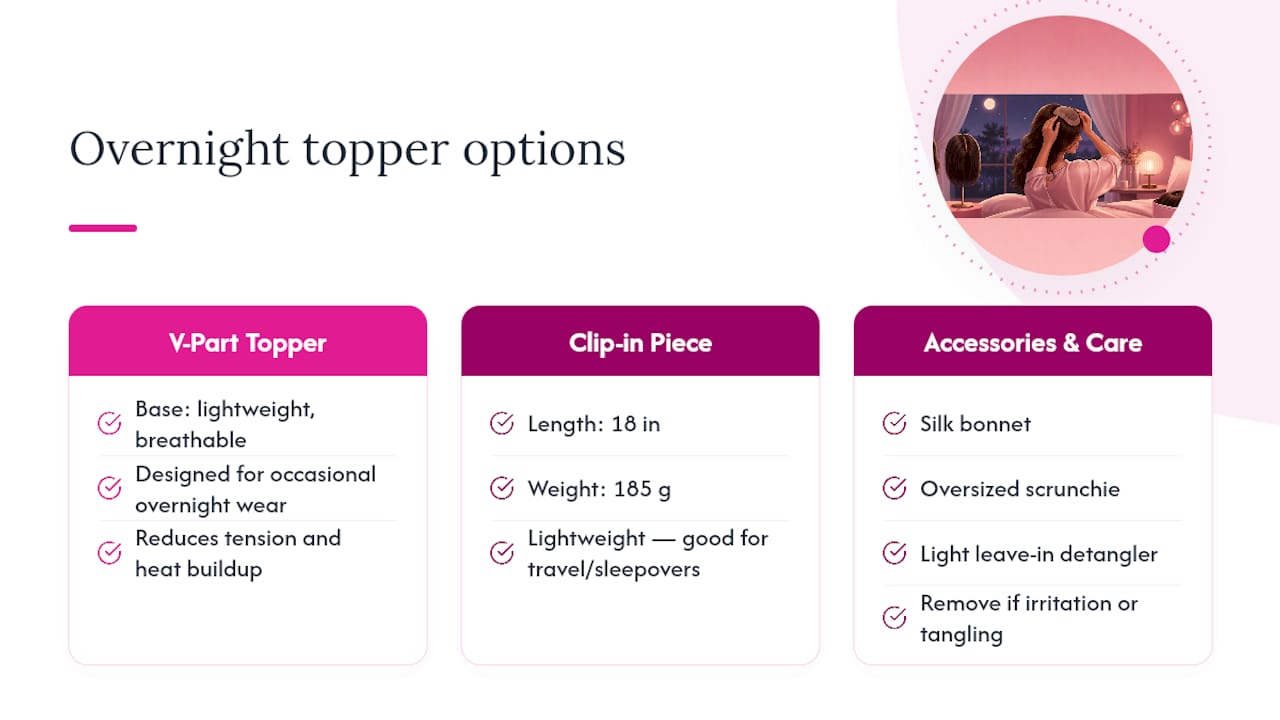
If sleeping in your topper now and then is part of your routine, the piece itself matters as much as the prep steps. Hairlockshairextensions designs its Top-Lock V-Part topper with a lightweight, breathable base specifically because heavier constructions create more overnight tension and heat buildup than a lighter one does.
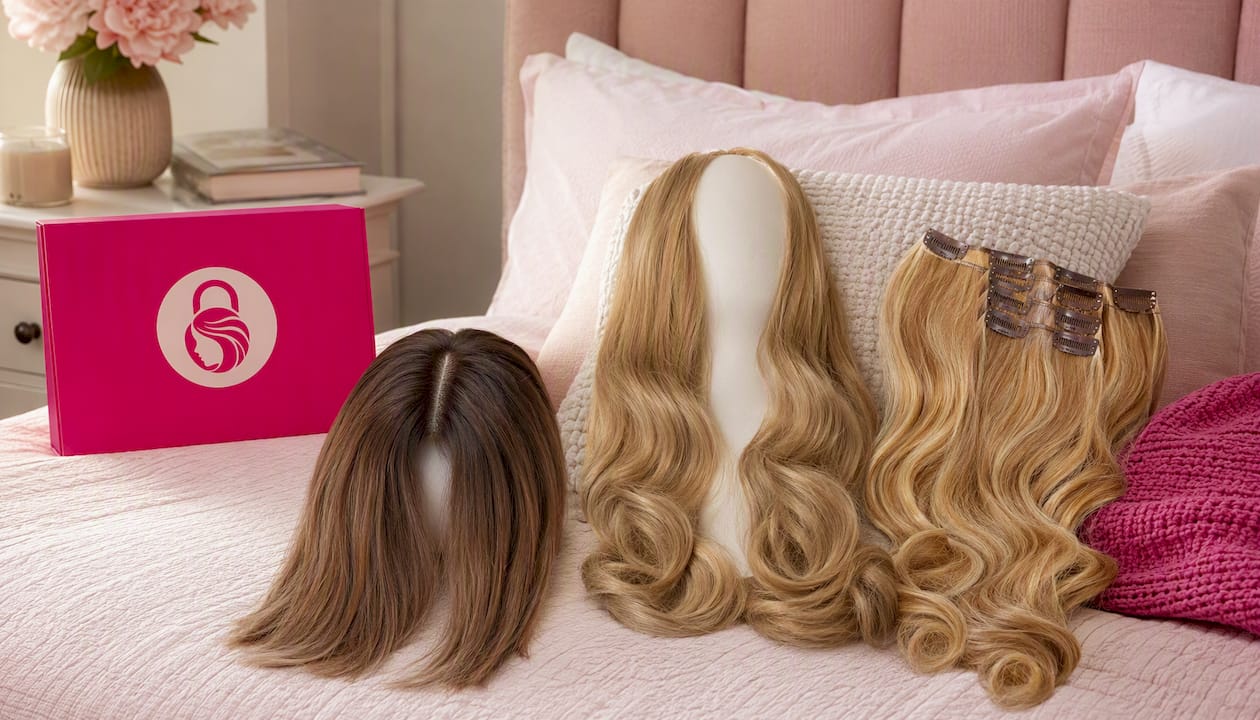
For those who prefer a clip-in option for lighter, less frequent wear, the Pearl & Oak clip-in hairpiece offers an 18-inch length at a manageable 185 grams, easy to detangle and gentle enough for the occasional sleepover or travel night. Pair either option with a silk bonnet, an oversized scrunchie, and a light leave-in detangler, all small additions that make a real difference to how your topper holds up over months of wear. And if you ever notice scalp irritation, damaged clips, or persistent tangling, take the piece off that night rather than pushing through it.
Ready to find the right fit for your lifestyle? Browse HairLocks’ full range of toppers and extensions or book a personalized fitting consultation to match your base weight and attachment style to how you actually sleep.
FAQ
Can you sleep with a hair topper on?
Yes, occasionally, especially with permanent or 24/7 units. Nightly wear of clip-in toppers raises the risk of tangling and clip-related tension on natural hair.
What are the downsides of using hair toppers overnight?
The main downsides are pillow-friction tangling, clip stress that can pull on natural hair, moisture buildup against the base, and a shorter usable lifespan for the piece.
Can people tell you’re wearing a hair topper?
A well-fitted topper with a breathable, natural-looking base like Hairlockshairextensions’ Top-Lock V-Part is designed to sit discreetly along the part line, making it hard to detect at a normal conversational distance.
What is the healthiest way to wear your hair while sleeping?
Detangle first, secure hair loosely with a braid or soft scrunchie, and sleep on a silk or satin pillowcase or under a bonnet to cut down on friction and tangling.