


3 Steps to Calm an Itchy Scalp From Extensions in 3–7 Days
Mild itching for the first few days after a fresh install is normal and usually settles on its own. Persistent or worsening itch is your scalp telling you something is wrong. Try three things first: have your stylist check and loosen any tight bonds or wefts, run a diluted shampoo cleanse along your part lines, and dry your roots completely on cool air. Give it three to seven days. If you see spreading redness, pustules, or sores instead of improvement, stop trying home fixes and get help.
TL;DR:
- Tension from installation, especially if bonds or wefts are too tight or placed too close to the scalp, commonly causes inflammation and itching.
- Buildup of product, sebum, and trapped moisture under tapes or wefts increases irritation risk, particularly when washing is avoided near attachments.
- Using silicone-lined beads, avoiding heavy oils near attachments, and scheduling adjustments every 6 to 8 weeks reduce the chance of itch-related problems.
- Mild itching after initial installation is normal, but persistent or worsening symptoms, including redness or sores, require professional assessment and possible removal.
- Sensitive scalp cases benefit from hypoallergenic attachment options like micro-beads or I-Tips, and avoid heavy oils or silicones that can worsen buildup and discomfort.
Table of Contents
- Why Does My Scalp Itch With Hair Extensions?
- How to Prevent Itchiness With Hair Extensions
- Quick Relief for Itchy Extensions Without Removing Them
- When Itching Signals a Real Problem, Not Just Adjustment
- Extension-Friendly and Hypoallergenic Attachment Options
- Scalp Treatments and Home Remedies That Are Safe With Extensions
- Is It Just Itchy, or Is It an Infection? Telling the Difference
- Talking to Your Stylist About Scalp Discomfort
- HairLocks’ View on Installation and Comfort
- Finding a More Comfortable Extension Option
- Primary Sources and Further Reading
- Sources
- FAQ
Why Does My Scalp Itch With Hair Extensions?
An itchy scalp with extensions almost always traces back to one of five things, and figuring out which one applies to you determines what actually fixes it.
Tension from installation is the most common culprit. Bonds, tapes, or wefts placed too close to the scalp pull on hair follicles, and that mechanical stress can inflame the follicle and irritate the surrounding skin. Dermatology research backs this up: chronic tension and certain installation practices are linked to inflammation and follicular damage, which is exactly why itching at the tension points deserves attention early rather than later.
Beyond tension, a few other patterns show up again and again:
- Product and sebum buildup collects around bonds and beads, especially when wearers avoid washing near attachments out of fear of loosening them.
- Trapped moisture under tapes and wefts creates a warm, damp environment where bacteria and fungi can take hold.
- Material sensitivity to adhesives or metal beads, particularly nickel, can trigger contact dermatitis in people with reactive skin.
- Dry scalp develops when extensions restrict natural oil movement and root cleansing becomes infrequent.
- Low-grade or heavily processed hair sheds coating chemicals and creates rougher wefts that abrade the scalp more than smooth, well-constructed ones.
Protective styles in general raise the risk of buildup and dryness if they go too long without extra scalp care, which is why periodic attention matters more than people expect.
How to Prevent Itchiness With Hair Extensions
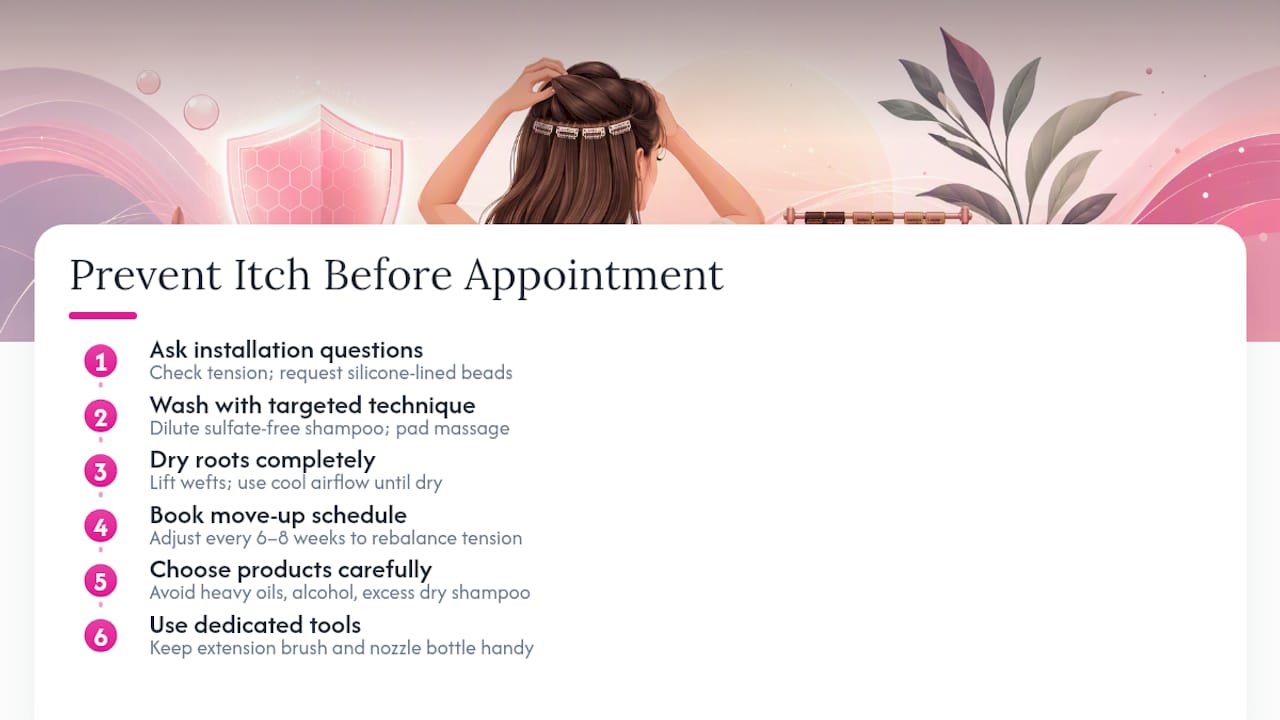
Prevention starts before your appointment, not after the itch shows up.
1. Ask the right installation questions. Before your stylist places a single bond, ask about tension and bead placement. Silicone-lined beads reduce contact irritation compared to bare metal, and if you have sensitive skin, silicone-lined micro-beads or pre-bonded I-Tips are worth requesting specifically.
2. Wash with a targeted technique. Diluting a sulfate-free shampoo in a nozzle bottle and applying it directly along your part lines clears buildup without disturbing your attachments. Gentle pad massage, not scrubbing, lifts residue while rinsing thoroughly removes it for good.
3. Dry roots completely. Lift each weft section and dry with cool airflow until the root area is fully dry. Sleeping on damp roots is one of the fastest ways to trap moisture and invite irritation overnight.
4. Keep to a move-up schedule. Book adjustments every 6 to 8 weeks. Regrowth shifts the weight and tension of your extensions, and skipping this step lets friction build where it shouldn’t.
5. Choose your products carefully. Heavy oils, alcohol-based tonics, and excessive dry shampoo near attachment points tend to worsen buildup rather than solve it.
Pro Tip: Keep a dedicated extension brush and a nozzle bottle in your shower caddy. Reaching for the right tool automatically instead of improvising with whatever is closest is half the battle.
For a full step-by-step routine, HairLocks’ care sheet walks through washing, drying, and styling in order.
Quick Relief for Itchy Extensions Without Removing Them
You don’t need to pull anything out to calm an itchy scalp. Work through these steps in order:
- Do a targeted cleanse. Fill a nozzle bottle with diluted, sulfate-free shampoo and apply it directly to your part lines, where buildup collects most. Rinse thoroughly.
- Apply a calming tonic. A lightweight, alcohol-free formula with diluted tea tree oil or witch hazel can settle irritation along part lines. Stick to extension-safe formulas so you’re not adding residue back in.
- Dry with cool air. Section by section, blow-dry your roots on the cool setting until they’re completely dry. Skipping this step undoes everything else.
- Tap, don’t scratch. A cooling spray or gentle tapping relieves the urge to scratch without damaging the scalp or loosening bonds.
- Get help with tight spots. If one area feels unusually tight or sore, ask your stylist to loosen that specific bond. Don’t attempt DIY removal unless you’ve done it before.
Trapped moisture matters more than most wearers realize. Clogged pores impede normal skin function, and once that happens, bacterial or fungal growth becomes more likely, which is precisely why the drying step above isn’t optional.
When Itching Signals a Real Problem, Not Just Adjustment
Mild itching in the first three to seven days after installation is expected as your scalp adjusts to new weight and attachment points; for maintaining comfort, consider advice on how to boost hair health with supplements to support your scalp during this time. Beyond that window, or if symptoms intensify rather than fade, treat it as a signal to act.
Watch for these red flags:
- Redness that spreads rather than stays localized
- Pustules, bumps, or open sores near attachment points
- A foul odor that persists after washing
- Fever or other signs your body is fighting an infection
- Sharp, persistent pain at specific tension points
Any of these warrant removing the affected piece or seeing a clinician promptly. Left untreated, ongoing tension can progress toward traction alopecia, a form of hair loss caused by sustained pulling on the follicle. Catching the problem early, while it’s still just uncomfortable rather than damaging, is what keeps a scalp issue from becoming a hair loss issue.
Extension-Friendly and Hypoallergenic Attachment Options
If your scalp has flagged a sensitivity, the attachment method usually matters more than the hair itself. Nickel in beads and certain adhesives can trigger contact dermatitis in people prone to metal sensitivity, and switching to a hypoallergenic alternative often resolves the problem without giving up extensions altogether.
Silicone-lined micro-beads are the most reliable substitute. The silicone lining creates a barrier between metal and skin, which removes the contact point that triggers reactions in sensitive wearers. I-Tip extensions offer a related advantage: because they’re applied strand by strand rather than in dense wefts, they allow more airflow to the scalp and make cleaning around each attachment point easier.
Weft construction matters too. Heavier, poorly finished wefts create a ridge of short, stiff hair at the top, sometimes called the “mustache” effect, that rubs against the scalp with every head movement. Double-drawn, flat wefts made from higher-quality human hair lie closer to the head and generate far less friction over a day of wear.
Lightweight options matter for a different reason: less pulling weight means less baseline tension on the follicle, which lowers your itch risk before you’ve even started your maintenance routine. If you’re rebuilding your setup around sensitivity, start with the attachment method, then choose hair quality, in that order.
Scalp Treatments and Home Remedies That Are Safe With Extensions
Not every scalp remedy plays well with extensions. Heavy natural oils can loosen bonds and attract dust and buildup, so the goal is targeted relief that reaches the scalp without traveling into the attachment zone.
Diluted tea tree oil, applied sparingly along part lines with a cotton pad or applicator bottle, has a long track record as a scalp-calming ingredient in extension-care routines. Witch hazel works similarly as a lightweight, alcohol-free toner for irritated skin. The key word is diluted: full-strength application can sting and, in some cases, worsen irritation rather than settle it.
Medicated shampoos formulated for scalp conditions can help, but check the label for sulfates and heavy silicones first. Sulfate-heavy formulas and silicone buildup tend to dry out the scalp or leave residue that compounds the itch rather than resolving it. An extension-friendly shampoo formulated without those ingredients is a safer daily choice.
Skip the heavy leave-in oils and butters near your roots. They feel soothing in the moment but build up around bonds and beads over days, creating the exact residue problem that causes itch in the first place. Reserve richer products for your mid-lengths and ends, where there’s no attachment to protect.
Is It Just Itchy, or Is It an Infection? Telling the Difference
A dry, generalized itch across the scalp usually points to buildup or dryness, not infection. It responds to cleansing and moisture control within a few days. Localized, worsening symptoms tell a different story.
Contact dermatitis from adhesives or metal beads typically shows up as redness and itch concentrated right at the attachment point, sometimes with small bumps, and it tends to appear within days of a new install using new materials. Folliculitis, an infection of the hair follicle, looks different: small, sometimes pus-filled bumps clustered around individual follicles, often tender to the touch, and it can worsen quickly if the area stays damp or covered.
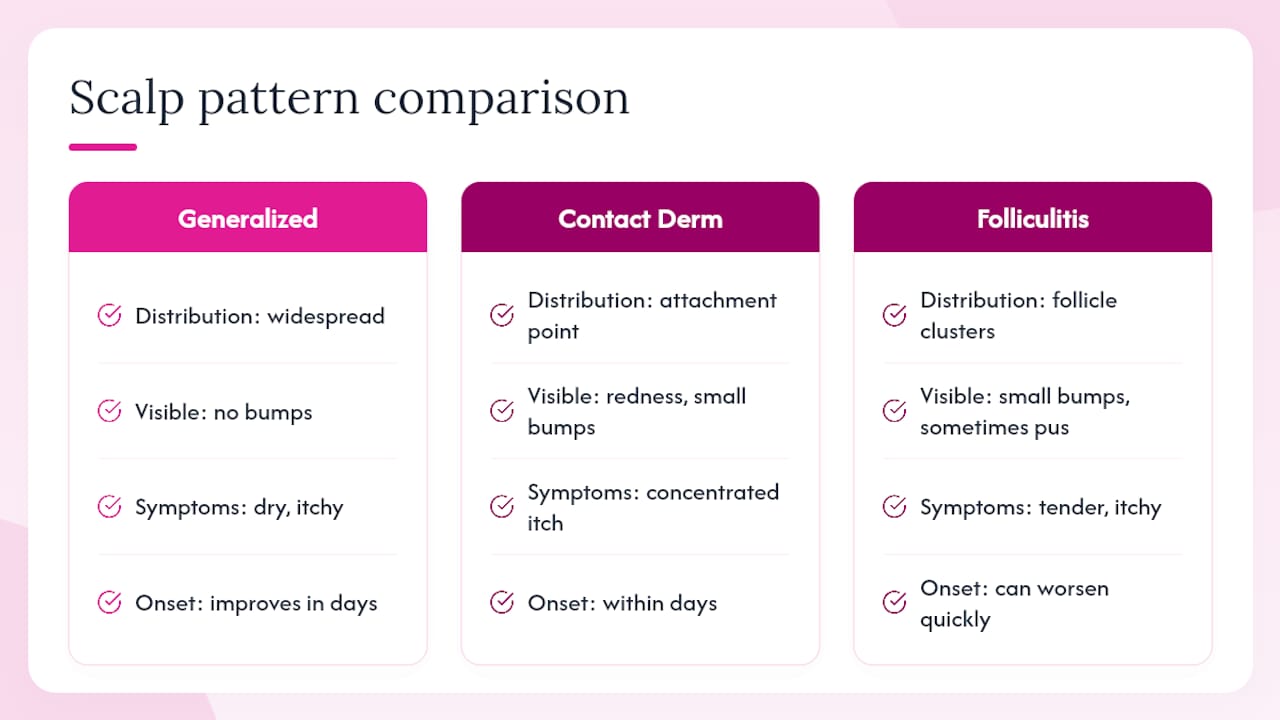
The tell is progression. Ordinary irritation from tension or dryness tends to plateau or improve with basic care. An infection tends to spread, intensify, or start producing discharge or odor. If you’re unsure which one you’re looking at, that uncertainty itself is a reason to have a professional look rather than guess with home treatment.
Talking to Your Stylist About Scalp Discomfort
Your stylist can’t fix what you don’t tell them. Describe the itch specifically: is it all over or localized to certain bonds? Did it start immediately after install or develop over the following days? Is it dry and flaky or accompanied by bumps and redness?
Bring up your history honestly, including any past reactions to jewelry, adhesives, or hair dye. That single detail often points a stylist straight to a hypoallergenic bead or a different attachment method before a problem even starts. If you’re mid-wear and dealing with an active itch, ask directly whether specific bonds can be loosened or checked at your next appointment rather than waiting for your scheduled move-up.
A stylist who takes scalp comfort seriously will adjust tension, recommend a different attachment type, or suggest spacing out your wear time if your scalp needs a break. If a stylist dismisses your concerns outright, that’s worth noting for your next booking. Scalp health and hair longevity are connected, and a good installer treats both as part of the job, not an afterthought.
HairLocks’ View on Installation and Comfort
After 30 years fitting extensions, founder Michele has seen that most itch complaints trace back to installation choices, not the wearer doing something wrong. Premium, well-constructed human hair with flat, double-drawn wefts sits closer to the scalp and creates less friction than bulky, heavily processed alternatives. Silicone-lined micro-beads consistently show up in customer feedback as more comfortable than bare-metal attachments, particularly for clients who’ve reacted to jewelry or costume beads before. Getting the attachment method right at a personalized consultation prevents most of the itch complaints that show up later.
— HairLocks
Finding a More Comfortable Extension Option
If tension or attachment sensitivity keeps causing you grief, the fix often isn’t more product, it’s a different attachment method entirely. HairLocks carries options built around scalp comfort rather than just length and volume.

For sensitive scalps, Micro-Bead Hair Extensions in 2.8mm offer a discreet, low-tension attachment point, while I-Tip human hair extensions allow better airflow and easier root cleaning between washes. If you’d rather avoid bonds altogether while your scalp settles, U-Part clip-in extensions and wraparound ponytail extensions give you volume and length with zero pressure on the follicle. Thinning at the crown or part line alongside your scalp concerns? The Top~Lock V-Part Topper is designed for discreet coverage without the tension a full bonded install can create.
Every option comes with access to HairLocks’ care sheet for step-by-step aftercare. If you’re not sure which attachment method fits your scalp, book a personalized consultation and have a stylist assess your tension tolerance and sensitivity before you commit.
Primary Sources and Further Reading
- Dermal Therapy: Combating Dry, Itchy Scalp From Extensions
- Cleveland Clinic: Clogged Pores
- Flexitol: Dry, Itchy Scalp From Weaves and Protective Styles
- British Journal of Dermatology: Mechanical Stress on the Scalp
Sources
- How to Combat Dry, Itchy Scalp from Hair Weaves, Extensions, and Protective Hairstyles
- Clogged pores — Cleveland Clinic
- How to combat dry, itchy scalp from hair weaves, extensions and protective hairstyles - Flexitol
- British Journal of Dermatology — mechanical stress on scalp (abstract)
FAQ
How do I stop my scalp from itching with extensions?
Loosen any overly tight bonds with your stylist, cleanse your part lines with diluted sulfate-free shampoo, and dry your roots completely with cool air. Most mild itching settles within three to seven days.
Do hair extensions make your scalp itchy?
Yes, mild itching is common in the first week as your scalp adjusts to new tension and attachments. Persistent itch usually points to buildup, dryness, trapped moisture, or a reaction to bead material rather than the extensions themselves.
Why does my scalp itch with sew-in extensions?
Sew-ins can trap moisture and product against the scalp under dense wefts, and tight stitching adds tension at the follicle. Both factors combined make sew-ins more prone to itch than lighter attachment methods if washing and drying aren’t thorough.
Why is my scalp suddenly itching like crazy?
Sudden, intense itching usually signals either a new reaction, such as contact dermatitis from a bead or adhesive, or an infection developing from trapped moisture. If it comes with redness, bumps, or odor, see a clinician rather than waiting it out.
When should I remove my extensions because of scalp irritation?
Remove or have a stylist adjust the piece if you notice sharp localized pain, spreading redness, pustules, or symptoms lasting beyond a week without improvement. Waiting too long on tension-related irritation raises the risk of traction alopecia.