


Can You Be Allergic to Hair Extensions? Signs and Fixes
Yes, you can be allergic to hair extensions, and it happens more often than most stylists let on. The usual culprits are acrylate bonding adhesives, latex components, synthetic fibers, nickel in clips or micro rings, and dyes like PPD in colored synthetic hair. If your scalp, hairline, or neck is itching, red, or swelling, the first move is simple: stop the exposure. Remove the extensions yourself if it is safe, or get to a salon for professional removal if the bonds are stuck fast.
While you sort that out:
- Cool the area with a damp compress rather than scratching it.
- Cleanse gently with a hypoallergenic, fragrance-free shampoo to lift adhesive residue or fiber coating.
- Watch for facial or eyelid swelling, throat tightness, or trouble breathing. That is an emergency, not a wait-and-see situation.
- Book a dermatologist or trichologist visit if symptoms persist beyond a few days. Patch testing is the only way to confirm exactly what triggered the reaction.
None of this means extensions are inherently risky for everyone. It means the wrong material combined with the wrong scalp is a predictable, preventable problem, and this guide walks through why it happens and what actually fixes it.
Key Takeaways
Allergic reactions to hair extensions are real and traceable to specific materials, and stopping exposure fast plus patch testing after is the reliable path to a lasting fix.
| Point | Details |
|---|---|
| Know the top allergens | Acrylate adhesives, PPD, disperse dyes, latex, and nickel cause most true allergic reactions to extensions. |
| Act within hours | Remove extensions, cool the area, cleanse gently, and take an oral antihistamine if itching is severe. |
| Get airway symptoms seen now | Facial swelling, throat tightness, or breathing trouble need emergency care, not a wait-and-see approach. |
| Patch test before reinstalling | Testing your own extension sample and adhesive alongside standard allergens gives the most accurate diagnosis. |
| Choose lower-risk materials | Hairlockshairextensions prioritizes untreated 100% human hair, nickel-free hardware, and strand testing for sensitive scalps. |
Table of Contents
- Hair Extension Allergy Symptoms and When They Show Up
- What Causes Allergic Reactions to Hair Extensions
- What to Do Immediately If You Suspect a Reaction
- How Doctors Diagnose an Extension Allergy
- How to Lower Your Risk Before Your Next Install
- Red Flags, Recovery Time, and Follow-Up Care
- What 30 Years in the Chair Teaches About Sensitive Scalps
- Why This Deserves More Attention Than It Gets
- Get a Sensitive-Scalp Consultation Before Your Next Install
- Sources
- FAQ
Hair Extension Allergy Symptoms and When They Show Up
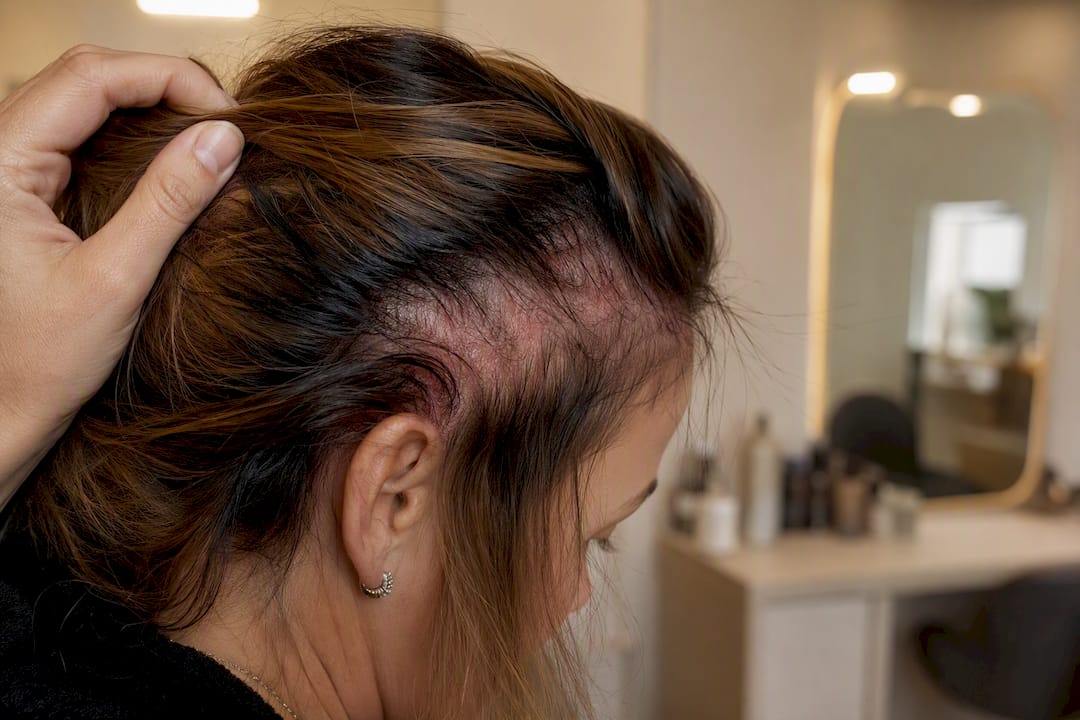
Allergic reactions to extensions rarely look identical from one person to the next, but they cluster into recognizable patterns. Localized signs show up right where the extensions touch skin: itching along the hairline, redness behind the ears, hives or rash across the neck, and puffiness around the attachment points. Scalp-specific signs are different and easier to miss because they mimic ordinary dryness at first: persistent pruritus, a burning sensation at bond sites, inflamed hair follicles, and unusual shedding around the areas where wefts or bonds sit.
Timing tells you a lot about what is happening.
- Immediate reactions appear within minutes to a few hours of application, usually pointing to an acute irritant response or a strong allergic trigger already present in your system.
- Delayed reactions surface 24 to 72 hours later, which is the classic timeline for allergic contact dermatitis, since the immune system needs time to mount a response after first contact with the allergen.
- Cumulative reactions build over weeks or months of repeat exposure, which is why career stylists develop sensitivities that clients wearing extensions occasionally do not. Hairdressers show a markedly increased risk of contact allergy to 2-hydroxyethyl methacrylate (HEMA), with some studies reporting positive reactions in up to 31% of highly exposed professional groups.
That statistic matters for anyone getting bonds reapplied every six to eight weeks, not just salon staff. Repeated low-level exposure to the same acrylate can tip a tolerant scalp into a sensitized one over time, even if the first few installs caused no trouble at all.
Distinguishing allergic contact dermatitis from irritant dermatitis or plain traction damage takes a bit of detective work. Allergic contact dermatitis tends to itch intensely, spread slightly beyond the contact area, and worsen with re-exposure. Irritant dermatitis stays confined to the exact contact site, feels more like burning than itching, and improves once the physical irritant is gone. Traction-related thinning, by contrast, shows no rash at all. It is tension along the parting or hairline from extensions pulling on the follicle, and it responds to repositioning or removal rather than antihistamines.
What Causes Allergic Reactions to Hair Extensions
Most reactions trace back to a short list of repeat offenders, and knowing them by name lets you ask sharper questions before you sit in the chair.
- Acrylate and methacrylate adhesives, including 2-hydroxyethyl methacrylate (HEMA) and ethyl cyanoacrylate, are the leading cause of true allergic contact dermatitis from bonded extensions. These monomers are small enough to penetrate skin and provoke a genuine immune response, not just surface irritation.
- Latex components occasionally show up in adhesive formulations and elastic wefts, triggering reactions in people with existing latex sensitivity.
- Preservatives and formaldehyde-releasing resins used to stabilize glues and some synthetic fiber coatings can sensitize skin with repeated contact.
- Disperse dyes and paraphenylenediamine (PPD) in colored synthetic fibers and some human-hair dye treatments are well-documented allergens. Synthetic hair fibers and certain hair dyes can cause allergic contact dermatitis at points of contact such as the neck, ears, and hairline, with patch testing frequently implicating PPD and disperse dyes alongside acrylates.
- Nickel in metal clips and micro rings is a classic contact allergen, especially for anyone who already reacts to costume jewelry or belt buckles.
- Mechanical amplifiers like tight tension and constant friction do not cause allergies on their own, but they break down the skin barrier and let allergens penetrate more easily.
Pro Tip: Ask your stylist for the full ingredient list of the bonding adhesive before your appointment, not after. Product composition on many extension adhesives is not fully disclosed on the label, so a direct question to the manufacturer or a request for the safety data sheet is often the only way to know if HEMA or a related acrylate is present.
Regulatory labeling for cosmetic adhesives varies by product category and country, and it does not always flag every sensitizing ingredient at the concentration used. That gap is exactly why patch testing before a full install matters more than reading a label alone.
What to Do Immediately If You Suspect a Reaction
Acting fast limits how far a reaction spreads and how long it takes to settle. Work through these steps in order.
- Stop the exposure. Remove the extensions yourself if the bonds release easily, or return to the salon for professional removal if adhesive is still holding firm. Pulling on stuck bonds risks tearing hair and worsening the skin under it.
- Soothe the area. Apply a cold compress for ten to fifteen minutes at a time and cleanse gently with a hypoallergenic, sulfate-free shampoo to lift lingering adhesive or fiber residue. Primary treatment for suspected contact dermatitis centers on removing the offending product, cooling the area, and gentle cleansing, with clinician-guided topical corticosteroids or oral antihistamines added if needed.
- Control symptoms. An over-the-counter oral antihistamine usually settles itching within an hour or two. Avoid reaching for a strong topical steroid on the face or eyelids without a clinician’s guidance, since thin facial skin absorbs steroids faster and is more prone to side effects with prolonged use.
A case series on synthetic hair extensions in patients with a history of atopy found that lesions resolved after the synthetic hair was removed and treated with topical steroids and emollients, which is a fairly reassuring outcome for anyone worried the damage is permanent.
Pro Tip: If you have a history of eczema, hay fever, or asthma, mention it to your stylist before installation. Atopic skin reacts more readily to synthetic fiber coatings, and that history changes how cautiously an install should proceed.
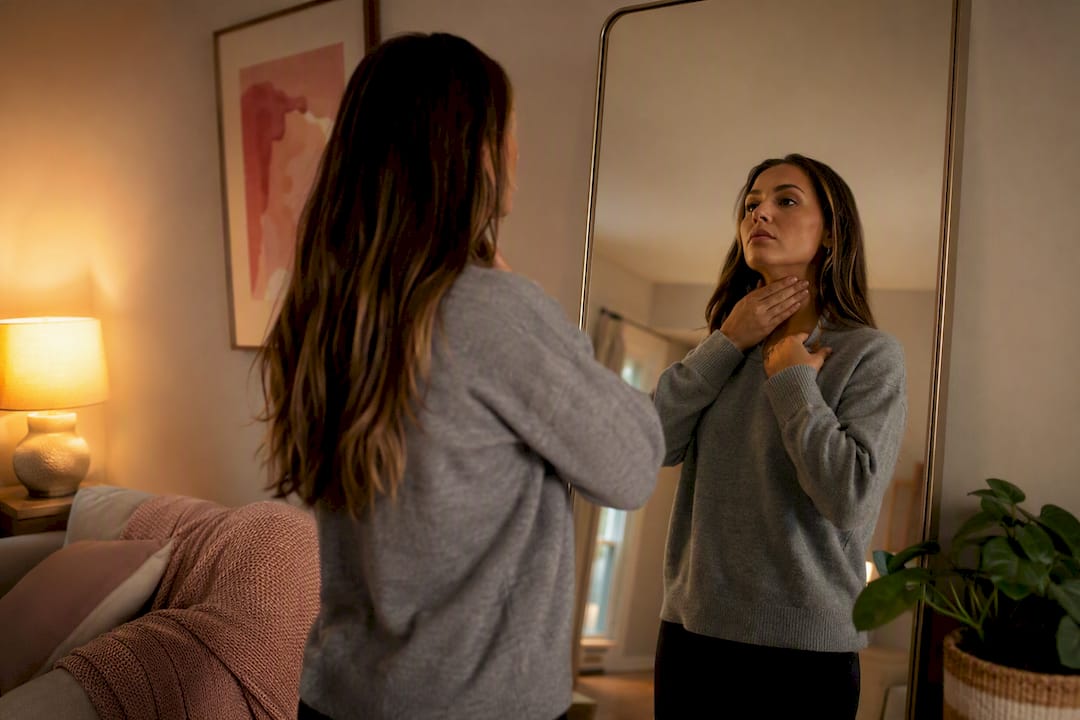
Call emergency services or go to urgent care immediately if you notice facial or eyelid swelling, tightness in the throat, difficulty breathing, or dizziness. Those are signs of a systemic reaction, not a local one, and they need care faster than a GP appointment can typically provide.
How Doctors Diagnose an Extension Allergy
Patch testing is the definitive step for confirming exactly what is triggering a reaction, and it is worth pushing for rather than guessing your way through trial and error with different products.
A standard dermatology patch test panel for suspected extension allergy typically includes:
- Acrylates and methacrylates, including HEMA and ethyl cyanoacrylate
- Paraphenylenediamine (PPD) and related disperse dyes
- Formaldehyde and formaldehyde-releasing preservatives
- Nickel sulfate
Bringing your own extension sample and the adhesive used for your install strengthens the test considerably. Testing extension samples alongside standard allergens improves diagnostic accuracy, since the exact formulation you were exposed to may differ from the generic allergens in a standard panel.
Patch testing has real limits. Delayed reactions can take 48 to 96 hours to fully develop, so results read too early sometimes miss the culprit and produce a false negative. Complex or unclear cases often need referral to a dermatologist who specializes in occupational or cosmetic contact allergy.
Diagnosis also means ruling out conditions that mimic an allergic reaction. Scalp infection tends to bring localized warmth, tenderness, and sometimes pus. Seborrheic dermatitis shows flaking and greasy scale rather than hives. Psoriasis presents thicker, well-defined plaques. Traction alopecia shows thinning without any rash. A clinician who sees all of this regularly can usually sort it out with a careful look and a few targeted questions about your install and symptom timeline.
How to Lower Your Risk Before Your Next Install
Prevention beats treatment every time, and most of it comes down to what you request before the appointment rather than what you do after a reaction starts.
- Strand test first. Have a small section of the exact hair and adhesive applied to a discreet area and left for 48 hours before committing to a full install. This catches a sensitivity before it spreads across your whole scalp.
- Choose untreated, 100% human hair where possible. Human hair avoids the disperse dyes and synthetic coatings responsible for many contact reactions, which is a large part of why 100% human hair extensions remains the lower-risk choice for anyone with a sensitive scalp or a known fragrance or dye allergy.
- Consider glue-free methods. Sew-ins, knotless braiding techniques, and clip-based systems remove acrylate adhesives from the equation entirely.
- Request nickel-free hardware. Ask specifically for nickel-free clips or micro rings, and hypoallergenic tape rather than standard adhesive tape if you are going the tape-in route.
- Pre-wash synthetic hair. If synthetic fiber is unavoidable, cleansing it before wear removes surface coatings that commonly irritate sensitive scalps.
Pro Tip: If braid tension has caused scalp soreness in the past on top of any allergy concerns, ask your braider about looser installation patterns. Tight tension at the part line is a separate mechanical issue from allergy, but it compounds irritation from any allergen already present.
Stylists carry responsibility here too. Nitrile or neoprene gloves are recommended over latex when handling acrylate adhesives, since acrylic monomers penetrate latex and some rubber gloves quickly. Reusing heavily treated stock hair without cleansing between clients is another avoidable risk, particularly for anyone already sensitized to a prior client’s dye or adhesive residue. Reading up on extension-friendly hair products ahead of your appointment gives you a head start on what to request.
Red Flags, Recovery Time, and Follow-Up Care
Get emergency care immediately for airway compromise, facial or eyelid swelling, or any systemic symptom like dizziness or widespread hives. These signal a reaction moving beyond the skin.
For milder, localized reactions, most people notice real improvement within a few days of removing the extensions and starting gentle care. Symptoms that linger past a week, or that leave scarring or persistent hair loss, need a dermatology follow-up rather than continued home treatment.
- Patch test results should directly shape your next install: known allergens get avoided by name, not just by product category.
- Chronic or repeated allergic inflammation on the scalp can compromise follicle health, and in persistent, unmanaged cases contributes to thinning or scarring alopecia.
- Rare but serious outcomes happen mostly when reactions go unaddressed for months, which is the strongest argument for treating early symptoms seriously rather than pushing through them.
What 30 Years in the Chair Teaches About Sensitive Scalps
HairLocks founder Michele has spent three decades fitting extensions on every scalp type imaginable, including plenty that reacted badly to someone else’s install before they ever sat in her chair. That experience shapes a specific, cautious workflow rather than a one-size-fits-all approach.
- Every new client with a history of skin sensitivity gets a sample test on the exact hair and bonding method before a full install, not after.
- Low-residue application techniques and nickel-free hardware are the default, not an upgrade you have to ask for.
- Human hair is the preferred material for anyone flagging a prior reaction to synthetic fiber or dye, in line with the clinical evidence pointing to synthetic coatings and dyes as common triggers.
- Removal is handled as carefully as application, since a rushed or forced removal can damage skin that is already inflamed.
Personalized consultation is not a luxury add-on when someone has a sensitive scalp. It is the difference between an install that lasts and one that ends in a rash within a week.
Clients working through recovery or planning their next install can also check the HairLocks care sheet and the guide to safe keratin bond removal for practical, salon-tested aftercare steps.
Why This Deserves More Attention Than It Gets
Most advice on extension allergies stops at “see a doctor if it gets bad,” which undersells how preventable most of this actually is. The clinical evidence is specific: acrylates, PPD, and nickel show up again and again as named culprits, not vague possibilities. That specificity is exactly what conventional salon advice tends to skip past.
The bigger gap is timing. People wait through days of itching and redness before doing anything, assuming it will settle on its own. Sometimes it does. Often it does not, and by the time someone seeks help, avoidable irritation has become a genuine dermatitis case that takes weeks to calm down. The single highest-leverage move in this entire guide is the strand test 48 hours before a full install. It costs almost nothing and catches the majority of reactions before they ever reach your whole scalp.
Extensions are not the risk. The wrong material on the wrong scalp is, and that is a solvable problem with the right questions asked early.
— HairLocks
Get a Sensitive-Scalp Consultation Before Your Next Install
If you have reacted to extensions before, or you simply want to avoid finding out the hard way, Hairlockshairextensions builds every consultation around what your scalp can actually tolerate rather than a generic install script. Founder Michele’s three decades of experience mean sample testing, nickel-free hardware, and low-residue application are standard practice, not upsells you have to request.

Because Hairlockshairextensions works exclusively with 100% human hair extensions, weft, nano bead, micro bead, and keratin bond options, along with the glue-free Top~Lock V-Part Topper for thinning hair, you get a lower-allergen starting point compared to synthetic-fiber or heavy-adhesive alternatives. That matters most if PPD, disperse dyes, or acrylates have caused you trouble in the past.
Browse the before and after gallery to see real results on a range of hair types, then visit Hairlockshairextensions to book a personalized consultation and get a strand test scheduled before your next full install.
This article is general information, not a substitute for advice from a qualified doctor. Consult a qualified healthcare professional about your own circumstances before acting on anything here.
Sources
- PubMed — study on professional exposure and acrylate allergy
- HealthDirect — contact dermatitis guidance
- Hair product allergy: a review of epidemiology and management (PMC)
- Synthetic hair extensions causing irritant contact dermatitis in patients with a history of atopy (Contact Dermatitis, 2021)
FAQ
How do you know if you’re allergic to hair extensions?
Look for itching, redness, rash, hives, or swelling at the hairline, ears, or neck, either within hours of application or two to three days later. A patch test confirms the exact trigger.
Can you be allergic to extensions?
Yes. Acrylate adhesives, PPD and disperse dyes in synthetic fibers, latex, and nickel in clips or micro rings are the most common allergens, and reactions range from mild itching to marked swelling.
How do I get my hair extensions to stop itching?
Remove the extensions or have them professionally taken out, cleanse the scalp gently with a hypoallergenic shampoo, apply a cold compress, and take an oral antihistamine for symptom relief.
How long does an allergic reaction to hair products last?
Mild reactions typically improve within a few days of removing the trigger and starting gentle care. Persistent or worsening symptoms beyond a week warrant a dermatology follow-up.
Is hair extension allergy common?
It is common enough among frequent wearers and professional stylists to warrant real caution, with acrylate sensitivity affecting a significant portion of highly exposed hairdressers in some studies.
Recommended
- Extensions for Damaged Hair: Safe Choices That Work – HairLocks Hair Extensions
- Best Extensions for Fine Hair: Safe Methods That Work – HairLocks Hair Extensions
- How to Sleep With Hair Extensions Without Damage – HairLocks Hair Extensions
- Hair Extensions Shedding: What Wearers Need to Know – HairLocks Hair Extensions