


Hot Fusion vs Cold Fusion: Which Extension Method Fits You?
Choose keratin (hot) fusion if you want 360-degree styling freedom, discreet bonds, and you’re comfortable with a longer install and professional removal. Choose cold-bond fusion if you want a heat-free process, gentler treatment for sensitive or chemically treated hair, and an easier removal day.
Both methods deliver natural, long-lasting results when a skilled technician applies them and you keep up with maintenance visits.
- Trade-off #1: Hot fusion wins on movement and updo versatility; cold-bond wins on gentleness and simpler removal.
- Trade-off #2: Hot fusion bonds typically aren’t reusable after removal; cold-bond capsules can sometimes be reset depending on condition.
The method matters less than who applies it. A trained technician following a consistent 6 to 8 week maintenance rhythm is what actually protects your natural hair, no matter which bonding style you choose.
Key Takeaways
The right extension method depends on your styling goals and hair condition, not which technique sounds more advanced, and professional application matters more than the method itself.
| Point | Details |
|---|---|
| Hot fusion fits styling-heavy lifestyles | Choose keratin bonds for frequent updos, ponytails, and maximum styling freedom. |
| Cold-bond fits sensitive or treated hair | Choose heat-free micro-capsules if your scalp is sensitive or your hair is chemically processed. |
| Reusability differs by method | Keratin bonds are typically not reusable after removal; cold-bond capsules sometimes can be reset. |
| Maintenance schedule matters most | Book move-up appointments every 6 to 8 weeks regardless of which method you choose. |
| HairLocks offers guided consultation | HairLocks matches keratin-bond installs and V-Part Toppers to your goals using 30 years of technician experience. |
Table of Contents
- How Hot Fusion vs Cold Fusion Are Applied and Removed
- What Are the Pros and Cons of Each Method?
- Which Hair Type Suits Hot or Cold Fusion Best?
- What Happens During Installation and Removal Appointments?
- How Often Do Hot and Cold Fusion Extensions Need Maintenance?
- What Damages Extensions and When Should You Worry?
- How Do You Choose Between Hot and Cold Fusion at Consultation?
- What Science Explains Hot and Cold Fusion Bonding?
- How Have Hot and Cold Fusion Techniques Evolved?
- What Do Longevity Reports Say About Each Method?
- Are There Safety Concerns With Heat or Chemicals?
- What Myths About Hot and Cold Fusion Should You Ignore?
- Ready to Book Your Consultation With HairLocks?
- Sources
- FAQ
How Hot Fusion vs Cold Fusion Are Applied and Removed
Keratin (also called K-tip or hot) fusion and cold-bond attachment differ at the moment of installation, and that difference shapes everything from appointment length to how your natural hair feels afterward.
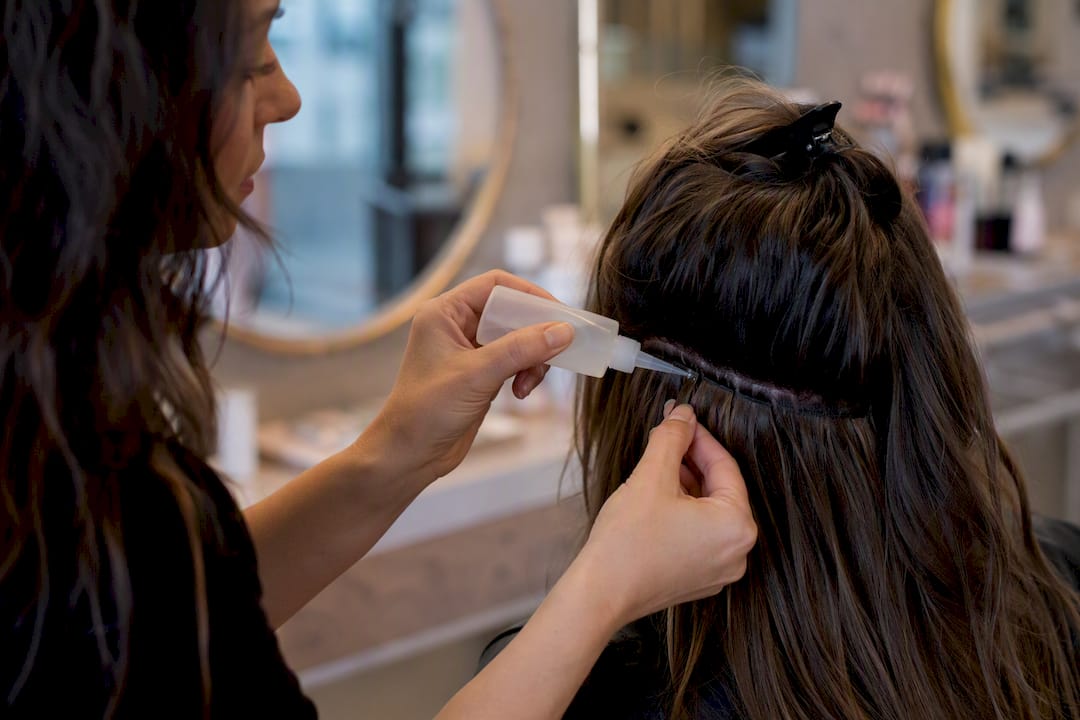
- Hot fusion application: A technician sections small strands of your natural hair, then heats a keratin-tipped extension strand with a specialized tool that melts the tip around your hair, fusing it into a discreet, flexible bond. This is done strand by strand, which is why full installs take real time.
- Cold-bond application: Instead of heat, the technician threads your natural hair through a micro-bead, micro-capsule, or silicone-lined bead, then clamps it closed with pliers. No melting, no heat tool near your scalp.
- Hot fusion removal: A professional-grade keratin solvent softens the bond, which is then gently slid or rolled off the natural hair.
- Cold-bond removal: The technician reopens the bead with pliers and slides the extension out, no solvent needed.
The mechanics explain why cold-bond removal feels quicker and gentler, while hot fusion removal depends heavily on a technician’s patience and the right solvent technique.
What Are the Pros and Cons of Each Method?
Every client’s ideal method comes down to how they live in their hair day to day.
Keratin (hot) fusion:
- Pro: Produces some of the most natural movement available, which is why it’s popular with clients who wear high ponytails and frequent updos.
- Pro: Bonds sit small and flat against the scalp, so they stay discreet even when hair is pulled back.
- Con: Requires heat during installation, so technician skill and controlled temperature matter enormously.
- Con: Bonds are generally not reusable once professionally removed, since the removal process breaks down the original keratin.
- Con: Strand-by-strand application takes longer in the chair.
Cold-bond fusion:
- Pro: No heat tools touch your scalp, which many clients with sensitive scalps or chemically treated hair prefer.
- Pro: Removal is typically faster and doesn’t require solvent.
- Con: Bead placement has to be precise. Sloppy positioning can cause slipping or visible bumps.
- Con: Can feel more limiting for extreme upstyles compared to hot fusion’s flatter profile.
Maintenance cost tends to track with method complexity, not with which one is “better.” Hot fusion often means a slightly longer, more technical move-up appointment, while cold-bond move-ups can be quicker but still require careful, individual bead repositioning.
Which Hair Type Suits Hot or Cold Fusion Best?
Your hair’s texture and history matter as much as your styling wish list.
- Fine hair: Often does well with cold-bond micro-beads sized appropriately, since they distribute tension across a wider point rather than one heated tip.
- Medium to coarse hair: Frequently handles hot fusion beautifully, holding keratin bonds securely without excess strain.
- Color-treated or previously bleached hair: Cold-bond systems avoid adding heat on top of chemical processing, which is why they’re often the safer starting point for compromised strands.
- Sensitive scalps: Cold-bond’s heat-free process tends to be the more comfortable choice.
- Frequent updos, ponytails, or athletic routines: Hot fusion’s flat, discreet bonds usually perform better under constant pulling and sweat exposure.
- Swimmers: Both methods hold up with proper aftercare, but cold-bond capsules can be less prone to slipping in chlorinated or salt water when placed correctly.
Pro Tip: Bring a photo of your natural hair from a few months ago to your consultation. It helps your technician judge how your hair has handled color or heat recently, which directly informs whether hot or cold fusion is the gentler starting point for you.
What Happens During Installation and Removal Appointments?
Knowing what should happen in the chair helps you spot when something’s off.
- Consultation and sectioning: The technician assesses your natural hair density and color-matches extensions before sectioning your hair into workable rows.
- Strand-by-strand application: Whether hot or cold, each bond is placed individually. This is the slowest and most skill-dependent part of the appointment.
- Final shaping and blend check: The stylist trims and blends the extensions into your natural length so the transition disappears.
- Removal day: For keratin bonds, expect a solvent application followed by careful sliding; for cold-bond, expect pliers reopening each bead. Rushed removal on either method is a red flag.
Technician skill is the variable that decides whether either method looks seamless or causes stress on your natural hair. HairLocks founder Michele has spent 30 years refining strand placement and removal technique, and that hands-on experience is exactly what separates a smooth appointment from a damaging one.
A technician who explains their heat settings, bead sizing, or removal solvent before you ask is showing you they’ve done this thousands of times, not just a few.
For a full breakdown of what safe removal should look like, see Keratin Bond Removal: Safe Steps for Healthy Hair.
How Often Do Hot and Cold Fusion Extensions Need Maintenance?
Regardless of which method you choose, most practitioners recommend maintenance appointments every 6 to 8 weeks to manage regrowth and prevent matting near the bonds. Skipping this window is one of the fastest ways to turn a great install into a tangled mess.
Daily care matters just as much as the salon schedule:
- Sleep with hair in a loose braid or use a silk pillowcase to reduce friction against your bonds.
- Brush from the ends up toward the roots with a loop brush, never yanking through knots near the bonds.
- Avoid oily or silicone-heavy conditioners and masks directly on or near bonds, since buildup can loosen both keratin and bead attachments over time.
For specific sleep positioning guidance, read How to Sleep With Hair Extensions Without Damage. If you’re unsure which products are safe near bonds, Extension Friendly Hair Products: Your 2026 Australia Guide breaks down what to use and what to skip, and a solid haircare routine built around lightweight, sulfate-free formulas keeps both bond types intact longer.
What Damages Extensions and When Should You Worry?
Most damage traces back to a handful of preventable mistakes, not the method itself.
- Excessive heat or oversized sections during hot fusion installation puts unnecessary stress on natural strands.
- Poor bond or bead placement too close to the scalp restricts natural movement and can pull at the root.
- DIY solvent removal at home instead of a professional appointment often damages hair far more than salon removal ever would.
- Rushed removal appointments where a technician pulls rather than slides or clamps open correctly.
If a technician can’t clearly explain their removal method or seems to be rushing your appointment, get a second opinion before your next move-up. Our guide on least damaging hair extension methods covers this in more depth.
How Do You Choose Between Hot and Cold Fusion at Consultation?
Walk into your consultation with a plan, not just a preference.
- State your styling goals first. Tell your technician if you wear frequent updos, work out daily, or want maximum styling flexibility, since that alone often points toward hot fusion.
- Explain your hair’s condition honestly. Mention recent bleaching, coloring, or scalp sensitivity so your technician can steer you toward cold-bond if that’s the gentler fit.
- Ask direct technician questions: “How many grams per strand set will you use?” “How long will this appointment take?” “What removal method do you use, and how long will removal take when it’s time?”
If you want a technician who can answer all three with specifics and 30 years of hands-on judgment behind the recommendation, that consultation experience is exactly what HairLocks was built to provide.
What Science Explains Hot and Cold Fusion Bonding?
The difference between these two methods comes down to how each one achieves a secure grip on your natural hair without cutting it or gluing it in a way that resists movement.
Hot fusion relies on thermoplastic behavior. Keratin, the same protein your natural hair is made of, softens under controlled heat and reshapes around a section of strands. As it cools, it hardens back into a solid, flexible bond that mimics your hair’s own structure closely enough to move naturally. That’s the physical reason hot-fusion bonds feel so discreet: they’re built from a material your hair already recognizes.
Cold-bond systems rely on mechanical compression instead of chemistry. A metal or silicone-lined bead is clamped shut around your natural hair and the extension strand together, creating friction and pressure tight enough to hold without melting anything. The heat-free micro-capsule design is engineered specifically to distribute that pressure evenly, which is why precise sizing and placement matter so much for cold-bond longevity.
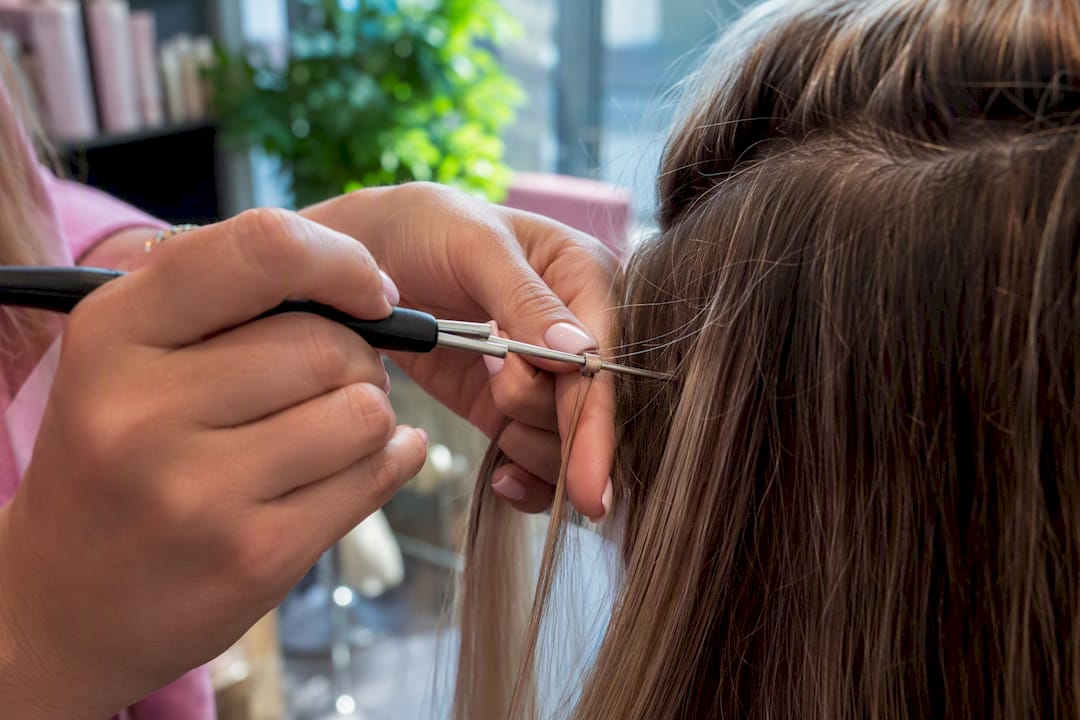
Neither approach is inherently “stronger.” Hot fusion trades a longer application process for a bond that mimics natural hair structure, while cold-bond trades some styling flatness for a mechanical hold that skips heat and chemical exposure entirely.
How Have Hot and Cold Fusion Techniques Evolved?
Strand-by-strand keratin fusion grew out of earlier bonding glues that used stronger adhesives requiring harsh solvents for removal. As keratin-tipped strands became widely available, salons shifted toward this gentler, heat-based method because it gave stylists more control over bond size and placement compared to older glue-gun techniques.
Cold-bond methods developed partly in response to client demand for a heat-free option, especially among clients with color-treated or chemically processed hair who wanted to avoid adding another heat step to their routine. Micro-bead and micro-capsule technology refined over time, moving from larger, more visible metal beads toward smaller, silicone-lined capsules that sit closer to the scalp and blend more discreetly.
Today, both techniques exist side by side in professional settings rather than one replacing the other. That’s a meaningful shift from a decade ago, when salons often specialized in just one method. Modern technicians, including those trained under experienced founders like Michele, now typically offer both so the method fits the client rather than the client adjusting to whatever the salon happens to specialize in.
What Do Longevity Reports Say About Each Method?
Client and technician reports consistently point to the same conclusion: application quality and maintenance consistency predict longevity far more reliably than the bonding method alone. A well-placed hot-fusion bond maintained on a regular schedule and a well-placed cold-bond capsule maintained the same way tend to perform similarly well over time.
Where reports diverge is in the details of wear. Hot fusion bonds, when applied by a skilled technician using controlled heat, tend to hold their shape and stay flat against the scalp through months of ponytails and updos. Cold-bond capsules, when sized and placed correctly, tend to report fewer complaints about heat-related hair stress but slightly more attention needed at the point of placement to prevent slipping.
Reusability is a place where the two methods clearly separate. Keratin bonds are typically not reusable after professional removal, because the removal solvent alters the bond material itself. Cold-bond capsules can sometimes be reset depending on their condition after removal, which matters if you’re weighing long-term cost across multiple install cycles. Neither difference makes one method definitively longer-lasting. It makes them suited to different client priorities: a hot-fusion client accepting non-reusable bonds in exchange for that natural, heat-molded shape, and a cold-bond client valuing potential bead reuse and a heat-free process.
Are There Safety Concerns With Heat or Chemicals?
Hot fusion’s main safety consideration is heat exposure at the scalp. A trained technician using controlled temperatures minimizes this risk substantially, but poorly regulated heat tools or rushed application can scorch natural hair near the root. This is precisely why technician training matters more for hot fusion than almost any other variable in the process.
Cold-bond’s main consideration isn’t heat, it’s pressure and material. Beads clamped too tightly can create tension damage at the root, and lower-quality metal beads without silicone lining can occasionally cause friction irritation for sensitive scalps. The heat-free nature of cold-bond systems removes one risk category entirely while introducing a different one tied to clamp pressure and bead quality.
Removal-stage chemical exposure is limited on both methods when handled professionally. Hot fusion’s keratin solvent is applied in small, controlled amounts directly to the bond rather than the scalp broadly, and reputable salons use formulations designed specifically for this purpose rather than generic removers. Cold-bond removal involves no solvent at all, which is one reason it’s often positioned as the gentler exit strategy for clients who are particularly cautious about chemical exposure.
Neither method carries the kind of environmental or safety concern associated with permanent chemical relaxers or bleach. The bigger real-world safety variable, across both methods, remains technician skill rather than the inherent chemistry or physics of the bond itself.
What Myths About Hot and Cold Fusion Should You Ignore?
A few misconceptions come up constantly at consultations, and clearing them up now saves confusion later.
Myth: Hot fusion always damages hair. Heat exposure is brief and localized to the bond itself when a technician uses controlled temperature and proper technique. Damage tends to come from technician error, not the method’s existence.
Myth: Cold-bond is always the “safe” choice and hot fusion is risky. Both methods carry risk if installed poorly. Cold-bond’s risk profile is different (pressure and placement) rather than nonexistent.
Myth: Keratin bonds can be reused after removal. This is one of the most common client assumptions, and it’s typically incorrect. The removal solvent alters the keratin bond, which usually makes reuse impractical.
Myth: Cold-bond limits you to simple hairstyles. Well-placed micro-capsules support most everyday styling. The limitation shows up mainly with extreme, tightly pulled upstyles rather than daily wear.
Myth: The method alone determines longevity. Practitioner experience consistently points elsewhere: professional application and a consistent maintenance schedule predict outcomes more reliably than which bonding style you pick.
A Founder’s Perspective on Choosing the Right Method
Michele’s 30 years of hands-on installation taught her that method rarely fails a client. Rushed technique does. One client wanted seamless ponytails and got hot fusion; another with sensitive, color-treated hair thrived with cold-bond. A proper consultation finds your fit.
— HairLocks
Ready to Book Your Consultation With HairLocks?
Choosing between hot and cold fusion gets a lot simpler with an experienced set of hands guiding the decision instead of guessing from a blog post. HairLocks offers professional keratin-bond installation built around Michele’s three decades of strand-by-strand experience, along with the exclusive Top-Lock V-Part Topper for clients dealing with thinning hair who want volume without a full bonded install.

If you want to see what either method actually looks like on real clients before committing, browse the before-and-after gallery for a clear sense of finished results. When you’re ready to talk through your hair goals, scalp sensitivity, or lifestyle with someone who can recommend hot or cold fusion based on your actual hair rather than a general guide, book a consultation and view pricing to get started.
Sources
- Keratin Hair Extensions: Pros, Cons & Who They’re Best For | LYA Hair
- Fusion Hair Extensions Pros and Cons - Emeda hair
- Everything You Need to Know What is Cold Fusion Hair Extensions? - GISTAR Hair
FAQ
Is Hot Fusion or Cold Fusion Better for Fine Hair?
Cold-bond fusion often suits fine hair better since micro-beads distribute tension across a wider point rather than concentrating it in one heated tip.
How Long Do Hot Fusion Bonds Last Before Maintenance?
Most practitioners recommend a move-up appointment every 6 to 8 weeks to manage regrowth and prevent matting near the bonds.
Can Cold-Bond Extensions Be Reused After Removal?
Cold-bond capsules can sometimes be reset depending on their condition, while keratin bonds are typically not reusable since the removal solvent alters the bond material.
Does Hot Fusion Damage Natural Hair?
Hot fusion is safe when a trained technician uses controlled heat and proper technique; damage usually results from technician error rather than the method itself.
Which Method Does HairLocks Recommend for Thinning Hair?
For thinning hair specifically, HairLocks often recommends the Top-Lock V-Part Topper alongside a personal consultation to determine whether keratin or cold-bond extensions also fit your goals.
Recommended
- Swimming with Hair Extensions: Your Complete Swim Guide – HairLocks Hair Extensions
- How to Store Hair Extensions So They Stay Soft for Months – HairLocks Hair Extensions
- Least Damaging Hair Extensions: Safest Methods Ranked – HairLocks Hair Extensions
- Hair Extension Lifespan: Your 2026 Australian Guide – HairLocks Hair Extensions