


250–350°F Salon Backed Safety for Heat Styling Human Hair Extensions
Skip any of those four and you risk dry, brittle strands that never quite recover.
TL;DR:
- Human hair extensions in good condition can safely tolerate up to 350°F, but fragile or processed extensions should stay at or below 300°F to avoid damage.
- Always detangle, dry thoroughly, and apply heat protectant before styling, and wait at least two days after attachment before applying heat to new extensions.
- Curling, straightening, and blow-drying require different techniques; use appropriate tools, hold sections for the recommended time, and finish with a cool shot to seal the cuticle.
- Limit heat styling to three to four times a week, regularly deep condition, and store extensions properly to maintain their appearance and prevent damage.
- Early signs of heat damage include dryness, split ends, and loss of curl hold, which should be addressed with trimming or professional assessment to avoid further harm.
Table of Contents
- Heat Styling Extensions: What Temperature Actually Works?
- How Do You Prep Extensions Before Using Heat?
- Curling, Straightening, and Blow-Drying: Do the Techniques Differ?
- What Aftercare Keeps Heat-Styled Extensions Looking New?
- How Do You Spot and Fix Heat Damage Early?
- What HairLocks Has Learned From Three Decades of Styling Extensions
- Product Picks for Heat-Styling Days
- Sources
- FAQ
Heat Styling Extensions: What Temperature Actually Works?
Temperature is the single biggest variable in whether heat styling extensions leave your hair silky or singed. Most Remy or virgin human-hair extensions tolerate 300 to 350°F (150 to 177°C), which is enough heat to curl or straighten without stressing the cuticle. Fragile, fine, or previously colored extensions need a gentler hand: 250 to 300°F (120 to 150°C) is the safer ceiling, since processed hair has already lost some of its natural protective layer.
Here’s the range breakdown:
- Low setting (250 to 300°F / 120 to 150°C): colored, highlighted, or fine/fragile extensions
- Medium setting (300 to 350°F / 150 to 177°C): most Remy or virgin human-hair extensions in good condition
- Avoid: repeated passes at high heat, even briefly, since human hair fibers don’t recover the way skin does
Statistic to remember: safe styling ranges top out around 350°F for healthy Remy hair, while synthetic fibers start melting above roughly 300°F, which is exactly why synthetic and human-hair extensions can never share the same heat rulebook.
Start on the low end of whatever band applies to your extensions, then increase in small increments only if the style isn’t holding. Color-treated or double-processed wefts should stay at the bottom of their range every time, no exceptions, since the drop in heat tolerance is permanent once the cuticle has been chemically opened.
How Do You Prep Extensions Before Using Heat?
Skipping prep is the fastest way to undo everything a good temperature setting protects. The sequence matters as much as the products.
- Detangle first, gently. Start at the ends with a loop brush or wide-tooth comb and work upward in small sections, never pulling from the root.
- Dry completely. Damp hair combined with heat causes the cuticle to lift and puts stress on bonds and wefts. Fully drying extensions before any hot tool touches them is non-negotiable, whether you’re air-drying clip-ins or blow-drying attached wefts on low heat.
- Apply a heat protectant to mid-lengths and ends, keeping product away from bonds, tape strips, or beaded attachments where residue can build up and loosen the hold.
- Finish with a light serum once styling is done, both for shine and to seal against humidity frizz.
Pro Tip: Warm the Frizz-Control serum 50ml between your palms before smoothing it over dry, styled ends. It tames flyaways without weighing down the strand or leaving a greasy finish near the scalp.
Curling, Straightening, and Blow-Drying: Do the Techniques Differ?
Each heat tool asks something different of extension hair, and treating them all the same is where most damage starts.
Curling extensions works best with a 1 to 1.25 inch barrel and thin sections, no more than an inch wide. Hold each section for 8 to 10 seconds at medium heat, then let the curl cool in your hand before releasing it. That cooling step locks the shape and cuts down on how long the hair actually spends hot.
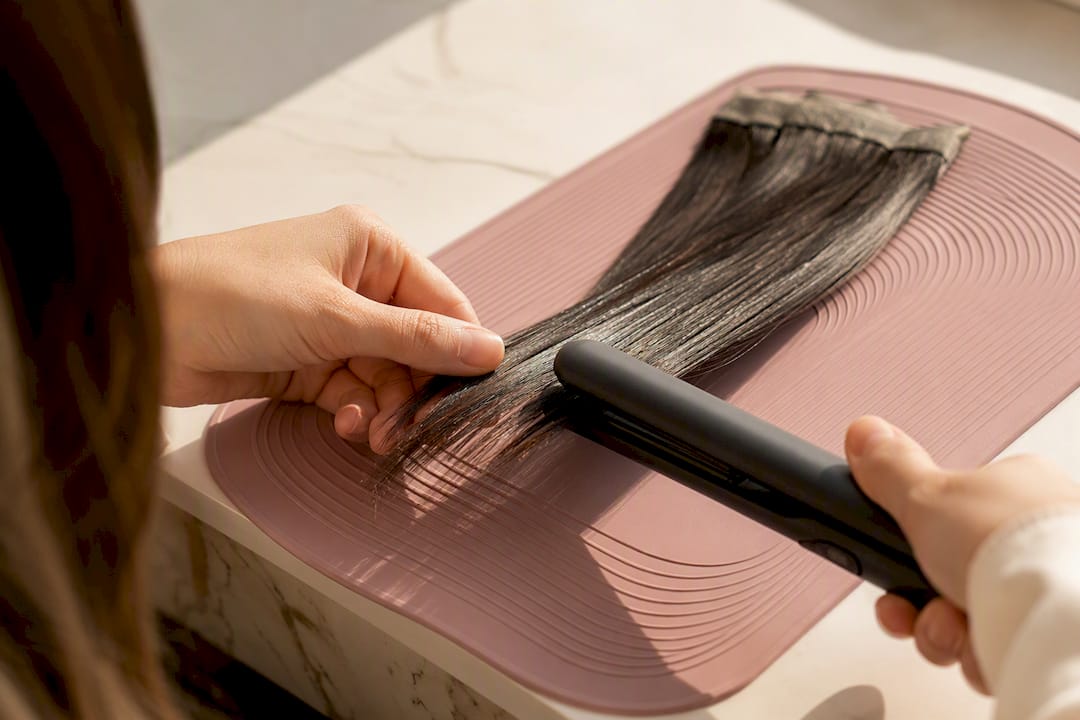
Straightening hair extensions rewards patience over pressure. One slow, single pass per section beats three fast ones every time, and ceramic or tourmaline plates matter here because they distribute heat evenly instead of creating scorch points.
Ceramic and tourmaline tools reduce the hot spots that cause localized breakage, which is precisely why they’re the standard recommendation for heat styling extensions rather than uncoated metal plates.
Blow-drying should happen on medium heat with a diffuser or concentrator nozzle, using a boar-bristle or paddle brush to guide the section. Finish with a cool shot to set the style and shut the cuticle back down.
One more coordination point that trips people up: if you’ve just had bonds, tape, or micro beads freshly attached, hold off on heat for at least a day or two. Newly placed attachments need time to settle, and heat applied too soon can loosen adhesive or bead grip before it’s fully cured.
What Aftercare Keeps Heat-Styled Extensions Looking New?
Heat styling extensions regularly means your aftercare routine has to work harder than it would for hair that air-dries most days.
- Deep condition weekly, not daily, using a mask focused on mid-lengths and ends. Leave-in conditioners work well between washes on clip-ins and wefts, applied lightly to avoid slipping the attachment.
- Cap heat styling at three to four sessions a week for wefts and bonds worn daily. If ends start feeling dry to the touch or curls fall flat within hours, that’s your sign to dial back.
- Brush before bed, then loosely braid or use a silk wrap to prevent friction tangling overnight.
- Store clip-ins and toppers flat or on a hanger away from direct heat sources, never bunched in a bag.
For more detail on extension-friendly products and overnight routines, HairLocks keeps a running library of care guides, along with a dedicated post on how to store hair extensions so they stay soft between wears.
How Do You Spot and Fix Heat Damage Early?
Heat damage rarely announces itself all at once. It shows up as texture changes long before it looks obvious in the mirror.
- Check for these signs first: straw-like dryness, a rough or gritty feel when you run fingers down the strand, split or frayed ends, and curls that won’t hold no matter the product.
- Compare against normal wear. Some shedding and mild dullness after weeks of wear is expected; brittleness and snapping strands are not.
- Treat detached pieces with a deep mask, but keep oils and heavy conditioners away from bonded attachments unless your stylist has specifically cleared it, since buildup near the bond can weaken adhesion.
- Trim split ends promptly on clip-ins and toppers to stop damage from traveling up the shaft.
- See a salon professional if you notice bond slippage, matting near the attachment point, or damage that a mask and trim don’t improve within a week or two. Reattachment or replacement is sometimes the more cost-effective call than trying to nurse damaged wefts back to life.
What HairLocks Has Learned From Three Decades of Styling Extensions
The organization emphasizes extensive experience observing what actually happens to human hair extensions under a flat iron, not just product label claims. That kind of hands-on history supports leaning toward conservative temperature advice rather than the highest number a tool’s dial allows.
Customer galleries reinforce the same lesson again and again: the best results come from lower heat, patient technique, and consistent aftercare, not from rushing a style. Browsing the HairLocks gallery makes that pattern visible in the before-and-after photos themselves. Internal guides on storage, sleep routines, and product choice underline that small daily habits do more for extension longevity than any single styling session ever could.
— HairLocks
Product Picks for Heat-Styling Days
If you’re building a routine around heat styling extensions, a few products make the difference between a style that lasts and one that fades by lunchtime. The Frizz-Control serum 50ml is designed as a finishing step, sealing in shine and blocking humidity after your iron or wand has done its work, which matters most on the exact days you’ve just applied heat.
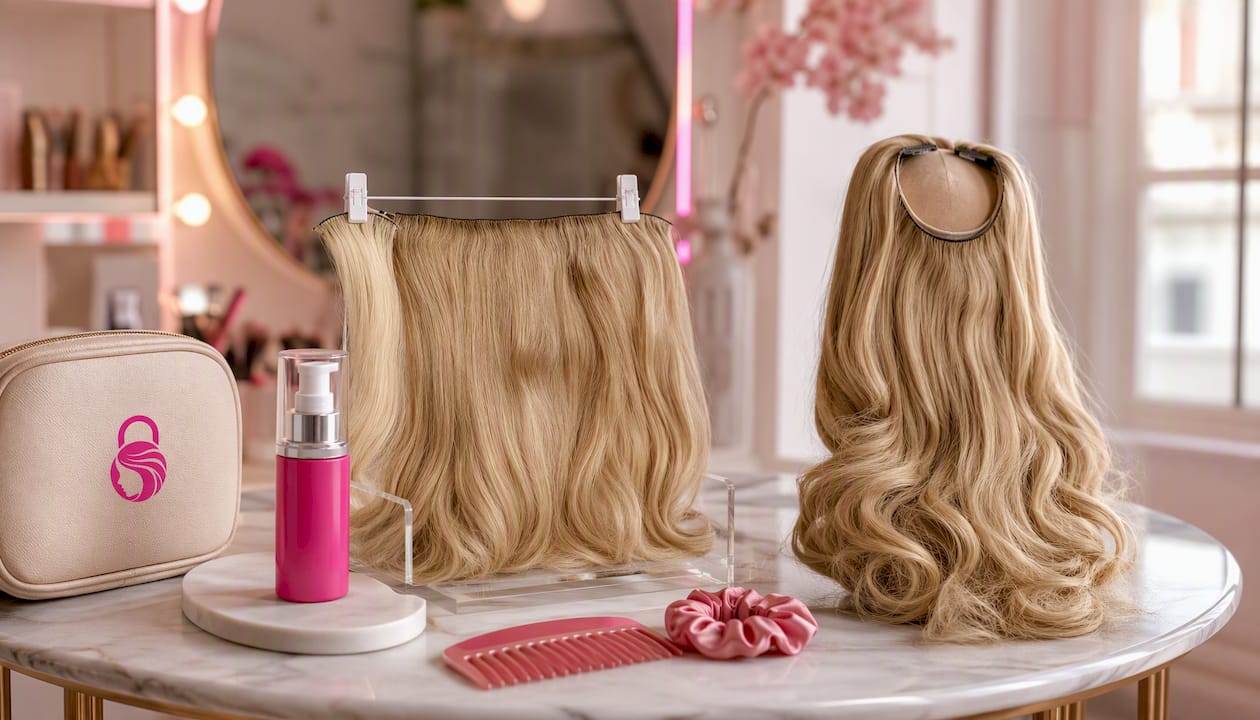
For anyone who prefers styling at home rather than booking salon time, removable pieces are simply easier to manage. The 18-inch Pearl & Oak clip-in can be fully dried and heat-styled off your head, which takes the guesswork out of timing around bonds or beads entirely. If volume is the goal, the U-Part Glam Curly extension in sunkissed blonde gives you 260 grams of thickness that holds a curl well when prepped at the right temperature. Browse the full range or book a personalized consultation to find the piece that matches your styling frequency and temperature preferences.
FAQ
Can You Curl Human Hair Extensions?
Yes, curling extensions works well with a barrel size of 1 to 1.25 inches, medium heat around 300 to 350°F, and a hold of 8 to 10 seconds per section before letting the curl cool.
What Heat Protectant Should I Use on Extensions?
Use a lightweight, silicone-based heat protectant applied to mid-lengths and ends, keeping it away from bonds or tape strips where residue can loosen attachment.
How Often Can I Heat Style Extensions Without Damage?
Limiting heat-styling sessions per week is advisable for daily-wear wefts and bonds; signs like dryness or flat curls mean you should scale back.
Is It Safe to Straighten Colored or Processed Extensions?
Yes, but stay at the lower end of the safe range, around 250 to 300°F, since color processing already reduces the hair’s natural heat tolerance.
Do Synthetic and Human-Hair Extensions Need Different Heat Rules?
Yes. Human hair tolerates heat up to roughly 350°F, while most synthetic fibers begin melting above 300°F, so the two materials can never follow the same styling settings.