


Buyers: Test Samples for 20 Minutes to Pick 10A vs 12A Hair
For most buyers, 12A hair is the safer practical pick because it typically means fuller ends and stricter donor selection, while 10A is often single drawn and thinner at the tips. Neither number is regulated, though, so the label matters less than who is selling it to you. Choose 10A for a lower-cost, lighter-density look; choose 12A when you want fuller ends, plan to color it heavily, or need it to outlast a full year of regular wear.
TL;DR:
- 10A hair is usually single drawn with thinner ends, making it suitable for natural volume but less durable than 12A, which is typically double drawn and fuller.
- The label “12A” reflects tighter donor screening and fuller bundles, but it is unregulated, so actual quality varies significantly between suppliers.
- Raw, unprocessed 12A hair tends to last longer and tolerate chemical treatments better than processed 10A hair, which often requires more frequent replacement.
- Cost comparison shows that 12A can be more cost-effective long-term if it lasts at least twice as long as 10A, emphasizing the importance of testing samples before purchase.
- Proper sample testing, including feel, wash, and lightening tests, is essential before buying bulk, as grade labels alone do not guarantee quality or longevity.
Table of Contents
- 10A vs 12A Hair: A Quick Comparison
- What Do 10A and 12A Labels Actually Mean?
- How Do 10A and 12A Compare on Fullness, Durability, and Cost?
- How Do You Test a Sample Bundle Before You Buy?
- Which Grade Should You Buy for Your Hair Type?
- Our Take on Grade Numbers vs Real Sourcing
- Which HairLocks Products Fit Your Situation?
- Sources
- FAQ
10A vs 12A Hair: A Quick Comparison
Before you get lost comparing catalog photos, here’s what actually separates these two grades in practice.
- Fullness: 10A is usually single drawn, meaning bundles include a natural mix of shorter and longer strands, which thins out toward the tips. 12A is more often double drawn, so nearly every strand runs the full length, giving you thicker, blunter ends.
- Lifespan: With decent care, good 10A tends to hold up for one to two years, while raw or well-made double-drawn 12A can last significantly longer.
- Chemical tolerance: 10A can handle light toning but stresses out fast under bleach. 12A, especially when sourced raw, tolerates lifting and coloring with noticeably less breakage.
- Price: 12A costs more per bundle, but the cost-per-wear often evens out once you factor in how much longer it lasts.
- Best fit: 10A suits buyers who want natural volume without a steep price tag. 12A suits anyone planning frequent color changes, long-term wear, or a fuller, blunter finish.
None of this is guaranteed by the number alone. A supplier’s “12A” tag reflects that vendor’s internal standard, not an industry certification, so the real differences show up when you handle the hair, not when you read the label.
What Do 10A and 12A Labels Actually Mean?
The A-grade system started as vendor shorthand, not a regulated classification. No independent body inspects or certifies what counts as 10A versus 12A, which means one supplier’s 12A can look a lot like another supplier’s 10A on the shelf. That single fact explains most of the confusion buyers run into when they shop by number alone.
What the labels attempt to describe, at least when vendors use them honestly, are a handful of physical attributes: cuticle condition (are the outer layers intact and running in one direction, or stripped and reprocessed), donor selection (hair from a single source versus a mixed batch), and preparation method (single drawn versus double drawn). Within reputable suppliers, 12A commonly signals fuller bundles from root to tip and tighter donor screening, which is why it usually costs more.
Grade inflation is the catch. Because there’s no referee checking anyone’s work, some sellers slap a 12A sticker on hair that would honestly earn a 10A elsewhere, or even lower. Grade labels function as marketing as much as description, and the practice compounds once you look past 12A. Labels like 13A or 15A rarely reflect any measurable quality difference; they’re often just a higher number attached to the same product, banking on the assumption that buyers equate bigger digits with better hair.
That’s the trap. The number tells you what a vendor wants you to believe. The hair in your hand tells you what’s actually true.
How Do 10A and 12A Compare on Fullness, Durability, and Cost?
The differences between these grades show up in four places that actually affect how the hair looks and lasts on your head: fullness, durability, chemical tolerance, and long-term value.
Fullness and end thickness come down almost entirely to drawing method. Single drawn bundles, common in 10A, include a natural taper of shorter and longer hairs, so the ends thin out the way your own hair might. Double drawn bundles, more common in 12A, remove those shorter strands so nearly every piece reaches full length. That process increases raw material waste, which is exactly why double-drawn hair costs more and looks noticeably thicker at the tips when you fan out a weft.
Durability depends less on the grade number than on whether the hair is raw or processed. Raw, unprocessed hair with intact cuticles can last 24 months or more, while processed remy variants, common in cheaper 10A lines, tend to hold up for six to eighteen months before shedding or matting sets in.
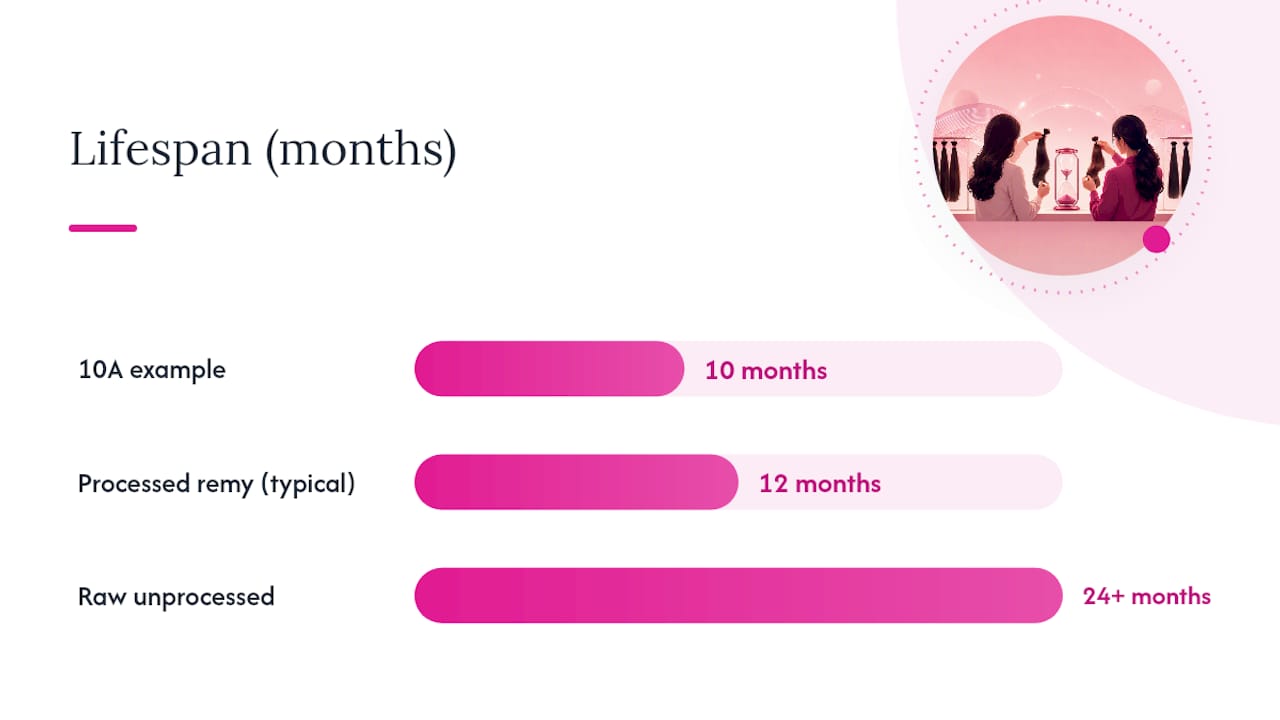
Chemical tolerance follows the same logic. If you’re planning to lighten the hair or add vivid color, ask directly whether it’s raw, since raw hair handles bleach and toner with far less breakage than reprocessed strands, regardless of what grade sticker is on the bag.
Price and value deserve real math, not gut instinct. A $150 bundle of 10A that needs replacing in ten months costs you $15 a month. A $280 bundle of 12A that lasts 24 months costs about $11.70 a month. The higher sticker price on 12A often loses out to 10A on a strict cost-per-month basis only when the 12A doesn’t actually outlast it, which is exactly why sample testing matters more than either number.
- Single drawn, processed hair: lower upfront cost, shorter lifespan, more visible thinning at the ends.
- Double drawn, raw hair: higher upfront cost, longer lifespan, fuller and blunter ends.
- Mixed-donor batches: unpredictable texture matching, regardless of the grade printed on the label.
- Single-donor batches: consistent texture and color fade, which matters most for long-term wear.
How Do You Test a Sample Bundle Before You Buy?
Never commit to a bulk order on the strength of a product photo. A short round of hands-on testing tells you more in twenty minutes than any grade label will tell you in a month of guessing.
- Check the weight and feel first. Real human hair has a specific, slightly heavy drape. Synthetic blends feel lighter and springier, and a chemical or plastic smell near the roots is a warning sign of heavy processing or silicone coating meant to fake softness.
- Run a wash test. Wash a small section with a sulfate-free shampoo and let it air dry. Raw and well-processed hair keeps its texture; poorly processed hair often reverts to a different curl pattern or turns frizzy almost immediately.
- Try a light bleach test on a hidden strand. Lift a small piece slightly and watch how it responds. Hair that snaps, gums up, or turns straw-like under mild lightening will fail badly under a full color service.
- Do a shed and tug test. Gently comb a section and count what falls out, then tug lightly at the weft seam. Reputable suppliers expect buyers to run these checks before committing to a bulk order, and a supplier who discourages sample testing is telling you something.
- Ask the vendor four direct questions: Is this single-donor or mixed? Is it raw or chemically processed? Is it single or double drawn? What’s the sample and return policy if it fails testing?
Pro Tip: Order your sample in the exact length and weight you plan to buy in bulk. Processing and shedding behavior can change once weft width or bundle length increases, so testing a mismatched sample gives you a false sense of security.
Refuse or return anything with a strong chemical smell, uneven color between strands in the same bundle, or a vendor who won’t answer sourcing questions directly. Those are the tells that a grade sticker was never going to catch.
Which Grade Should You Buy for Your Hair Type?
The right grade depends on your hair texture, your color plans, and how long you need the extensions to hold up, not on which number sounds more impressive.
- Fine or lower-density natural hair usually blends better with 10A. Because it’s single drawn, it tapers the way fine hair naturally does, so it doesn’t look artificially thick or “wig like” against your own strands. A guide on extensions for fine hair covers density matching in more detail if this is your main concern.
- Frequent bleaching or color changes call for 12A, and specifically raw 12A. The extra chemical tolerance buys you room to lift, tone, and recolor multiple times without the strands snapping partway through the year.
- Long lengths and full, luxury installs are where double-drawn 12A earns its price. Thin, wispy ends look fine at shoulder length but read as cheap once you go past 18 inches, where a fuller tip makes the whole install look intentional rather than sparse.
- Salons and resellers should stock both, but market them honestly. Sell 10A as the accessible, everyday option and 12A as the premium, longevity-focused upgrade, and always let clients handle a sample before a big-ticket purchase. Consumer research on grading consistently shows that vendor reliability matters more than the number itself once buyers get past the marketing.
Whatever you choose, proper aftercare stretches the lifespan of either grade considerably. A basic care routine for permanent extensions protects your investment regardless of which grade you land on, and simple habits like protecting the hair while sleeping or wearing hats matter more than most buyers assume. If you wear hats often, a few simple habits that prevent hat hair can keep friction damage from undoing an otherwise good grade choice.
Our Take on Grade Numbers vs Real Sourcing
Thirty years of fitting and consulting on hair extensions teaches you one thing fast: the grade sticker is the least reliable part of the transaction. Michele, HairLocks’ founder, built her sourcing approach around donor selection and processing transparency precisely because a number on a bag tells you nothing about how that hair will behave under a flat iron or a bottle of bleach six months from now.
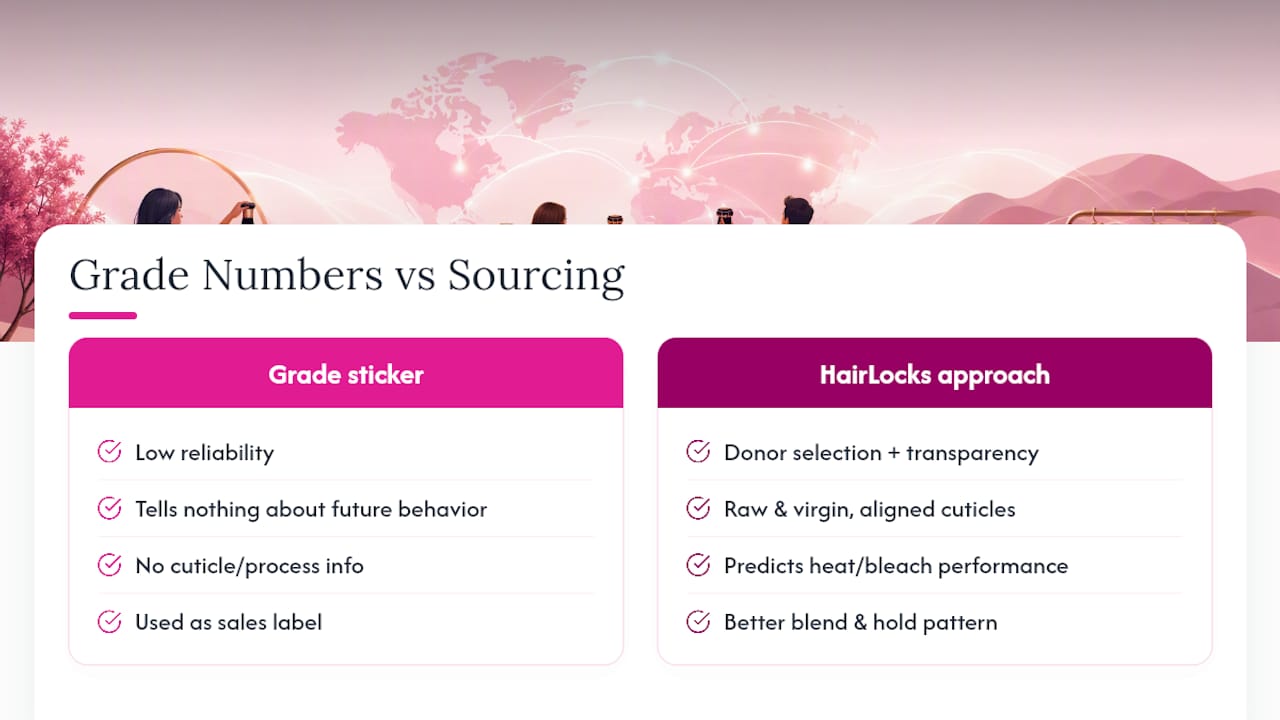
That’s why HairLocks leans on raw and virgin sourcing with clear cuticle alignment rather than leaning on a grade claim to do the selling. Clients consistently report that the hair holds its pattern, blends into their natural texture, and needs less daily maintenance than what they’d tried before.
If you’re unsure which option fits your hair, request a sample or book a personalized consultation before committing to a bulk order. Testing beats trusting a label, every time.
— HairLocks
Which HairLocks Products Fit Your Situation?
Once you know what you’re actually shopping for, matching it to a product is straightforward. If you want subtle volume without full-length commitment, the 22" Mini Mane, 50 grams gives you added body while staying light enough for fine or thinning hair. If you’re after the fuller, blunt-ended look that mimics well-made 12A, the 22" Signature Full Head, 100 grams is built for maximum length and density in a single install. And if you’re not ready to commit to permanent extensions at all, the Lift & Lock Claw Pony, 16 inches, 150 grams gives you instant volume you can clip in and remove the same day.
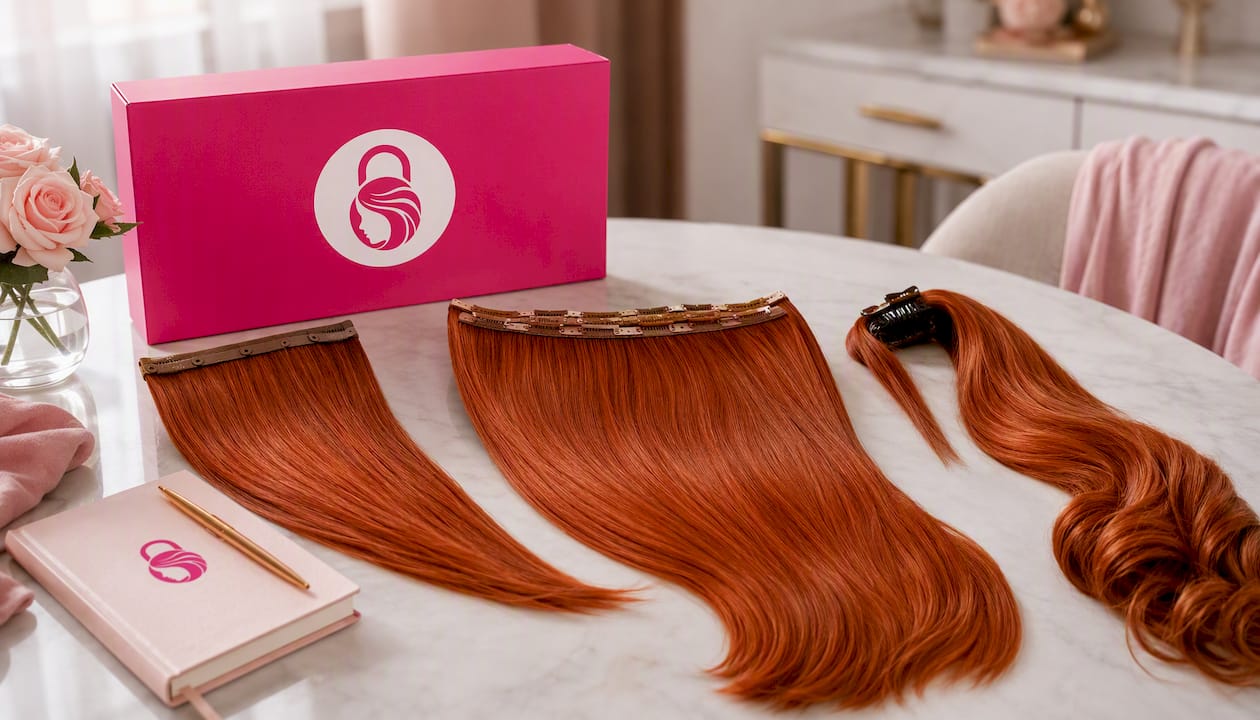
Every option comes with a clear sample and return policy, so you can test wash tolerance, weight, and blend before buying in bulk. If you’re still deciding between fullness levels or need help matching texture to your natural hair, book a consultation and get a direct answer instead of another grade guessing game.
Sources
For a deeper breakdown of how 10A and 12A labels actually work and where they fall apart, the Arrow Exim guide on hair grades is the most thorough explainer available, covering donor selection, drawing method, and pricing logic in detail. For buyers thinking about sourcing at scale, the Alibaba seller blog on the 7A to 10A grade system explains raw versus processed hair from a B2B angle. And for a plain look at how grade inflation misleads everyday shoppers, Bossique’s piece on deceptive hair grades is worth the five-minute read.
- 10A vs 12A Hair Grades Explained | Arrow Exim
- Hair Extension Grade System Explained: 7A to 10A Quality Comparison - Alibaba.com Seller Blog
- Deceptive Hair Grades: Should I buy 9A, 10A, or 12A hair?
FAQ
Is Grade 10A Hair Good Quality?
Yes, when it comes from a reliable, single-donor source. Standard 10A is usually single drawn, meaning it thins slightly at the ends, but it can still last one to two years with proper care.
Is 9A or 10A Hair Better?
10A generally sits above 9A in most vendor catalogs, typically reflecting fuller bundles or stricter donor selection, but since neither number is regulated, the actual quality still depends on the specific supplier.
What Is 12A Grade Hair?
12A typically describes hair that is double drawn for fuller ends and comes from more selective donor sourcing than 10A, which is why it often commands a higher price.
What Is the Difference Between 12A and 14A Hair?
In most catalogs, labels above 12A often reflect marketing rather than a measurable quality gain, so sample testing matters far more than chasing a higher number.