


HairLocks' 30 Year Method: Tone Extensions with Purple Shampoo Safely
Yes, you can use purple shampoo on extensions, but only if you choose a sulfate-free, extension-safe formula and control how long it sits on the hair. Concentrated toner left too long, or applied straight onto bonds, wefts, and clips, is what causes uneven color or a dull purple cast. Test a small section first, keep contact time short, and always follow with a moisturizing conditioner.
TL;DR:
- Using purple shampoo on extensions requires a sulfate-free, extension-safe formula with controlled contact time to prevent uneven coloring or dull purple casts.
- Porous, processed, or previously lightened extension hair absorbs pigment faster, which can lead to over-toning at attachment points or unintended color deposits.
- The safest method is a diluted shampoo bath, immersing extensions in a lightly pigmented water solution for 20 to 60 seconds, followed by thorough rinsing and deep conditioning.
- Conduct a test on a small section before full application to adjust timing and dilution, as overexposure causes gray, ashy, or purple-tinted results.
- Regular toning is unnecessary unless brassiness appears; most sets need only occasional, conservative treatments to maintain a cool tone.
Table of Contents
- Why Extensions React Differently to Purple Shampoo
- When Should You Tone Extensions, and How Often?
- How to Apply Purple Shampoo on Extensions Safely
- What to Look for in a Purple Shampoo Formula for Extensions
- Fixing Over-Toned or Purple-Stained Extensions
- Salon-Tested Tips From HairLocks
- Why the “Just Use Purple Shampoo Like Normal” Advice Misses the Point
- Toning Your Pure Bleach Blonde Clip-Ins the Right Way
- Sources
- FAQ
Why Extensions React Differently to Purple Shampoo
Extensions do not behave like the hair growing out of your scalp, and that single fact explains most purple shampoo problems. Hair that has already been processed, lightened, or exposed to heat styling before it ever reached you tends to be more porous than virgin hair. Porous strands have a raised, uneven cuticle layer, which means pigment molecules from a purple shampoo slip in faster and settle in deeper.
That is good news and bad news at the same time. Good, because toning happens quickly and you rarely need a long soak.
The attachment points make this trickier. Wefts, keratin bonds, and clips are not just styling hardware. They are also spots where product can pool, trap moisture, and hold pigment against the hair (or the bond material itself) longer than intended. A wash of purple shampoo that clears evenly through mid-lengths can leave a faint violet tint right at the base if it sits against a bond for too long.
One more thing worth being clear on: purple shampoo does not lighten anything. It works by depositing violet pigment to cancel out the yellow and orange tones that show up as blonde extensions age, using basic color theory rather than bleach chemistry. If your extensions have gone properly brassy rather than just faded, purple shampoo tones the color. It does not undo the damage that caused the brass in the first place. For that, you are looking at safe dye and color correction steps, not a toning shampoo.
When Should You Tone Extensions, and How Often?
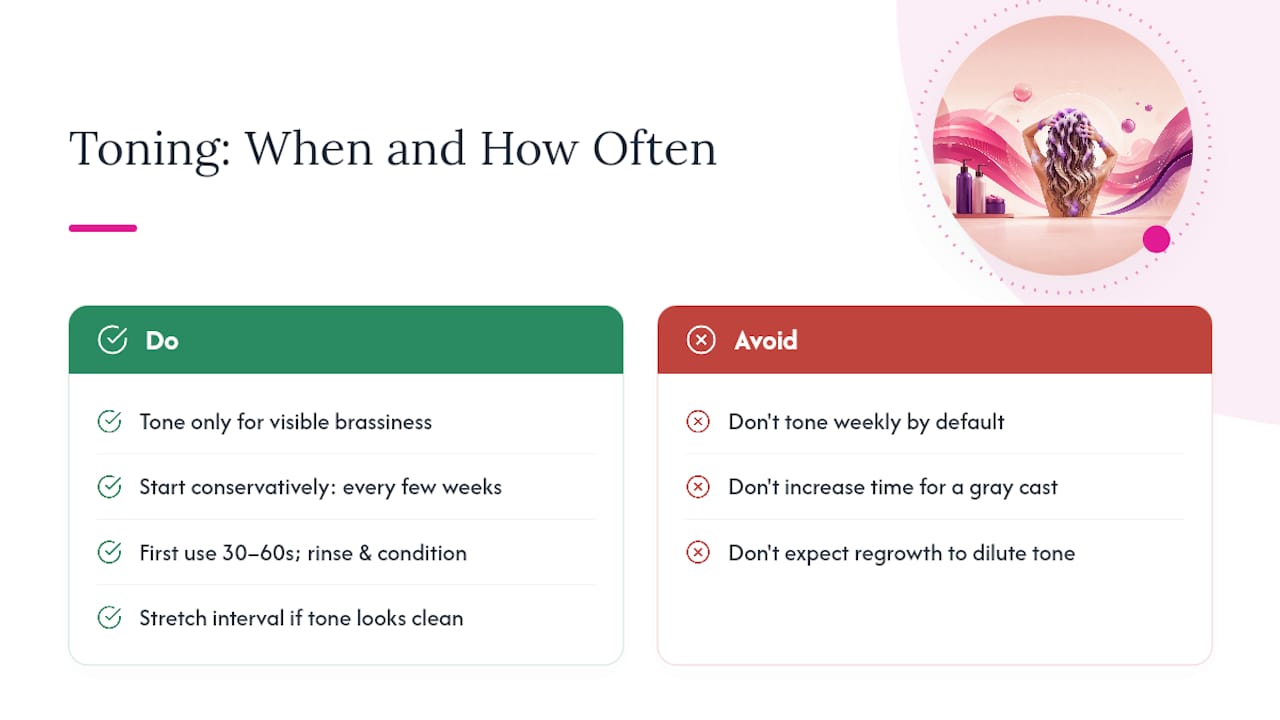
Reach for purple shampoo when you actually see brassiness, not on a rigid weekly ritual. Blonde extensions pick up warmth from UV exposure, hard water, styling product buildup, and the natural way lightened hair oxidizes over time. If your extensions still look clean and cool-toned, adding a toning wash does nothing but risk over-depositing pigment you do not need yet.
For most people running a lightened or pale blonde set, a conservative starting cadence is to tone extensions occasionally, approximately once every few weeks or washes. Extensions with heavier bleaching, higher porosity, or particularly warm undertones may need it weekly or every other wash, but that is a ceiling to work up to, not a starting point.
Start conservatively regardless of your hair’s history. A first-time use should run on the shorter end of processing time, roughly 30 to 60 seconds, followed by a full rinse and a conditioning step. Watch how the color settles once it dries. If brassiness is fully neutralized and the tone looks clean, stretch the interval out. If a faint gray or violet cast shows up instead, you went slightly too far, and the fix is simply less frequency or less time next round, not more shampoo.
Extensions also do not “regrow” the way natural hair does, so there is no root grow-out diluting the tone over weeks the way there is with your own hair. Whatever cast you deposit stays until it is washed out or grown into a new set. That makes patience during the first few uses worth more than speed.
How to Apply Purple Shampoo on Extensions Safely
The safest way to tone hair extensions is a technique stylists have used for years on wigs and hair systems: the diluted shampoo bath. It spreads pigment evenly across the whole set instead of concentrating it wherever your hands happen to rub hardest.
Shampoo-bath method, step by step:
- Fill a basin or sink with lukewarm water, enough to fully submerge the length of the extensions.
- Add a small, measured amount of purple shampoo, roughly a capful for a full set, and swirl until the water turns a pale, translucent lilac rather than a deep purple.
- Test one small piece or a single weft first. Submerge it for 20 to 30 seconds, rinse, and check the result before committing the full set.
- If the test piece looks right, submerge or gently swirl the rest of the extensions in the diluted bath for 20 to 60 seconds.
- Rinse thoroughly under cool to lukewarm running water until the water runs clear, not tinted.
- Follow immediately with a deep conditioner from mid-length to ends.
If a full bath is not practical, a direct-application approach works as a fallback. Apply shampoo only to the mid-lengths and ends, avoiding bonds, tape strips, or clip hardware where product can pool. Work carefully, timing the application precisely, and rinse promptly when ready. Begin with a brief contact time, checking the color after rinsing. Extend the time only if needed based on visible brassiness, and stop as soon as any undesired gray, ashy, or lavender tint appears, indicating pigment saturation.
Aftercare decides whether the finished result looks salon-fresh or slightly straw-like. Apply a moisturizing conditioner from mid-length to ends every time you tone, since the pigment deposit process can pull moisture out of already-porous strands. Keep conditioner off bonds and attachment points, where residue buildup can loosen adhesive or cause slippage. Dry gently, ideally with a leave-in heat protectant, and drop your styling tool a notch cooler than you would for your own natural hair. A gentle cleansing option like Crown Wash pairs well with this routine on wash days when you are not toning.
Pro Tip: Keep a simple note on your phone with the shampoo brand, dilution ratio, and exact timing that worked for your set. Extensions do not change week to week the way your scalp hair might, so once you find the right formula, that same recipe should work every time.
What to Look for in a Purple Shampoo Formula for Extensions
Not every purple shampoo on the shelf belongs anywhere near your extensions, and the ingredient list tells you more than the marketing copy does.
- Sulfate-free and low-alcohol formulas protect against the drying effect that harsh detergents have on both hair fibers and the bonds or tape adhesive holding your set together.
- Purpose-built extension or wig toners are formulated with gentler surfactants than mass-market blonde shampoos, since they are designed for hair that has no scalp oil replenishing it naturally.
- Added moisturizers, hydrolyzed proteins, or keratin help offset the drying tendency of any pigmented shampoo, which matters more on extensions than on hair still connected to your scalp’s natural oils.
- UV protection helps slow the oxidation that causes brassiness to return in the first place, extending the gap between toning sessions.
- Moderate pigment strength beats a heavily concentrated formula unless you already know how to dilute it correctly; strong pigment loads are exactly what causes overcast, ashy results on porous extension hair.
A “safe for extensions” label on the bottle is a genuinely useful signal, and formulas like BLONDA Toning Purple Shampoo advertise results in as little as 60 seconds while stating they are safe for color-treated and extension hair when used as directed. Professional options built specifically for hair systems, such as Colour Shield Pro, go a step further by combining pigment with hydrolyzed proteins to reduce shedding and friction damage, a real concern for wefts and clip-ins that get handled daily. Even with a trusted label, still test a strand. Marketing claims describe average results, not your specific set’s porosity. Avoid anything listing sodium lauryl sulfate near the top of its ingredient list, or any shampoo that markets itself primarily as a bleaching or lightening product rather than a toner.
Fixing Over-Toned or Purple-Stained Extensions
The three mistakes that cause almost every bad purple shampoo result are the same across clip-ins, tape-ins, and bonded sets: leaving the product on too long, applying full-strength shampoo directly at the bonds, and toning far more often than the hair’s actual brass level calls for.
If you have already landed with a gray, ashy, or visibly purple-tinted set, here is the recovery order to try:
- Wash with a clarifying shampoo, which strips product buildup and lifts some of the deposited pigment along with it.
- Run a diluted clarifying bath, using the same shampoo-bath technique but with a clarifying formula instead of a toner, for gentle, repeated pigment removal.
- Alternate a few gentle washes with a plain, non-toning shampoo and a deep conditioning treatment, since pigment fades gradually with normal washing once you stop adding more.
- Repeat the clarifying step every few days rather than back-to-back, giving the hair time to recover moisture between sessions.
Pro Tip: If a clarifying wash lightens the cast but leaves it looking dull or straw-textured, that is a moisture problem, not a pigment problem. A protein-and-moisture mask solves it faster than another round of clarifying shampoo.
Know when to stop trying it yourself. Persistent staining that survives two or three clarifying washes, visible damage or breakdown at the bonds or base, or unusual shedding all point to something a professional needs to look at rather than another home fix.
Salon-Tested Tips From HairLocks
Thirty years of fitting, coloring, and troubleshooting extensions taught HairLocks founder Michele one rule above all others: never treat a full set the same way you would treat one strand you already trust. Every set behaves slightly differently depending on how it was processed before it reached you, so a quick test matters more than any product label.
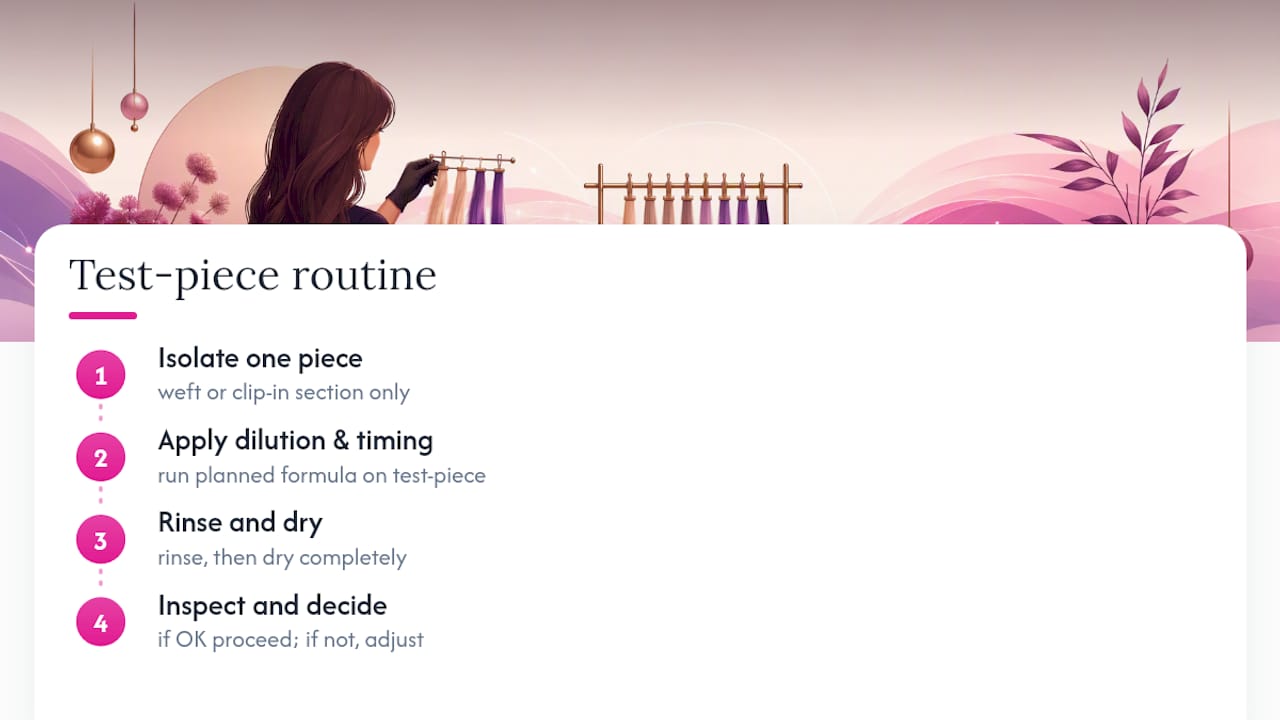
The test-piece routine is simple and non-negotiable. Take a single weft or one clip-in section, run your planned dilution and timing on it alone, rinse, dry, and inspect it before touching the rest of the set. If the color and texture look right, proceed. If not, adjust before you risk the whole thing.
Detachable pieces like clip-ins and single wefts are the best candidates for confident at-home toning, since you can isolate them fully from bonds or tape strips. Bonded systems, keratin fusion, and heavily color-matched pieces are a different story. When brass is heavy, or the base involves adhesive that reacts to prolonged moisture, in-salon toning protects your investment better than a home attempt. A shampoo guide built specifically for extensions is a good next stop if you are still narrowing down a formula.
Why the “Just Use Purple Shampoo Like Normal” Advice Misses the Point
Most of the advice circulating online treats purple shampoo as a one-size-fits-all fix, borrowed wholesale from natural-hair routines and dropped onto extensions without adjustment. That is where things go wrong. The research behind this guide points to a different priority order: timing and dilution control matter more than which bottle you buy.
A mediocre formula used with a careful test-piece routine and short contact times will outperform an expensive toner applied full-strength and left on too long. That is not the message most product marketing sends, because a “just apply and rinse” instruction sells easier than “test it first, time it carefully, and expect to adjust.”
If there is one habit worth prioritizing above all others, it is the test strand. Skipping it is the single most common reason people end up with a patchy or overly ashy set, and it costs nothing but two extra minutes. Everything else, formula choice, frequency, aftercare, is easier to get right once that habit is in place.
— HairLocks
Toning Your Pure Bleach Blonde Clip-Ins the Right Way
If your set is the U Part Clip In Hair Extensions in Pure Bleach Blonde, a 24 inch, 260 gram set built thick enough for real volume, the same rules apply, and the payoff is worth getting right.
Before treating the whole piece, isolate one clip section, run it through a brief diluted shampoo bath for 20 to 30 seconds, rinse, and check the result once dry. If the tone looks clean and even, apply the same timing to the rest of the set. Keep conditioner concentrated on the mid-lengths and ends rather than the U-part base, where the clips and tracks sit, to protect the attachment structure over repeated wears.
Pure Bleach Blonde is a shade that shows brass quickly, so a light monthly toning habit will likely keep it looking fresh longer than reaching for a stronger formula less often. If you want a second opinion before your first toning session, you can seek advice to understand timing suited to your specific set. Check the Pure Bleach Blonde U-part clip-ins product page for current availability and details, and reach out for a consult if you would rather have it confirmed before you start.
Sources
Safety guidance in this article draws on regulatory notices such as the ACCC’s recall of hair straightening products, which underscores why gentler, extension-safe formulas beat harsh ones. Product-specific claims reference BLONDA Toning Purple Shampoo and Colour Shield Pro, both formulated for extensions and hair systems.
For more on daily care, see the guide to extension-friendly hair products and the breakdown of safe extension coloring steps.
- Colour Shield Pro - Purple (product page)
FAQ
Is purple shampoo suitable for hair extensions?
Yes, as long as you choose a sulfate-free, extension-safe formula and keep contact time short, ideally 30 to 60 seconds, with a test strand checked first.
What happens if you use purple shampoo on extensions incorrectly?
Leaving it on too long or applying it full-strength at the bonds can leave a gray, ashy, or purple-tinted cast, and it may dry out already-porous hair.
Why do some hairdressers not recommend purple shampoo for extensions?
Concerns usually come from concentrated formulas or long processing times causing over-toning on porous, previously lightened hair, not from purple shampoo itself being unsafe when diluted and timed correctly.
How do you wash purple shampoo out of extensions?
Rinse thoroughly under cool to lukewarm running water until the water runs clear, then follow with a deep conditioner on the mid-lengths and ends to restore moisture.
How often should you tone extensions with purple shampoo?
Once a month or every three to four washes is a reasonable starting point, adjusting up to weekly only if brass returns quickly on your specific set.