


Cut Monthly Extension Cost: Wefts Last 9–12 Months
The hair itself can hold up for 9 to 12 months with proper care. That number only holds true if you keep up with move-up appointments every 6 to 8 weeks and choose genuine Remy human hair over synthetic or heavily processed alternatives.
TL;DR:
- Wefts, especially when maintained with scheduled move-ups, can last up to 12 months and be reused multiple times if properly cared for.
- Tape-in extensions typically last 6 to 8 weeks per install and can be reused for up to 12 months with careful inspection and minimal product buildup.
- Fusion and keratin bonds generally need reapplication every 3 to 6 months due to bond degradation, regardless of hair quality.
- Microlink and I-tip extensions depend heavily on natural hair texture and tension, lasting from 3 to 9 months with proper tension adjustments.
- Clip-in extensions can last 1 to 2 years if stored and handled correctly, but are best suited for occasional use rather than long-term wear.
Table of Contents
- What Extensions Last Longest? A Quick Ranking
- Why Weft Methods Win on Hair Longevity
- How Long Do Tape-In Extensions Really Last?
- Do Fusion or Keratin Extensions Last as Long?
- Microlink and I-Tip Installs: How Grip Affects Longevity
- Are Clip-Ins the Longest-Lasting Option Overall?
- What Actually Determines How Long Extensions Last?
- How to Care for Extensions Between Salon Visits
- How Do You Choose the Longest-Lasting Option for You?
- Where HairLocks Fits Into the Longevity Picture
- A Stylist’s Honest Take on Longevity Claims
- Ready for Extensions Built to Last?
- Sources
- FAQ
What Extensions Last Longest? A Quick Ranking
If you’re comparing methods side by side, here’s how the major installation types stack up on pure longevity.
- Wefts (machine, hand-tied, genius): the top pick for hair life, often stretching to 9 to 12 months of usable hair when maintained on a consistent schedule.
- Tape-ins: a close second. The adhesive needs replacing every 6 to 8 weeks, but the same quality hair can be re-taped for 8 to 12 months total.
- Microlink/I-tip: variable performance. Grip depends heavily on your natural hair texture, with installs commonly lasting 3 to 9 months.
- Fusion/keratin: bond-limited. Even excellent hair rarely stretches an install past 3 to 6 months before the bonds need redoing.
- Clip-ins: a different category entirely. The hair itself can survive up to a couple of years because it’s removed daily, but this is an occasional-wear solution, not a semi-permanent one.
The pattern that emerges: methods that minimize repeated adhesive stress or bond removal tend to protect the hair fiber longest, which is exactly why weft-based systems dominate this list.
Why Weft Methods Win on Hair Longevity
Wefts work by attaching rows of hair, either sewn into braided tracks or secured with small beaded connections, rather than bonding individual strands to your natural hair. That structural difference matters more than most people realize.
Because wefts distribute tension across a row instead of concentrating it at single attachment points, they put less mechanical stress on both the extension hair and your scalp. There’s also no repeated glue, keratin, or adhesive application directly on the strands, which is often what degrades extension hair fastest in bonded methods.
Salons typically recommend move-ups every 6 to 8 weeks as your natural hair grows and the tracks shift away from the scalp. Skip too many of these appointments and you risk matting at the roots, which can shorten the hair’s usable life dramatically.
What makes wefts stand out is reuse potential. High-grade human hair wefts can often be reconditioned and reinstalled multiple times when properly removed and cared for between installs.
Getting the most months out of your weft:
- Book move-ups on schedule, don’t wait until it feels loose
- Use sulfate-free shampoo and avoid heavy conditioner at the root
- Sleep with hair braided or on a silk pillowcase to reduce friction
- Ask your stylist about reconditioning before assuming you need new hair
Pro Tip: Ask your stylist to check the wefts for reuse potential at every removal appointment. A single set of quality hair, handled correctly, can sometimes carry you through two or three separate install cycles instead of one.
How Long Do Tape-In Extensions Really Last?
Tape-ins have a two-part lifespan, and understanding the split is the key to getting real value from them. The tape bond itself typically lasts 6 to 8 weeks before it needs replacing, but the hair underneath that tape can survive multiple re-taping cycles.
Quality human hair used in tape-ins can often go through 3 to 4 reuse cycles, stretching total hair life to roughly 8 to 12 months. That’s a meaningful number if you’re calculating cost-per-month rather than just upfront price.
What kills tape-ins early usually isn’t age, it’s product buildup. Oil-based root products, heavy dry shampoo, and conditioner applied too close to the scalp break down the adhesive bond faster than normal wear ever would.
- Keep root-area products oil-free and lightweight
- Avoid conditioner or masks within an inch of the tape
- Ask your stylist to clean and inspect the tape at each removal, not just replace it
- Don’t wait past 8 weeks if you notice slipping, waiting increases tangling risk
Tape-ins suit clients who want a flat, low-profile install and don’t mind a steady salon rhythm.
Do Fusion or Keratin Extensions Last as Long?
Fusion and keratin-bonded extensions attach individual strands using heated keratin, which fuses directly to small sections of your natural hair. That bond is strong, but it’s also the limiting factor on lifespan.
Even with excellent hair and diligent care, fusion installs typically last 3 to 6 months before the bonds need removal and reapplication. The hair strands themselves might have life left in them, but the bond degrades on its own timeline as your natural hair grows out beneath it.
Removal is the part clients underestimate. Breaking down keratin bonds requires solvent or heat, and that process puts real stress on the natural hair surrounding each bond if it’s rushed or done without professional tools.
- Fusion suits clients who want the most natural, low-profile movement and don’t mind more frequent salon visits
- It’s less suitable for anyone with fine or fragile natural hair, since the bonds add weight at concentrated points
- Insist on professional removal every time, DIY removal is where most breakage happens
- Prioritize a protein-based aftercare routine to keep bonded sections from drying out between visits
Microlink and I-Tip Installs: How Grip Affects Longevity
Microlink and I-tip extensions attach through small metal beads clamped around sections of natural hair, no glue, no heat. That mechanical grip is exactly what makes their lifespan so texture-dependent.
Salons commonly report install life ranging from 3 to 9 months, and the wide range comes down almost entirely to how well the beads hold. Fine or naturally slippery hair tends to let beads slide sooner, while coarser, more textured hair holds mechanical attachments noticeably better.
- Ask your stylist about bead size and tension calibrated to your specific hair texture
- Avoid heavy oils near the roots, which accelerate slippage
- Sleep with hair loosely braided to reduce friction against the beads
- Schedule move-ups proactively rather than waiting for visible slipping
If you have naturally fine or fragile strands, extensions built for fine hair may hold better than a standard microlink approach.
Are Clip-Ins the Longest-Lasting Option Overall?
Calendar-wise, clip-ins often win by a wide margin. Because you remove them daily instead of leaving them attached under constant tension, high-quality human hair clip-in sets can remain in excellent condition for 1 to 2 years with proper handling and storage.
Synthetic clip-ins tell a different story. They typically last only 1 to 4 months of regular wear, and most can’t tolerate heat styling tools at all without melting or frizzing beyond repair.
- Clip-ins fit best for occasional wearers: special events, date nights, or days you want extra volume without a salon commitment
- Store sets flat or on a hanger, never crumpled in a bag, to prevent tangling and shed
- Wash less often than you’d think, over-washing wears down the wefts faster than wear does
- Choose human hair over synthetic if you plan to style with heat regularly
What Actually Determines How Long Extensions Last?
Method matters, but it’s not the only variable. Four factors decide whether you get the top end or the bottom end of any lifespan range.
Hair grade is the biggest lever. Remy human hair with intact, aligned cuticles consistently outlasts processed or synthetic hair, resisting tangling in a way that non-Remy hair simply can’t match over months of wear.
Product and styling habits either protect or erode that hair grade fast. Sulfate shampoos strip moisture, brushing from the root loosens attachment points, and sleeping on wet extensions accelerates matting, three of the most common mistakes stylists see repeatedly.
Maintenance consistency protects the install itself. Skipping scheduled move-ups doesn’t just risk visible slippage, it lets tangling and tension build at the root, which can damage both the extensions and your natural hair underneath.
- Choose Remy human hair whenever budget allows
- Detangle from the ends upward, never starting at the root
- Skip sulfates and heavy oils near attachment points
- Keep move-up appointments on schedule, even when things feel fine
Pro Tip: If you’re an active swimmer or spend a lot of time in chlorinated or salt water, ask your stylist about a protective leave-in before submerging. Both chlorine and saltwater strip moisture and accelerate cuticle damage faster than everyday wear.
How to Care for Extensions Between Salon Visits
A realistic care routine, followed consistently, does more for lifespan than any single product claim.
- Daily: Detangle starting from the ends, never the root. Sleep with hair loosely braided or on a silk pillowcase to cut down on friction and matting.
- Weekly: Wash with sulfate-free shampoo, focusing suds at the scalp only. Keep heat styling to a minimum, and always use a heat protectant when you do style.
- Monthly: If you wear clip-ins, check your storage method, flat or hanging, never balled up. Reassess how your extensions are holding up before your next scheduled appointment.
- Every 6 to 8 weeks: Book your move-up appointment on schedule rather than waiting for visible problems. Consistent timing protects both the extensions and your natural hair from excess tension.
Avoid oil-based root products regardless of method, they’re one of the fastest ways to undercut whatever lifespan your hair grade promised you.
Pro Tip: Keep a simple calendar reminder for move-up appointments instead of relying on memory. Clients who book on a fixed schedule almost always report less matting and fewer emergency salon visits than those who wait until something feels off.
For a deeper breakdown of what to use and what to avoid, the extension-friendly product guide covers specific ingredients worth skipping.
How Do You Choose the Longest-Lasting Option for You?
Before booking anything, run through a short checklist that matches your lifestyle to the method, not the other way around.
- How many hours a day do you want to wear extensions, occasional or constant?
- How often can you realistically commit to salon visits, every 6 weeks or less frequently?
- What’s your budget shape, higher upfront cost with lower ongoing maintenance, or lower upfront with more frequent visits?
- What’s your natural hair texture, fine and slippery, or coarse and textured?
When you sit down for a consultation, ask direct questions: What’s the expected move-up cycle? Can this hair be reused after removal? What’s a realistic lifespan in months, not just “a long time”? Any stylist who can’t answer specifically, or who gives you a vague lifespan claim with no aftercare guidance, is a red flag worth taking seriously.
Where HairLocks Fits Into the Longevity Picture
Consultations consider hair grade and installation methods based on individual texture and lifestyle, rather than a one-size-fits-all recommendation.
For readers focused specifically on maximizing hair life, HairLocks’s weft options map directly onto the top-performing category in this guide. The hair extension lifespan guide and printable care sheet go deeper into the day-to-day routines that protect your investment between appointments.
A Stylist’s Honest Take on Longevity Claims
Most longevity questions have less to do with the method and more to do with follow-through. Wefts win on cost-per-month almost every time, tape-ins earn their place for clients who want a low-profile, midterm commitment, and clip-ins remain unmatched for anyone who only needs extra length a few times a month.
The mistake we see most often isn’t choosing the wrong method. It’s skipping move-ups because the hair “still looks fine,” then wondering why the lifespan fell short of what was promised. Consistency beats method choice almost every time.
— HairLocks
Ready for Extensions Built to Last?
If you’ve read this far, you already know the pattern: the biggest lifespan gains come from starting with genuine Remy human hair in a weft install, then keeping up with move-ups on schedule. That’s exactly the category HairLocks was built around, and it’s why our product lineup skews toward weft-based options rather than short-lifespan bonded systems.
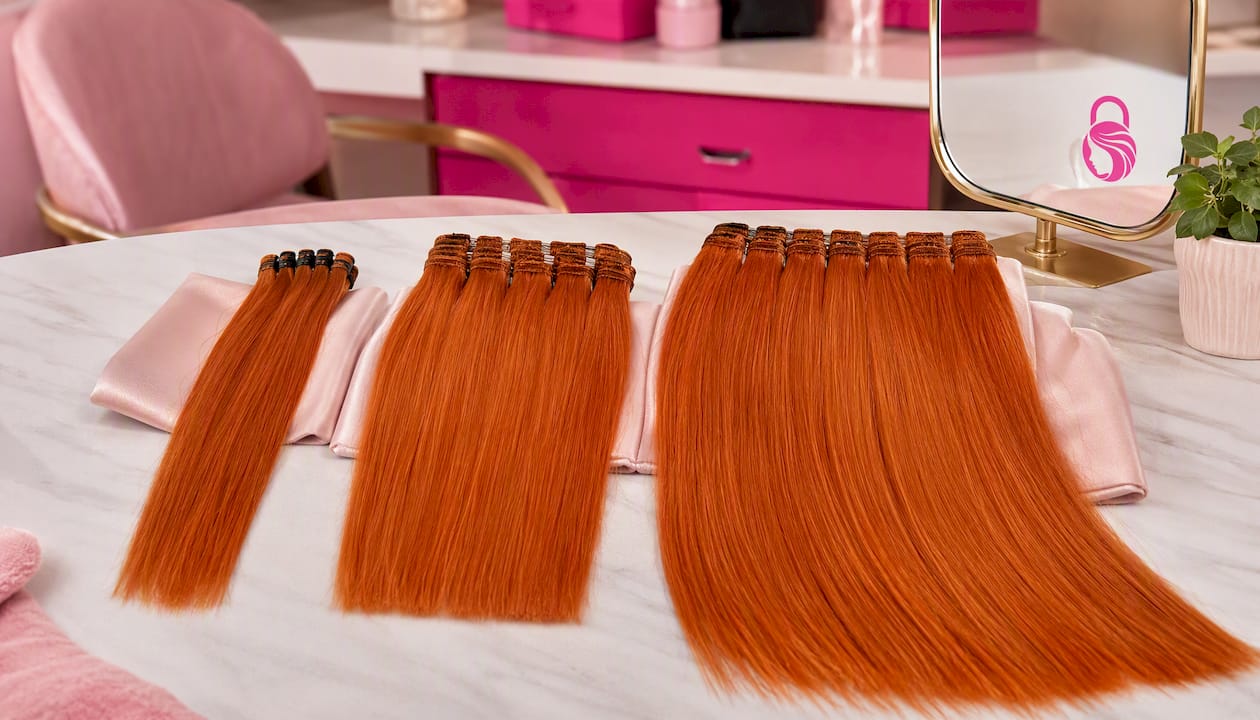
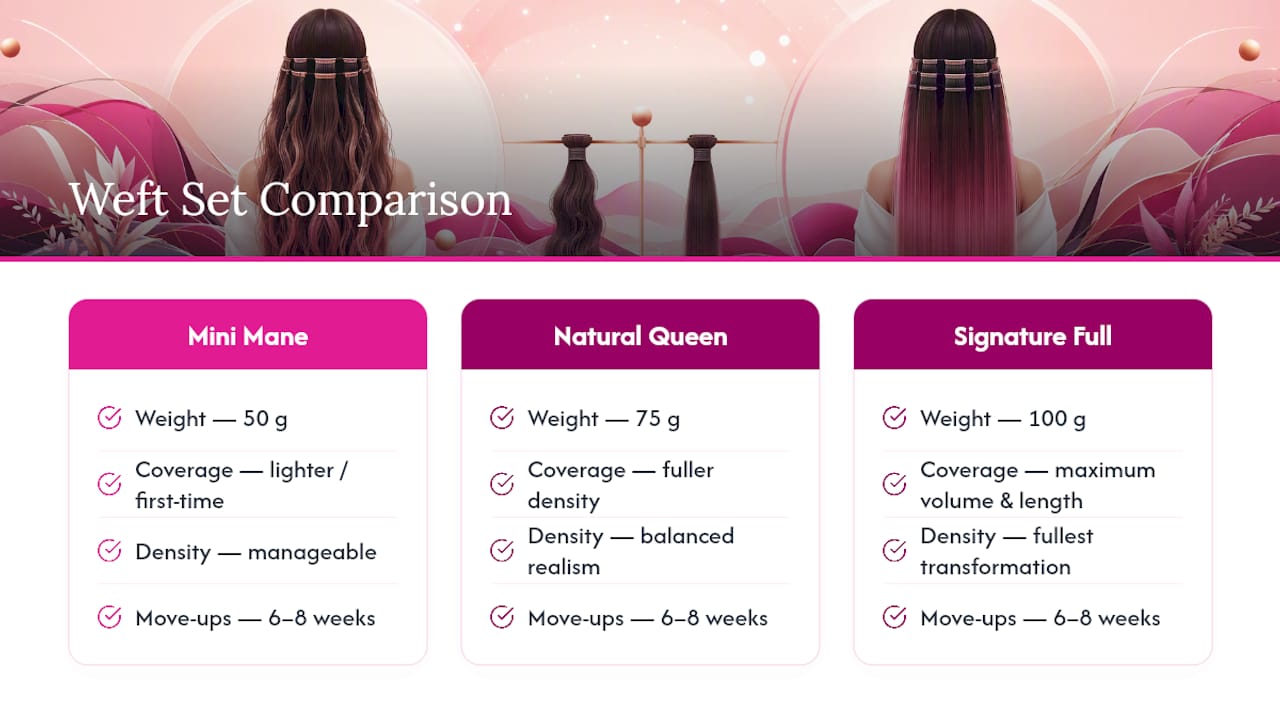
For lighter coverage or a first-time extension experience, the Mini Mane set at 50 grams offers a manageable entry point without sacrificing hair grade. If you want fuller density while staying realistic about maintenance, the Natural Queen Set at 75 grams balances coverage with the same longevity profile. For maximum volume and length, the Signature Full Head at 100 grams gives you the fullest transformation while still following the same 6 to 8 week move-up rhythm that protects your investment.
Every set uses Premium European Grade 7A human hair, chosen specifically because it holds up to the reuse cycles this article has covered. Book a personalized consultation with Michele to find which set matches your hair texture and lifestyle, and pair your purchase with our care sheet so you know exactly what to expect between appointments.
Sources
This guide draws on salon-reported move-up intervals and lifespan ranges from industry sources including Christian Michael Hair Extensions, The Knot, Hair By Russians, and Salon 144, alongside HairLocks’s own care resources. For adhesive and product care specifics, Hairbond offers additional professional guidance.
- Which Hair Extensions Last Longest? Salon Owner Shares All
- How long do hair extensions last? — The Knot
- How long do hair extensions last? An honest answer by method - Hair By Russians
- Lifespan guide: how long do professional hair extensions last? - Salon 144
FAQ
What brand of hair extensions lasts the longest?
No single brand universally outlasts every other, longevity depends more on hair grade and installation method than brand name alone. Premium European Grade 7A human hair, like the wefts HairLocks offers, tends to outperform lower-grade or synthetic alternatives regardless of brand.
What is the longest-lasting hair extension method?
Weft methods, machine, hand-tied, or genius weft, typically offer the longest real-world hair lifespan, often 9 to 12 months with consistent maintenance. Clip-ins can last longer in calendar time but serve a different, occasional-wear purpose.
What are the least damaging hair extensions to get?
Weft-based installs generally carry the lowest damage risk since they distribute tension across rows rather than concentrating stress at individual strands. Fusion and keratin bonds carry more risk during removal, since breaking down the bonds puts direct stress on the surrounding natural hair.
Can hair extensions last 2 years?
Clip-in human hair extensions can last 1 to 2 years with careful use and proper storage, since they’re removed daily rather than worn continuously. Semi-permanent methods like wefts or tape-ins don’t reach that timeframe in a single install, but the same quality hair can be reused across multiple cycles to extend total value well beyond a year.