


Three Decades of Installer Rules: Leave In Conditioner for Extensions
Yes, leave-in conditioner is not just safe for extensions, it’s one of the best tools for keeping them soft and tangle-free, as long as you pick a lightweight, water-based formula and use it correctly. The one rule that matters most: never apply product directly at the bond, tape, or weft track. Everything else, from ingredient choice to application timing, follows from that single principle.
TL;DR:
- Applying leave-in conditioner within two to three inches of the bonds, tapes, or tracks can cause slippage and weaken extension adhesion.
- Water-based sprays with thermal protectants and UV filters are safest, while heavy silicones, waxy oils, and high-protein formulas should be avoided near the bonds.
- Use damp hair to spray mid-lengths and ends, avoiding the roots and attachment points, and comb from ends upward to prevent tangling and damage.
- Weekly deep masks or serums should be applied to lengths and ends, never directly at the attachment sites, to prevent buildup and loosening of bonds.
- Always consult with your extension installer before switching products or applying new formulas, as proper placement and routine adherence are crucial for longevity.
Table of Contents
- Why Leave-In Conditioner for Extensions Actually Works
- Ingredients to Look For and Ingredients to Avoid
- How to Apply Leave-In Conditioner to Extensions Without Wrecking Your Bonds
- Choosing the Right Format: Sprays, Masks, and Serums
- Salon-Tested Rules Behind Every HairLocks Recommendation
- Is Leave-In Conditioner Safe for Tape-Ins, Bonds, Wefts, and Beads?
- What the Research Actually Tells You to Prioritize
- Sources
- FAQ
Why Leave-In Conditioner for Extensions Actually Works
Extensions have no scalp feeding them natural oils, so they dry out faster than the hair still attached to your head. That’s the whole reason leave-in conditioner earns its place in an extension routine.
Detangling agents and slip ingredients coat each strand and let hair glide past hair instead of catching. That matters more than most wearers realize, since friction and mechanical wear are the main reasons extensions shed and mat at the wefts or bonds. A quality leave-in acts as a buffer between strands, cutting down on the tugging that loosens bonds and thins out tips over time.
Humectants and lightweight oils pull moisture back into hair that’s already been through processing before it ever reached you. Human hair extensions are cut, colored, and sometimes bleached before installation, which strips some of the natural lipid layer that protects virgin hair. A good leave-in partially restores that barrier.
That said, leave-in conditioner has limits. It cannot fix a bond that’s slipping because of buildup, and it won’t rescue extensions that were matted at the root before you ever picked up a spray bottle. Leave-ins manage moisture and friction. They don’t replace a professional reinstallation or a proper wash routine.
Ingredients to Look For and Ingredients to Avoid
Not every leave-in conditioner on the shelf belongs anywhere near your extensions. Some formulas actively work against you, coating strands in residue or, worse, softening the adhesive holding your tape-ins in place.
Look for these:
- Water-based sprays as the first ingredient, not oil or silicone
- Thermal protectants rated for heat styling, with some professional formulas claiming protection up to 450°F
- UV filters, since extensions left in the sun fade and dry out faster than hair protected by a scalp and regular oil production
- Humectants like glycerin or panthenol for lightweight moisture without weight
- Small, controlled amounts of silk protein or keratin, useful for smoothing without overloading the strand
Avoid or use with caution:
- Heavy silicones and waxy oils, which build up fast on extensions since there’s no natural shedding cycle to clear them out
- High-protein formulas if your extensions already feel stiff or straw-like, since protein overload makes hair brittle rather than strong
- Any solvent-heavy formula near tape-ins. Stylists warn that certain conditioning agents can soften tape adhesive, and the safest move is always to check with your installer before introducing a new product
Pro Tip: Scan the label for phrases like “extension safe,” “safe for wigs,” or “lightweight spray.” If a product’s marketing leads with “rich” or “intense hydration,” it’s probably formulated for natural scalp hair, not extensions.
How to Apply Leave-In Conditioner to Extensions Without Wrecking Your Bonds
Application technique matters as much as the product itself. The same conditioner that protects your lengths can cause slippage if you spray it in the wrong place.
Damp-hair routine (post-wash):
- Towel-blot extensions gently. Never rub or twist wet hair, since wet strands are at their weakest and most prone to tangling.
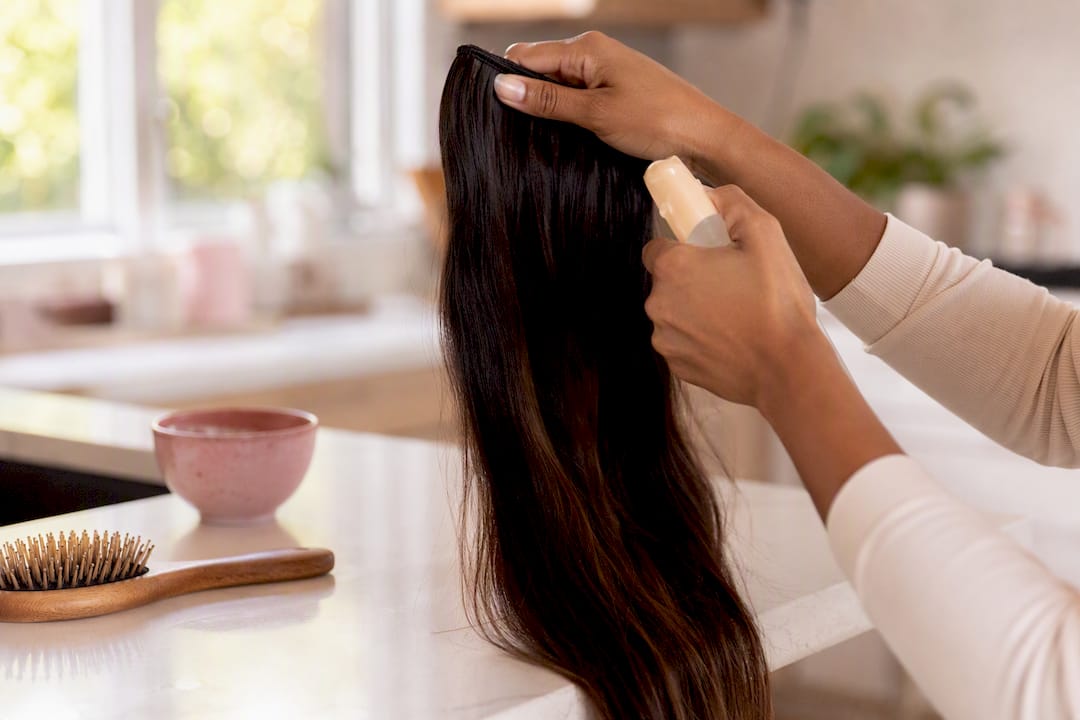
- Spray leave-in conditioner from mid-length to ends, keeping at least two to three inches away from any bond, tape, or weft track.
- Comb through with a loop brush or wide-tooth comb, starting at the ends and working upward.
- Style as usual, adding heat protectant separately if you plan to blow-dry or use tools.
Dry-refresh routine (between washes):
Mist lightly over dry lengths, finger-detangle any knots, then run a soft brush through. Skip heavy serums near the roots entirely. A dry mask format, like the extension-specific leave-in masks marketed for use across bond types, works well here since it’s designed to be combed through without rinsing.
Special situations:
Before swimming, apply a light leave-in as a barrier against chlorine or salt, then rinse and reapply a fresh light coat once you’re out. Before heat styling, always add a dedicated thermal protectant. Some professional leave-ins, including formulas built to reduce styling time, combine detangling and heat protection in one step. Overnight, a loose braid or silk wrap after a light misting keeps friction down while you sleep. For a full nighttime routine, HairLocks has a detailed guide on sleeping with hair extensions without damage.
Pro Tip: Daily light misting keeps extensions manageable, but save intensive leave-in masks for once a week. Doing both every day is the fastest route to buildup at the roots.
Choosing the Right Format: Sprays, Masks, and Serums
The format you choose should match how often you’re using it and where on the strand you’re applying it.
For daily use, weightless detangling sprays labeled for extensions or wigs are the safest default. They’re formulated to evaporate any excess rather than sit heavy on the strand, which matters since you’ll be reaching for this bottle most often.
For a weekly refresh, a leave-in mask or dry treatment applied mid-length to ends gives a deeper moisture boost without the rinse-out step that risks loosening bonds. HairLocks recommends a frizz-control leave-in serum for exactly this kind of weekly touch-up on lengths and ends.
Steer clear of anything marketed as a “rich cream” or “heavy oil treatment,” and be especially wary of any product whose directions tell you to apply at the roots for tape-in wear. That instruction is written for natural hair, not bonded extensions.
Before committing to a full-size bottle, patch test on a small, hidden extension section. Watch it for 48 to 72 hours for any sign of slippage or adhesive softening before applying it across your whole head. HairLocks breaks down more label language to watch for in its guide to extension-friendly hair products.
Salon-Tested Rules Behind Every HairLocks Recommendation
Three decades of fitting and maintaining extensions has taught HairLocks founder Michele a short list of rules that rarely change, regardless of which product trend comes and goes. Never spray directly at the installation point, full stop. Always ask your installer before switching leave-in products, especially with tape-ins, since adhesive compatibility varies by brand. And favor one weekly lightweight treatment over daily heavy product, since buildup accumulates fastest at the crown and nape.
Three simple rituals come out of that experience: a post-swim rinse followed by a light mist, an evening protection braid after a quick spray, and a weekly leave-in mask applied strictly to lengths, never roots. For the full step-by-step version of each, the HairLocks care sheet walks through wash day, drying, and storage in order.
Is Leave-In Conditioner Safe for Tape-Ins, Bonds, Wefts, and Beads?
The safety answer changes slightly depending on your installation method, and treating all extensions the same is where most wearers go wrong.
Tape-ins carry the highest risk. The adhesive strip bonding the tape to your natural hair can soften if certain solvents or heavy oils reach it repeatedly, which is why stylists consistently recommend keeping any leave-in product at least a few inches from the tape line and checking new products with your installer first.
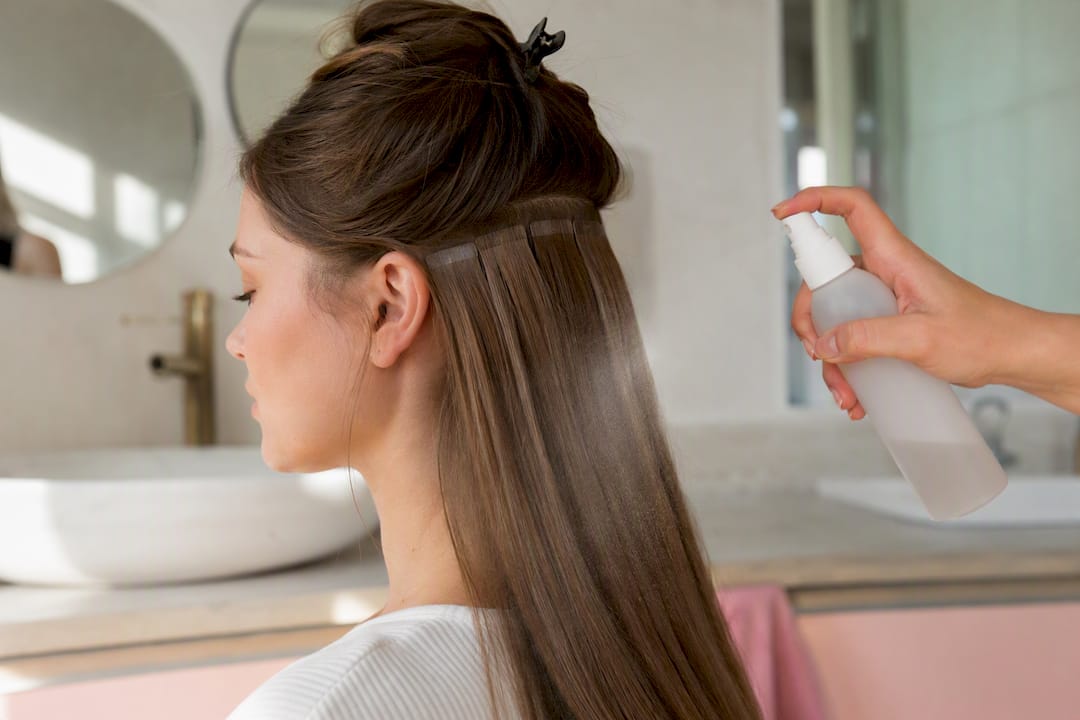
Bonds, whether keratin or fusion, are less chemically reactive to conditioner but still vulnerable to slippage if too much product accumulates right at the bond site, softening its grip over weeks of repeated contact.
Wefts, whether sewn or micro bead, tolerate leave-in conditioner best of the four, since there’s no adhesive to weaken. The main risk here is buildup at the track itself, which can make the weft feel heavier and start to slip loose from the tension of the beads or thread.
Across every method, the same principle holds: product on the lengths, nothing at the point of attachment. Manufacturer guidance on professional sprays reinforces this, advising wearers to keep conditioner away from tape-in roots and to check with a stylist before introducing anything new.
What the Research Actually Tells You to Prioritize
Most advice on extension care treats every leave-in conditioner as interchangeable, and that’s the gap worth closing. The formula matters less than most wearers assume. Application discipline matters more.
A $60 bottle applied at the bond will cause more damage than a $12 bottle kept strictly to the lengths. That’s the uncomfortable truth buried under most product roundups, which tend to rank conditioners by scent and packaging rather than by what happens when the product actually meets a tape strip or a keratin bond.
If you take one thing from ingredient labels, take this: “lightweight” and “extension safe” tell you more than any ingredient list of botanical extracts ever will. And if you take one habit from application routines, take this: ask your installer before you experiment. Thirty years of watching extensions fail prematurely points to the same culprit again and again, not bad product, but product in the wrong place. Start with your installer’s guidance, build a weekly rhythm around it, and the rest of your routine will follow naturally. For anyone weighing a fresh install or a switch in extension type, browsing the before and after gallery shows what consistent, correctly applied care looks like over time. HairLocks also partners with fellow extension specialists like ARQ Hair on shared care standards worth knowing regardless of who installs your extensions.
— HairLocks
Sources
- Leave-In Conditioning Spray – Living Proof
- Shampoo tape-in hair extensions — StyleVanity
- Leave-In Conditioner For Blonde Hair 250ml — Angel Extensions / Salon Cosmetics
- Best leave-in conditioners for extensions – The Curious Millennial
FAQ
Is leave-in conditioner safe for hair extensions?
Yes, as long as it’s a lightweight, water-based formula applied to the mid-lengths and ends only. Keep it away from tape strips, bonds, and weft tracks, and check with your installer if you’re unsure about a specific product.
What is the best leave-in conditioner for hair extensions?
The best choice is a lightweight spray or dry mask labeled specifically for extensions or wigs, with detangling agents and, ideally, thermal protection built in. Specialty formulas, including ones designed for blonde extensions, can also help maintain color while reducing tangling.
How do I keep my extensions soft and silky?
Mist lightly with leave-in conditioner daily, brush from ends upward with a loop brush, and apply a deeper leave-in mask once a week on lengths only. Editorial roundups on extension care consistently point to lightweight, detangling formulas as the format that keeps hair softest without weighing it down.
How do I moisturize my hair extensions?
Use a humectant-rich leave-in spray on damp hair after washing, then follow with a weekly leave-in mask for deeper moisture. Avoid heavy oils near the roots, since they build up faster on extensions than on natural hair, and store extensions properly between wears using a guide like HairLocks’ storage tips to prevent dryness from setting in.