


Prevent Traction Alopecia From Extensions: Salon Backed 6–8 Week Plan
Extensions do not inherently damage hair when the method, weight, and installation match your hair type and get proper upkeep. Most reported damage traces back to preventable causes: excess tension, the wrong method for your density, tight placement, skipped maintenance, or DIY removal. The sections below break down exactly how damage happens, which methods carry less risk, and what a recovery timeline looks like if things go wrong.
TL;DR:
- Proper extension installation and maintenance can prevent damage, but excessive tension, weight, or tight placement significantly increase the risk of traction alopecia.
- Wefted methods distribute weight more evenly and pose less risk for thicker, denser hair, while tape-ins and micro-beads suit fine or low-density hair better.
- Early warning signs like scalp tenderness, breakage near attachment points, or thinning along the hairline indicate the need to remove extensions before permanent follicle damage occurs.
- Recovery from shaft breakage is typically straightforward with trims and regrowth, but follicle scarring from tension may be irreversible, especially if scar tissue has formed.
- Professional consultation and careful application, including regular move-up schedules and gentle habits, are key to minimizing damage and encouraging healthy recovery.
Table of Contents
- How Do Extensions Cause Hair Damage?
- Which Extension Methods Are Least Likely to Damage Hair?
- What Are the Warning Signs You Should Remove Extensions?
- How Can You Prevent Damage While Wearing Extensions?
- Will Your Hair Recover From Extension Damage?
- Salon Perspective: How Careful Practice Changes the Outcome
- Considering Extensions? Here Is What a Safe Install Looks Like
- Sources
- FAQ
How Do Extensions Cause Hair Damage?
The mechanical culprit is traction. When hair is pulled in one direction for weeks at a time, the follicle absorbs constant low-grade stress. Dermatologists call the resulting condition traction alopecia, and it develops specifically from excessive chronic tension on hair roots, not from the presence of extensions themselves.
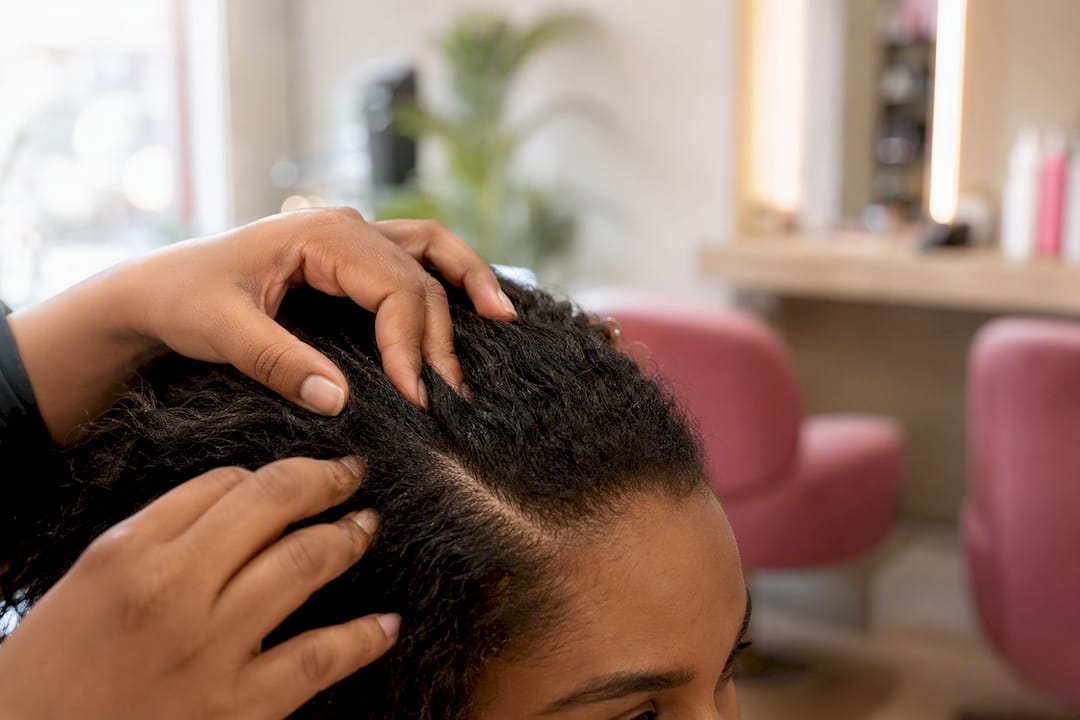
Weight compounds the problem. A bonded section carrying too much hair, or wefts sewn too close together, multiplies the pull on each strand. Placement matters just as much as weight. Extensions installed too close to the hairline or too tight at the nape put stress exactly where hair is thinnest and most vulnerable.
There is a critical distinction between two kinds of damage:
- Shaft breakage happens when strands snap under tension or friction. It is cosmetic and almost always reversible with trims and regrowth.
- Follicle damage happens when tension is sustained long enough to scar the follicle itself. That kind of damage can be permanent.
The encouraging part is that timing determines the outcome. Traction alopecia can be reversed if caught early, while it becomes permanent only once scar tissue has already formed at the follicle. That window between reversible and irreversible is exactly why catching warning signs early matters so much, which the checklist further down covers in detail.
Which Extension Methods Are Least Likely to Damage Hair?
Not every method distributes weight the same way, and matching method to hair type is the single biggest lever you control. Dermatology guidance backs this up directly: preventing hair loss from extensions starts with professional installation and avoiding tight tension, which is really a matching problem in disguise.
Here is how the common categories stack up:
- Sewn wefts distribute weight across a braided track rather than concentrating it at single points, making them a solid option for thicker, denser hair.
- Tape ins and micro beads apply lighter, more distributed sections and tend to suit fine or lower-density hair better than bulkier methods.
- Keratin bonds offer a strong, long-lasting hold but need careful sizing, since oversized bonds on fine strands raise tension risk.
- Clip ins and halo styles attach and detach the same day, which removes sustained tension entirely and eliminates the need for professional removal.
For fine or thinning hair specifically, conservative, well-distributed applications matter more than any single method label. Lighter, distributed applications reduce traction risk far more reliably than choosing based on hold strength alone. Readers who want a fuller method-by-method risk ranking can also see how different techniques compare on tension and longevity.
What Are the Warning Signs You Should Remove Extensions?
Your hair and scalp will usually tell you something is wrong before real damage sets in. Catching these signs early is what keeps shaft breakage from turning into follicle scarring.
- Scalp tenderness or pain, especially in the days right after installation, signals tension beyond what the follicle can tolerate.
- Breakage right at the attachment point rather than along the length of the hair points to localized stress on that section.
- Visible thinning along the hairline or part, particularly at the temples or nape, is an early marker of traction alopecia.
- Matting or tangling at the root that will not detangle with normal brushing usually means the section has been left in too long.
If you notice any of these, stop trying to fix it yourself. Book a stylist assessment before the situation worsens.
Pro Tip: Take a phone photo of your hairline every few weeks while wearing extensions. Subtle thinning is far easier to catch in a side-by-side comparison than in the mirror.
How Can You Prevent Damage While Wearing Extensions?
Prevention starts before a single strand goes in. A stylist should assess your natural hair’s density and strength and be honest if your hair is not ready for a particular method or weight. That consultation is not a sales formality. It is the single biggest predictor of whether your install will hold up over time.
Sizing and distribution matter next. Conservative weight and even spacing across sections protect fine or fragile hair far better than a heavier, faster install. Stylists and industry sources are consistent on this point: most severe extension damage comes down to the wrong method, too much weight, or skipped maintenance, not the extensions themselves.
From there, maintenance rhythm keeps risk low. Move-up appointments on a regular schedule prevent the natural regrowth gap from creating tangling and pull at the root. Waiting longer than that raises tension risk substantially.
Daily habits round out the picture:
- Detangle from ends to roots first, then work upward, using a loop brush designed for extensions.
- Avoid sleeping on wet hair, and use a protective braid or wrap to cut down on friction overnight.
- Choose sulfate-free, gentle formulas that clean the scalp without stripping bonds or wefts.
There is also a counterintuitive risk worth flagging. Some people get so nervous about damage that they skip washing or detangling altogether, and that avoidance backfires: matting at the root creates more tension than normal brushing ever would. Under caring for extensions is its own hazard.
Pro Tip: Sleeping habits cause more day-to-day friction damage than people expect. A loose braid or silk pillowcase makes a bigger difference than most product upgrades. For a full nightly routine, see how to sleep with extensions without damage.

Removal deserves the same care as installation. Professional removal uses specific solvents and technique to release bonds safely, while DIY removal is one of the most common causes of immediate, avoidable hair loss. If you are using extension-safe products, a guide to which formulas work with bonds and wefts is worth bookmarking before your next wash day.
Will Your Hair Recover From Extension Damage?
Recovery depends entirely on which type of damage you are dealing with. Shaft breakage grows out with regular trims and typically resolves within a few months as new, undamaged hair replaces the broken ends. Follicle-level traction alopecia is different. Caught early, it often reverses over several months as the follicle recovers its normal cycle. Once scarring has set in, though, the follicle may not regrow hair at all.
A few markers help you track where you stand:
- New, fine baby hairs along the hairline are a good sign of active regrowth.
- Persistent bald patches with smooth, shiny skin (rather than stubble) suggest scarring has already occurred.
- Reduced tenderness at the scalp over a few weeks indicates inflammation is settling down.
If you have noticed thinning or tenderness, give your natural hair a break of at least six to eight weeks before reinstalling anything, longer if signs of traction were present. Use that window for trims, protein or bond-repair treatments, and a scalp check with your stylist before deciding whether to go back in.
Salon Perspective: How Careful Practice Changes the Outcome
Most of the horror stories about extensions trace back to the same root causes: wrong sizing, skipped move-ups, or a DIY removal gone wrong. That pattern shows up across dermatology guidance and stylist reporting alike, and it is the reason HairLocks builds every consultation around an honest density and strength assessment before any hair goes in.
Founder Michele has spent 30 years matching method and weight to what a client’s natural hair can actually support, rather than defaulting to whatever install is fastest. That means conservative sectioning for fine hair, a strict 6 to 8 week move-up cadence, and removal using proper technique rather than shortcuts. For clients dealing with thinning rather than length goals, the Top~Lock V-Part Topper offers coverage and volume without the sustained root tension that bonded methods require.
None of this eliminates risk entirely. It shifts the odds firmly in your favor.
— HairLocks
Considering Extensions? Here Is What a Safe Install Looks Like
Reading about traction alopecia and tension mechanics is useful, but the real risk reduction happens at the consultation table, not in a blog post. HairLocks builds every service around that principle: a density and strength check first, then a method recommendation sized to what your natural hair can actually carry.

A consultation covers three things before anything touches your hair: how much your natural hair can safely support, which method (weft, micro-bead, keratin bond, nano-bead, or the Top~Lock V-Part Topper for thinning hair) fits that assessment, and a maintenance plan built around 6 to 8 week move-ups from day one. You can browse real results in the before and after gallery, get your natural color matched at no cost through the personal color matching service, and check current pricing before you book a consultation.
Sources
- Traction alopecia — Advanced Hair Clinic
- How to prevent hair damage from a weave or extensions — American Academy of Dermatology (AAD)
- How to fix damaged hair from extensions — Wella Professionals
FAQ
Which Type of Hair Extensions Are Least Damaging?
Temporary options like clip-ins and halo styles carry the lowest risk since they avoid sustained tension entirely, while among semi-permanent methods, well-sized tape-ins and micro-beads distribute weight more gently on fine or thin hair than heavier bonds.
What Is the Downside of Hair Extensions?
The main downside is the risk of traction alopecia from sustained tension, along with tangling and matting if maintenance is skipped between move-up appointments.
Will My Hair Ever Recover From Extensions?
Shaft breakage typically grows out within a few months, and early-stage traction alopecia often reverses once tension is removed, but damage involving follicle scarring can be permanent.
Should I Give My Hair a Break From Extensions?
Yes. Plan on at least six to eight weeks without extensions if you notice thinning or tenderness, and longer if there are clear signs of traction, using that time for trims and scalp recovery.