


Device Physics: How to Avoid Micro Bead Damage for Extension Wearers
Micro bead extensions are low-risk when they’re professionally applied, correctly sized, and maintained on schedule, and most micro bead damage traces back to preventable factors like excess tension, mismatched bead size, overdue move-ups, or rough removal. If you feel sharp pain, spot new breakage near the beads, or notice hard knots forming at the roots, stop wearing tension-heavy styles and get the extensions checked by a professional. Consultations and sizing guidance can help catch these risks before they become damage.
TL;DR:
- Proper sizing and professional installation minimize damage, with fine hair requiring smaller beads like 2.8mm and thick hair supporting larger sizes like 4mm.
- Over-tightening, delayed move-ups beyond six to eight weeks, and placement on fragile zones significantly increase damage risk.
- Regular movement checks and avoiding oil-based products near beads can prevent slippage and excess tension.
- Signs of damage include pain, breakage, knots, and bead slippage, requiring prompt professional assessment.
- Long-term scalp health depends on avoiding repeated overtightening and rotating bead placement to prevent traction alopecia.
Table of Contents
- How Micro Bead Systems Attach and Why That Creates Risk
- Main Causes of Micro Bead–Related Damage
- Signs to Watch For That Indicate Damage or Excessive Tension
- How to Prevent Damage: What to Ask a Stylist and Daily Care Routines
- Safe Removal and Repair: Professional Steps and When to See a Specialist
- Long-Term Effects of Micro Bead Damage on Scalp Health
- Comparison of Micro Bead Damage Incidence Versus Other Hair Extension Methods
- Preventative Scalp Care Routines to Reduce Risk of Damage
- What the Research Actually Tells Wearers About Risk
- Get Fitted for the Right Bead Size Before You Book
- Sources
- FAQ
How Micro Bead Systems Attach and Why That Creates Risk
A micro bead is a small metal ring, often lined with silicone, that a stylist clamps around your natural hair and a weft or strand of extension hair. The clamp holds through friction and compression rather than glue or heat, which is part of why micro beads have a reputation as a gentler alternative to bonded methods. Salon-based comparisons back this up: because micro bead extensions skip heat and adhesive, they avoid the thermal and chemical damage that bonded methods can cause. That doesn’t mean they’re risk-free.
Every bead adds mass to a small cluster of strands, and that mass has to hang from somewhere. Research on the device physics of hair extensions points to three variables that determine whether that load stays safe: how much weight each anchor carries, how the bead is positioned relative to the follicle, and how densely the beads are placed across the scalp. Stack too much weight on too few points, and you get focal compression, a concentrated pressure point that can restrict blood flow to the follicle and produce the traction problems wearers associate with tight styles.
One clarification worth making here, since the terminology overlaps: the plastic “microbeads” banned from rinse-off cosmetics under the Microbead-Free Waters Act have nothing to do with hair extension beads. Those are tiny plastic exfoliating particles; these are metal or silicone rings that clamp hair. Different materials, different purpose, different regulatory conversation entirely.
What this means practically:
- More mass per bead means more load on fewer follicles.
- Denser placement spreads weight further but increases the number of anchor points that can each become a friction site.
- Silicone linings reduce slippage but don’t eliminate compression if the clamp is closed too tightly.
Main Causes of Micro Bead–Related Damage
Most damage cases share one of a handful of root causes, and nearly all of them are avoidable with the right technique and follow-up care.
- Over-tightening at installation. A bead clamped too hard grips the hair shaft with more force than the follicle can comfortably bear, creating a chronic pull every time the extension moves.
- Mismatched bead size or strand weight. A bead sized for coarse, dense hair placed on fine or fragile strands concentrates weight onto too few hairs, and an oily scalp can cause beads to slip out of position entirely, shifting tension to new spots.
- Delayed move-ups. Hair grows roughly a half inch a month, and the bead stays fixed at its original placement while the root moves further away. Add in the fact that the average person sheds 50 to 100 hairs a day, and those shed hairs have nowhere to go but tangled around the base of the bead, forming a dense root knot.
- Placement on fragile zones. Beads set too close to the hairline or nape, where hair is naturally finer, take on stress that thicker crown hair could handle without issue. Chemically treated or heat-styled hair is already weaker at the shaft, so adding clamp pressure on top compounds the risk.
Signs to Watch For That Indicate Damage or Excessive Tension
Your scalp usually tells you something is wrong well before you see the hair loss in the mirror. Salon safety guidance is blunt on this point: constant pulling or pain means the install is wrong and needs immediate attention, not a wait-and-see approach.
Watch for these signals:
- Soreness or a sharp, localized pain at specific bead sites, especially when you touch your scalp.
- A persistent tight or binding sensation, particularly right after installation or when you tie your hair back.
- Short, broken hairs appearing near the beads, or a part line that looks wider than it used to.
- Hard, tangled knots at the root that weren’t there when the extensions went in.
- Redness, itching, or flaking around bead placements.
- Beads slipping out of position repeatedly, or whole sections shedding faster than expected.
Pro Tip: Run your fingers along your part line once a week and compare what you feel to how it felt at installation. A new rough patch or a knot you can’t smooth out with your fingers is usually the earliest physical warning sign, days before you’d notice it visually.
If you’re dealing with redness or itching specifically, a scalp irritation routine can calm things down within a week, but persistent pain or knotting calls for a professional look, not a home remedy.
How to Prevent Damage: What to Ask a Stylist and Daily Care Routines
Prevention starts before a single bead goes in, and it continues every day you wear the extensions.
Before installation, ask your stylist to walk through this checklist:
- Assess your natural hair’s strength and diameter. Fine, fragile hair needs a lighter bead and a smaller section than thick, coarse hair.
- Match bead size to your hair diameter rather than defaulting to one size for every client.
- Confirm section size and strand weight per bead. Smaller sections spread the load across more anchors, reducing focal compression at any one point.
- Ask the stylist to tension-test each bead after clamping. It should feel secure, not tight enough to tug when you move your head.
- Request that beads stay off fragile edges like the hairline and nape, where hair is naturally thinner.
On maintenance, the salon consensus points to move-ups every 6 to 8 weeks as the practical middle ground between getting good wear out of the extensions and avoiding the root matting that comes from waiting too long. This is also where following a structured 6 to 8 week maintenance plan pays off, since the interval isn’t arbitrary. It’s tied to how fast new growth outpaces the bead’s original position.
Daily care matters more than most wearers expect:
- Brush starting at the tips and work upward toward the roots, never the reverse, to avoid dragging tangles straight into the bead line.
- Keep oil-based conditioners and heavy styling products away from the bead line itself, since oil buildup is one of the more common reasons beads slip and shift tension.
- Loosely braid or tie hair back before bed to keep beads from catching and pulling overnight.
- Use heat tools at a distance from bead placements, since direct heat on silicone linings can degrade them faster than normal wear.
Pro Tip: Sleep on a satin or silk pillowcase. The reduced friction means beads catch less overnight, which cuts down on the slippage that leads to uneven tension by morning.
Safe Removal and Repair: Professional Steps and When to See a Specialist
Pulling beads out yourself, or forcing them open with whatever tool is on hand, is one of the fastest ways to turn a manageable situation into real breakage. Root matting doesn’t release with a quick tug; it needs patient, section-by-section detangling, and rushing that process is how hair snaps instead of releasing cleanly.
A professional removal typically follows this sequence:
- The stylist opens each bead with the correct pliers, applying no more pressure than needed to release the clamp.
- Matted sections get detangled slowly, often with a detangling spray or oil to ease friction, working from the ends inward.
- A conditioning treatment follows, sometimes paired with a targeted bond-repair or protein treatment similar to the Olaplex-style restoration protocols many salons use after extension removal, to rebuild shaft integrity.
- If your natural hair thinned during wear, a stylist may recommend tapering the weight of your next set or extending the gap before reinstalling.
For keratin bond removal, similar principles apply: patience and the right solvent matter more than speed.
See a trichologist or dermatologist if shedding continues for weeks after removal, if you notice scarring, or if patches show visible hair miniaturization. Those signs point past normal extension wear into something that needs a clinical diagnosis. Most healthy recovery, by contrast, plays out over a few months with gentle trims, reduced heat styling, and consistent conditioning.
Long-Term Effects of Micro Bead Damage on Scalp Health
Left unaddressed, chronic tension at bead sites can do more than break hair. Follicles under sustained mechanical stress can weaken over repeated cycles, and in more severe or prolonged cases, this pattern overlaps with traction alopecia, where hair thins specifically along the stress points rather than evenly across the scalp.
The encouraging part is that most micro bead wearers never get anywhere near that outcome, because the stress has to be both significant and sustained for months without correction. A single overdue move-up won’t cause lasting change. What matters is the pattern: repeated overtightening, ignored pain signals, or years of installs without giving the scalp a break between sets. Scalp skin also reacts to prolonged pressure the way skin elsewhere does, with irritation, tenderness, or lasting sensitivity in one spot if the same bead site takes pressure install after install. Rotating placement slightly between sets and giving your scalp occasional bead-free weeks are simple habits that protect follicle health over years of wear, not just over one set.
Comparison of Micro Bead Damage Incidence Versus Other Hair Extension Methods
Every extension method carries its own risk profile, and micro beads land in a specific spot on that spectrum. Bonded methods that use keratin glue and heat tools introduce thermal and chemical stress that micro beads simply don’t have, since micro bead application skips both. That’s a real advantage for hair that’s already color-treated or heat-fatigued.
But micro beads aren’t automatically the gentlest option in every scenario. Weft-based methods that sew or clip extensions across a wider section of hair distribute weight more evenly than beads, which concentrate load at individual points. Nano bead systems, which use smaller beads and finer strand sections, tend to reduce focal compression further, though they require more maintenance appointments to keep up with new growth.
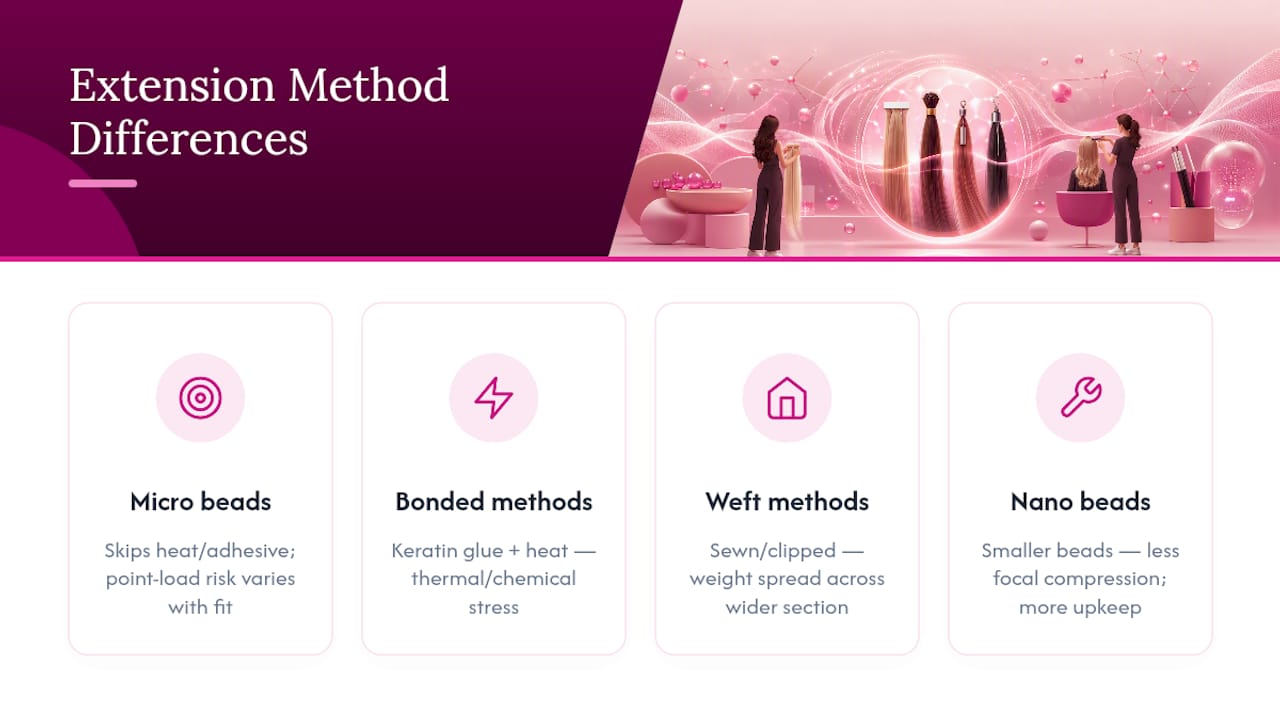
The honest takeaway is that damage incidence with micro beads depends heavily on execution. A well-placed, correctly sized micro bead set carries comparable risk to other point-anchor methods. A poorly executed one, with oversized beads on fine hair or beads packed too densely, carries meaningfully more risk than a properly fitted weft. Method matters less than fit and maintenance discipline.
Preventative Scalp Care Routines to Reduce Risk of Damage
Scalp care while wearing micro beads isn’t about scrubbing harder. It’s about protecting the skin around each bead without disturbing the clamp itself. A gentle, sulfate-free shampoo applied at the scalp with fingertip pressure, rather than nails, keeps the area clean without loosening beads prematurely. Rinse thoroughly, since leftover product buildup near bead sites is a common contributor to slippage and itching.
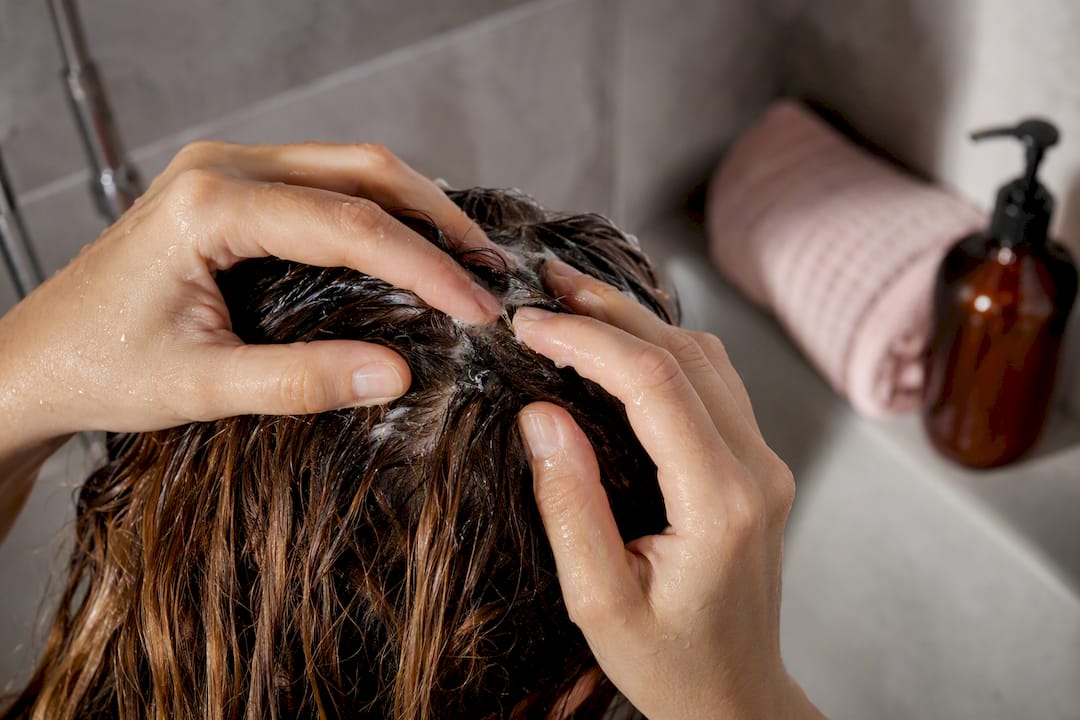
Scalp massage between wash days, done with clean fingertips and light pressure, can support circulation around bead sites without adding tension. Avoid direct oil application at the bead line even though oils are otherwise great for scalp health, since oil is exactly what causes beads to loosen and migrate.
If you deal with dryness or flaking, treat it with a leave-in scalp serum applied between beads rather than on top of them, and give your scalp a rest between extension cycles when possible. Even a few weeks bead-free between sets gives follicles time to recover fully from any localized pressure before the next installation begins.
What the Research Actually Tells Wearers About Risk
The conventional wisdom on micro beads splits into two unhelpful camps: extensions are either totally safe or secretly destructive. Neither holds up. The device-physics research on load, anchor geometry, and placement density makes a more useful point: risk is mechanical and measurable, not mysterious. That reframes the whole decision. You’re not gambling on whether extensions “work for your hair type.” You’re evaluating whether a specific installation matches specific physical limits, bead size to strand diameter, section size to hair density, move-up timing to your actual growth rate.
What gets underrated is how much of the risk lives in the maintenance calendar, not the installation day. A perfect first application can still cause damage eight weeks later if nobody catches the matting building at the root. What we’d tell any wearer to prioritize first is simple: treat the 6 to 8 week move-up as non-negotiable scheduling, not a suggestion, and treat pain as data, not something to push through. Everything else, bead choice, brushing technique, product selection, matters less than those two habits.
— HairLocks
Get Fitted for the Right Bead Size Before You Book
Getting the bead size wrong is one of the most common, and most fixable, causes of micro bead damage, which is why some providers build micro-bead ranges around fit rather than a one-size-fits-all approach.

The 2.8mm Micro-Bead Hair Extensions suit fine or lower-density hair, where a lightweight bead keeps focal compression to a minimum. The Flare Silicone Micro-Bead 3.4mm is built for mid-density hair that needs a bit more grip without added bulk. The Silicone Micro-Bead 4mm is sized for thicker, coarser hair that can support a larger anchor without strain. Professional installation and scheduled move-up appointments are part of the service, so your fit gets checked before it becomes a problem rather than after.
If you’re not sure which size matches your hair, book a consultation with Michele, whose 30 years in premium extensions goes into every fitting, or browse the full product range to compare specs before you decide.
Sources
- How much hair loss is normal — Regrow
- Hair extensions: anatomic, biological, and device-physics considerations — Journal of Craniofacial Surgery Open (2026)
- Do Micro Bead Hair Extensions Damage Your Hair? — SISHAIR
FAQ
Are Micro Bead Hair Extensions Damaging?
Micro bead extensions are generally low-risk when correctly sized, professionally installed, and maintained on a regular schedule; damage typically comes from over-tightening, mismatched bead size, or overdue move-ups rather than the method itself.
How Long Do Micro Bead Hair Extensions Last?
Most sets last through several maintenance cycles, with move-ups recommended every 6 to 8 weeks to keep pace with natural hair growth and prevent root matting.
How Long Can You Keep Micro Bead Extensions In Before a Move-Up?
Six to eight weeks is the standard window before a move-up becomes necessary, since hair growth beyond that point lets shed hairs collect at the bead and increases the risk of matting.
Why Do Micro Bead Extensions Fall Out?
Beads commonly loosen or fall out due to oily scalp buildup causing slippage, incorrect installation tension, or overloaded rings that weren’t matched to the hair’s natural weight.
What Are the Early Warning Signs of Micro Bead Damage?
Sharp pain at bead sites, new breakage near the roots, hard knots forming at the base, and repeated bead slippage all signal that the install needs professional attention right away.