


Rescue Tangled Extensions in 5 Salon Proven Steps
Extensions tangle because their fibers lose moisture faster than natural hair, take on friction from clothes and pillows, and often carry cuticle damage from processing or low-quality sourcing. Product buildup makes it worse by coating strands unevenly. The single most important fix is keeping fibers hydrated and reducing friction, especially overnight, through gentle detangling and a protective sleep routine.
TL;DR:
- Extensions made from processed or low-quality hair with mixed cuticle directions tangle more quickly due to increased snagging and uneven movement.
- Dryness significantly worsens tangling because extensions do not receive scalp oils, causing fibers to become rough and friction-prone.
- Regular gentle detangling with a wide-tooth comb and moisture-based products helps prevent matting, especially when applied before bed and during routine maintenance.
- Environmental factors like humidity, wind, pollution, or water exposure accelerate tangling by disrupting cuticle alignment and increasing fiber friction.
- Matching extension texture, quality, and attachment method to natural hair minimizes tangling risks and improves long-term manageability.
Table of Contents
- Why Extensions Tangle: The Core Causes to Check First
- Why Extensions Tangle More Than Your Natural Hair
- How to Rescue Tangled or Matted Extensions
- Building a Daily and Weekly Care Routine That Prevents Tangling
- When to Get Maintenance and When to Give Your Hair a Break
- Expert Care Tips from HairLocks
- How Your Hair Type Affects Extension Tangling
- How Weather and Environment Make Tangling Worse
- Stylist’s Quick Checklist: Five Habits to Stop Tangles
- Solving Tangling Problems With the Right Extensions and Support
- Sources
- FAQ
Why Extensions Tangle: The Core Causes to Check First
Most tangling traces back to one of six overlapping problems, and figuring out which one applies to your extensions determines how you fix it.
Cuticle damage and raw material quality sit at the top of the list. Extensions made from hair where the cuticles run in mixed directions, rather than aligned in one consistent orientation, rub against each other and catch instead of sliding smoothly. Heavy bleaching or dyeing during manufacturing strips the cuticle layer further, and processed hair tangles faster than hair that’s been left closer to its natural state.
Dryness compounds everything else. Extensions never receive sebum from your scalp, so they dry out faster than the hair growing around them, and dry strands create more friction than hydrated ones.
Other common culprits:
- Product buildup from heavy oils or silicones, which coats fibers unevenly and leaves them feeling sticky or rough.
- Incorrect brushing, especially starting at the roots instead of the ends.
- Sleeping with wet or loose hair, which lets strands twist and knot against the pillow all night.
- Friction from scarves, collars, and pillowcases, particularly rougher cotton fabrics.
- Poor installation, including sections that are too heavy or spaced incorrectly, which increases rubbing between wefts or bonds.
Why Extensions Tangle More Than Your Natural Hair
Your scalp constantly produces sebum, a natural oil that coats each strand and helps hair glide past itself. Extensions get none of that. Once installed, they rely entirely on what you apply from a bottle, and that gap explains why extensions dry out and tangle in a way natural hair rarely does.
Cuticle direction matters just as much. Hair with cuticles layered in the same direction, root to tip, moves smoothly against neighboring strands. Mixed or damaged cuticles snag on each other, and that snagging compounds with every brush stroke or gust of wind.
Attachment method changes the friction pattern too. Clip-ins shift with every removal. Tape and weft extensions stay fixed but concentrate movement at the root line. Bonded and micro-bead attachments create small points of tension that hair winds around as you move. That’s also why tangles so often start at the nape, the point of the most contact with clothing, pillows, and your own hands, then spread upward if you don’t catch them early.
How to Rescue Tangled or Matted Extensions
Before you touch a brush, check the attachment type and how far the tangle has traveled. A few knots near the ends need a different approach than matting that’s worked its way up to the bonds or tape tabs.
Reach for a wide-tooth comb or a detangling brush designed for extensions, along with a slip agent, either a leave-in conditioner or a dedicated detangling spray. Skip fine-tooth combs and dry brushing, both of which pull rather than glide.
- Section the hair into small, manageable pieces rather than attacking the whole head at once.
- Hold each section at the attachment point to keep tension off the bond, tape, or root.
- Apply the slip agent generously and let it sit for a minute before you start.
- Work from the ends upward, never from the root down.
- Repeat in small movements, easing knots apart rather than tearing through them.
Wet detangling with conditioner in the shower tends to work faster because the slip agent softens knots immediately, but it’s easier to stretch and damage bonds if you rush. Dry detangling with a spray takes longer but puts less strain on attachments. If a section feels solid and matted rather than knotted, stop. That’s a sign it needs professional removal, not more brushing.
Pro Tip: Work in sections no wider than two inches. Trying to detangle a full panel at once is how people end up pulling out extensions instead of freeing them.
Building a Daily and Weekly Care Routine That Prevents Tangling
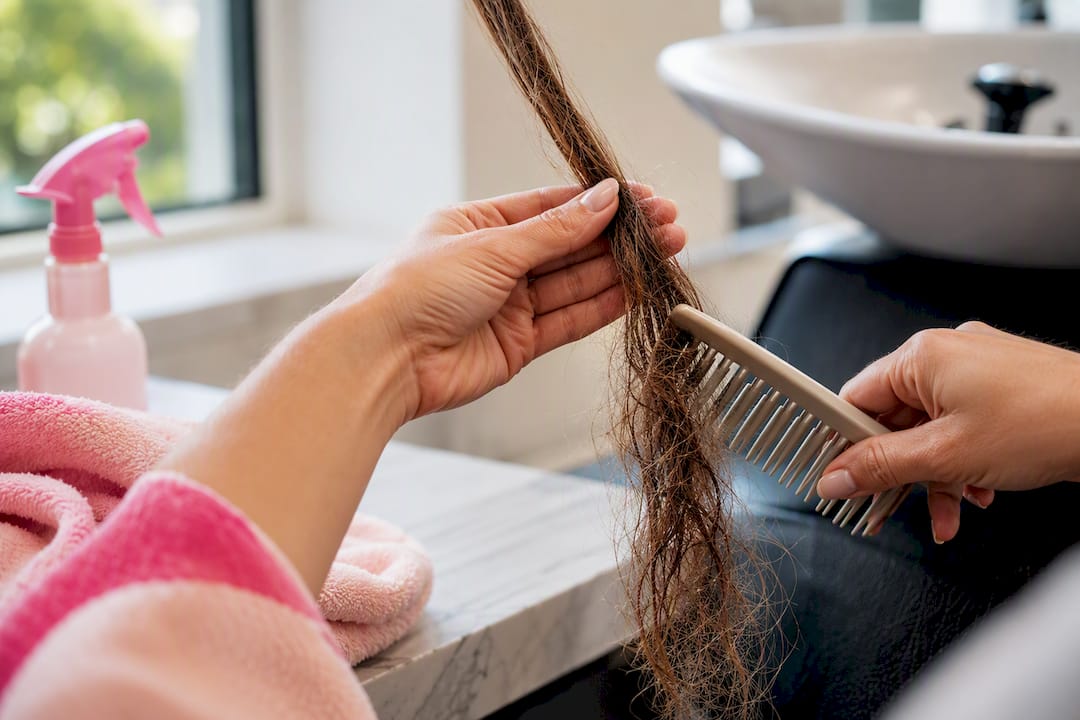
Brush at least once or twice daily, always starting at the ends and working up, holding the section near the scalp so you’re not tugging on the attachment itself. A loop or paddle brush designed for extensions spaces its bristles to avoid pulling on bonds.
Wash every two to three days rather than daily. Extensions don’t need frequent washing since they’re not producing new oil, and overwashing just accelerates dryness. Apply shampoo at the scalp and let the suds rinse through the lengths instead of scrubbing the extensions directly, then follow with a lightweight, hydrating conditioner on the mid-lengths and ends only.
Favor moisture-focused, sulfate-free formulas. Heavy oils and silicone-rich products feel good going on but build up fast, and hydrating shampoos formulated for textured or processed hair tend to work better without leaving residue behind.
- Loosely braid or twist extensions before bed, or use a silk pillowcase and protective wrap to cut down on overnight friction.
- Never sleep with wet extensions.
- Tie hair back before swimming or intense workouts, and rinse chlorine or salt water out as soon as possible.
Pro Tip: If you wear tape-ins, keep products away from the root line entirely. Oil near the tape tabs is one of the fastest ways to cause slippage and tangling at the scalp.
When to Get Maintenance and When to Give Your Hair a Break
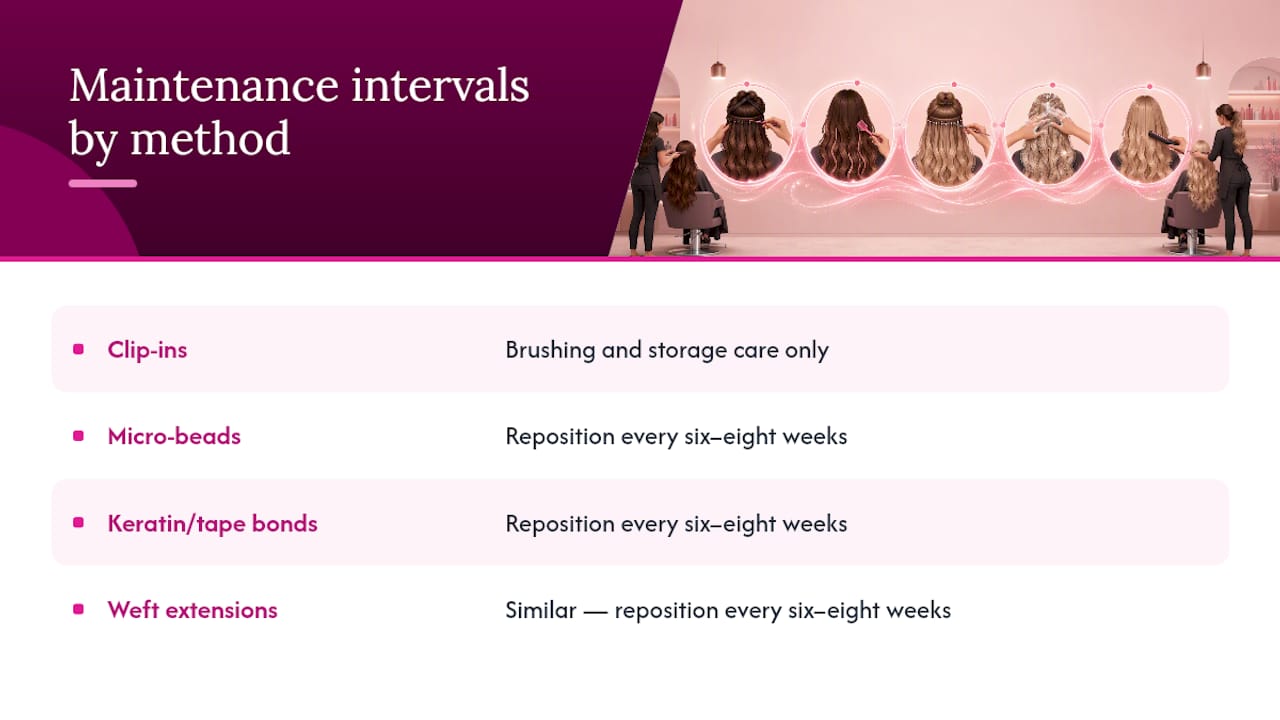
Maintenance intervals vary by method. Clip-ins need little beyond regular brushing and storage care between wears. Micro-beads and keratin or tape bonds typically need repositioning every six to eight weeks as the attachment grows out with your natural hair. Weft extensions follow a similar window, since natural growth changes how the tracks sit against your scalp.
Persistent nape matting, extensions that won’t hold slip no matter how much conditioner you use, or tangling that returns within a day of detangling all signal you’re overdue for a move-up appointment. Following a salon-backed six to eight week schedule catches these problems before they compound into matting that requires cutting hair out.
If your natural hair needs a reset, most stylists recommend a break of several weeks between removal and reinstallation, using that window for deep conditioning treatments. Delaying maintenance past the recommended window doesn’t just increase tangling. It raises the cost and risk of the eventual fix, since matted sections often can’t be saved with detangling alone.
Expert Care Tips from HairLocks
Michele, founder of HairLocks and a stylist with 30 years of hands-on experience fitting and maintaining extensions, built the brand’s care sheet around one principle: prevention is cheaper and gentler than rescue. Her installation priorities focus on even section weight, correct tension at each attachment point, and matching hair texture to the client’s natural growth pattern, since a mismatch is one of the fastest routes to friction and tangling.
The HairLocks care sheet recommends a salon-backed six to eight week maintenance plan for bonded and taped methods, timed to natural hair growth rather than a fixed calendar date.
For readers dealing with recurring tangling, a few product choices make a measurable difference:
- Itips Human Hair, 22-inch, double drawn suits anyone whose current tangling stems from low-quality or single-drawn hair with mismatched cuticle direction.
- Wraparound ponytail extensions in Caramel Blonde or Darkest Brown give you a lower-maintenance option that avoids daily attachment-level friction altogether.
Before-bed checklist: brush from ends to roots, apply a light leave-in to the lengths, braid loosely, and switch to a silk pillowcase or wrap.
How Your Hair Type Affects Extension Tangling
Extensions tangle faster when there’s a mismatch between the extension’s texture and your natural hair’s texture and porosity. Fine, straight natural hair paired with thicker or coarser extension wefts creates friction at the point where the two textures meet, since they move at different speeds and catch on each other. Curly or wavy natural hair paired with straight extensions faces the same problem in reverse, with the curl pattern constantly working against the straighter strands.
Porosity plays a role too. High-porosity natural hair, which absorbs and loses moisture quickly, often dries out faster than the extensions attached to it, creating uneven hydration across the head. That imbalance shows up as tangling concentrated at the blend point rather than throughout the extension itself.
Density matters as well. Fine or thin natural hair struggles to support heavier wefts without extra friction at the attachment, since there’s less natural hair cushioning the contact point. Thicker natural hair generally tolerates a wider range of extension weights and textures without the same tangling risk.
The practical fix is choosing extensions that closely match your natural texture, wave pattern, and, where possible, porosity, rather than picking based on length or color alone. A stylist matching extensions to natural hair during installation, rather than fitting a generic option, heads off a large share of blend-related tangling before it starts. This is also why a personalized consultation tends to outperform guessing from a product photo.
How Weather and Environment Make Tangling Worse
Humidity swells the hair shaft and disrupts cuticle alignment, and extensions without the protective oils natural hair produces feel that swelling more acutely. High humidity is a common trigger for sudden, unexplained tangling on days when your routine hasn’t changed at all.
Wind creates a more direct mechanical problem: it whips strands against each other repeatedly, and extension fiber, already lacking natural oil, doesn’t have the same slip to resist that friction. A short walk on a windy day can undo a morning’s careful brushing.
Pollution and airborne particulates settle into hair throughout the day, adding a layer of grit that acts almost like sandpaper between strands. Combined with dryness, that grit accelerates the friction that leads to knots.
Chlorine and salt water deserve a mention here too, since both strip moisture aggressively and leave extensions rougher to the touch within a single swim. Rinsing immediately with fresh water limits the damage, but the fix that covers the most ground is the same one that solves humidity, wind, and pollution issues at once: keeping extensions consistently hydrated with a leave-in or detangling spray, so external moisture and grit have less of a chance to disrupt the cuticle. On days with rough weather, a loose braid or low ponytail does more to prevent tangling than any product applied afterward.
Stylist’s Quick Checklist: Five Habits to Stop Tangles
A stylist’s go-to habits: brush ends-to-roots twice daily, sleep with hair braided or wrapped, apply leave-in before bed, wash no more than every few days, and book move-ups on schedule rather than waiting for problems to show. When a client comes in with recurring nape tangling, the salon plan almost always starts with tightening the sleep routine first. One long-term wearer who switched to a silk wrap and consistent six-week move-ups went from daily knots to occasional light detangling within a couple of months.
— HairLocks
Solving Tangling Problems With the Right Extensions and Support
Choosing extensions built with aligned cuticles and consistent quality removes one of the biggest tangling triggers before it starts, and that’s the advantage of sourcing from a specialist rather than guessing with a generic set. If persistent knotting keeps tracing back to mismatched or low-grade hair, the Itips Human Hair, 22-inch double drawn option gives you consistent cuticle direction that resists the tangling patterns cheaper single-drawn hair develops within weeks.

If daily maintenance isn’t realistic for your schedule, the wraparound ponytail extensions in Caramel Blonde or Darkest Brown sidestep attachment-level friction entirely, since they clip in and out rather than staying installed against your scalp around the clock. HairLocks also offers personalized consultations built around founder Michele’s 30 years of fitting experience, paired with the salon-backed six to eight week maintenance plan outlined in the care sheet. If your current extensions keep matting no matter what you try, book a consultation to get matched with hair that fits your texture and routine instead of fighting the wrong fit every day.
Sources
For more detail, see the Haneway causes-of-tangling guide, community troubleshooting on Beautylish, and the HairLocks care sheet.
- What Causes Hair Extensions to Tangle? | Haneway Hair Extensions Guide
FAQ
How Do I Stop My Extensions From Tangling?
Keep fibers hydrated with a leave-in or detangling spray, brush from ends to roots at least once daily, and protect your hair overnight with a loose braid and a silk pillowcase or wrap.
Why Do Hair Extensions Get So Tangled?
Extensions tangle from a combination of dryness, cuticle damage, product buildup, friction from fabric and pillows, and incorrect brushing or installation, since they don’t receive the natural oils your scalp produces.
How Often Should I Give My Hair a Break From Extensions?
Most stylists recommend a break of several weeks between removal and reinstallation for bonded, taped, or micro-bead methods, using that time for deep conditioning before your next fitting.
How Do You Revive Tangled Hair Extensions?
Section the hair, apply a slip agent like conditioner or detangling spray, hold each section at the attachment point, and work knots out gently from the ends upward rather than pulling from the root.
How Often Should Extensions Be Maintained?
Micro-bead, keratin, and tape methods generally need repositioning every six to eight weeks, while clip-ins and wraparound pieces like HairLocks’ ponytail extensions need little beyond routine brushing and storage care.